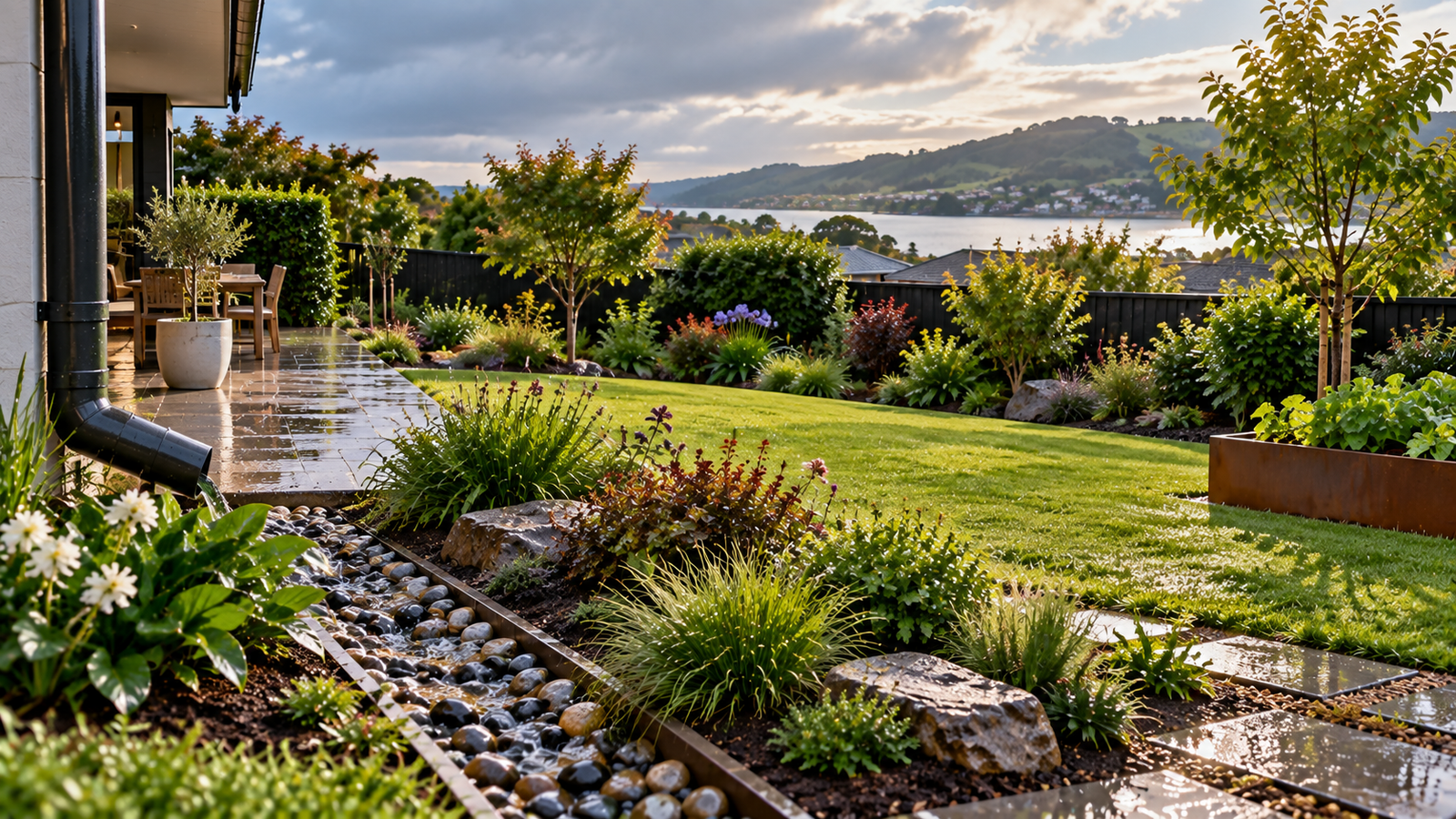
Looking for practical ways to improve garden drainage NZ homeowners commonly struggle with? A waterlogged garden can turn an otherwise healthy outdoor space into a muddy, difficult-to-manage area. Puddles remain after rain, lawns become soft underfoot, plants struggle, and heavy soil can seem permanently wet through winter.
Garden drainage problems are frustrating because there is rarely one solution that works everywhere. The cause could be heavy clay soil, compaction, a low point in the section, runoff from hard surfaces, or simply water that has nowhere suitable to go.
The good news is that many drainage problems can be improved without completely rebuilding your garden.
In this guide, we’ll look at how to identify poor drainage and seven practical ways to improve garden drainage in New Zealand, from simple soil improvements to raised beds and dedicated drainage systems.
- Garden Drainage NZ: How to Spot a Drainage Problem
- 1. Improve the soil with organic matter
- 2. Relieve compacted soil
- 3. Raise waterlogged garden beds
- 4. Fix low spots and poor surface levels
- 5. Manage runoff from hard surfaces
- 6. Consider drainage coil or a French drain
- 7. Use a rain garden or swale
- Clay soil drainage in NZ
- Garden bed vs lawn drainage
- Common drainage mistakes
- Frequently asked questions
Garden Drainage NZ: How to Spot a Drainage Problem
Wet soil immediately after heavy rain is not automatically a drainage problem. The warning sign is water that consistently remains where it shouldn’t.
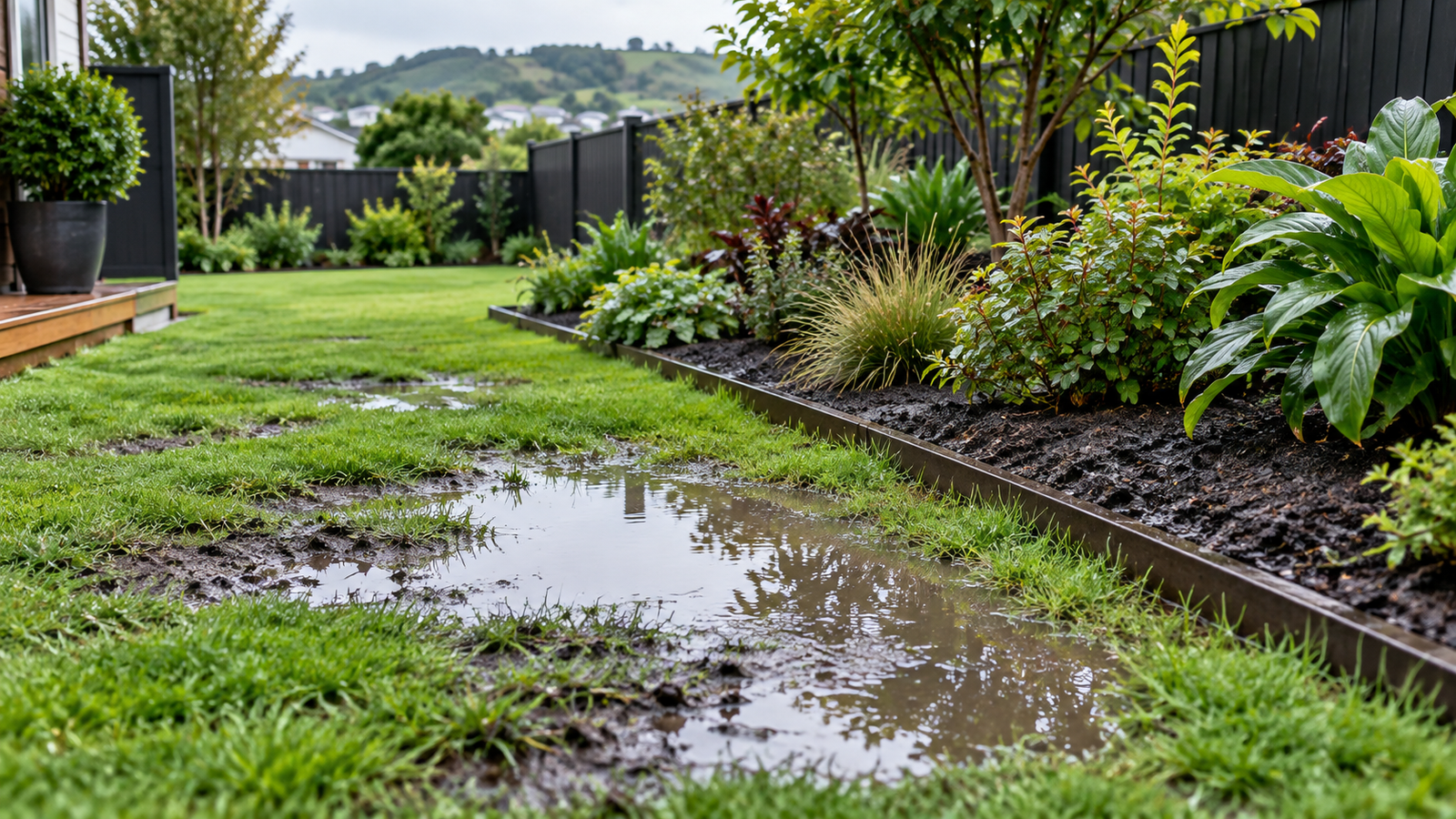
When improving garden drainage NZ conditions such as heavy rainfall, clay soil, compacted ground and sloping sections should all be considered before choosing a solution.
Look for:
- puddles that remain well after surrounding areas have drained;
- soft or boggy lawn areas;
- moss or weeds thriving where grass struggles;
- plants repeatedly declining in the same wet areas;
- heavy soil that stays sticky for long periods;
- water collecting beside paths, patios or garden beds;
- obvious runoff flowing into a low part of the garden.
Compaction can also contribute to poor lawn drainage, particularly in high-traffic areas where the soil has gradually become dense.
1. Improve the Soil for Better Garden Drainage NZ
If the problem is concentrated in garden beds, improving the soil should often be one of the first steps.
Dense soil contains fewer useful spaces through which air and water can move. Adding well-decomposed compost and other appropriate organic matter can gradually improve soil structure.
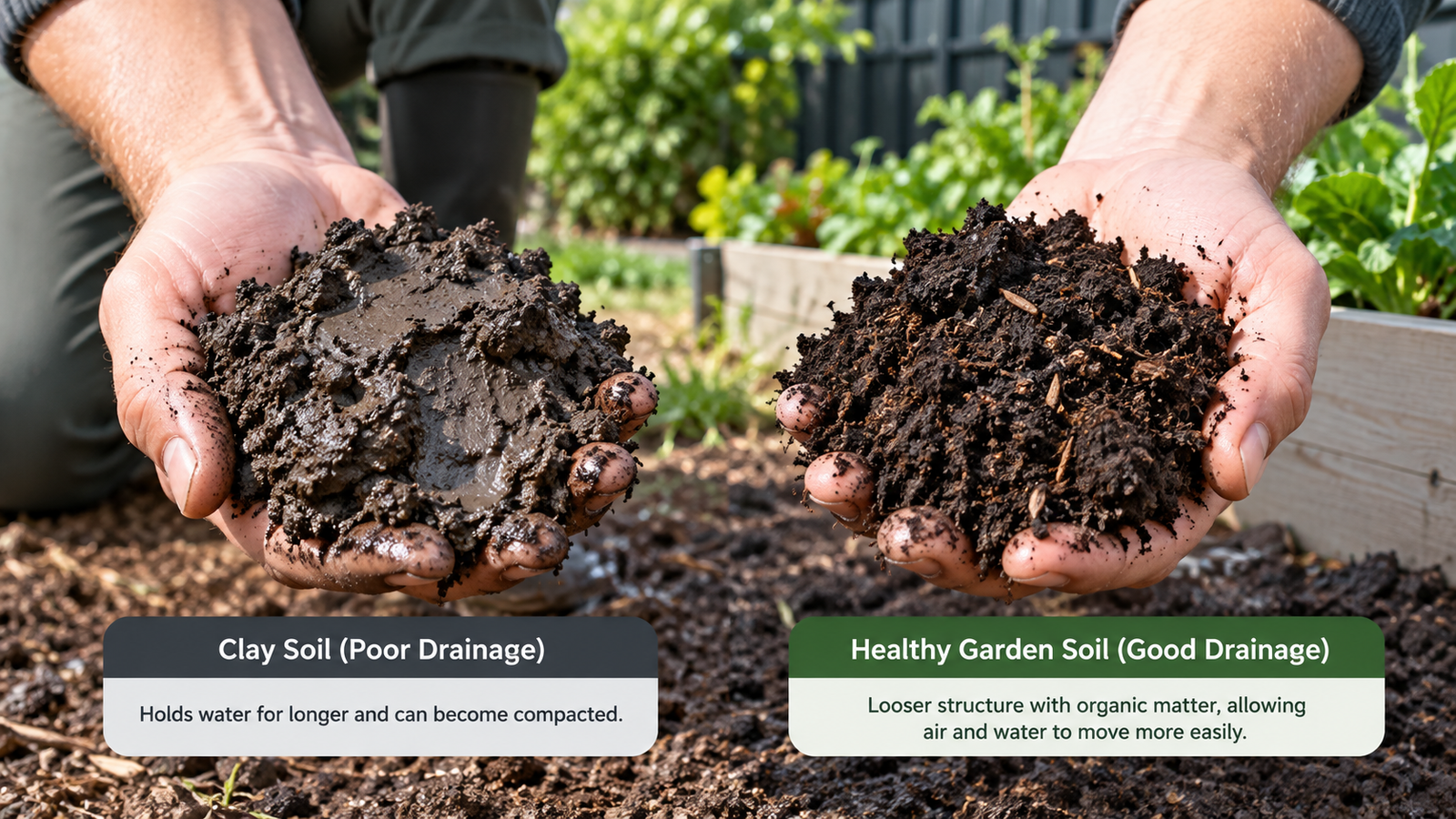
This is particularly relevant to clay soils. Regular additions of compost can improve the growing environment over time, but the key word is gradually.
Adding compost once will not magically transform extremely heavy clay, especially where the underlying native soil remains dense.
Don’t automatically add sand to clay soil
The common advice to simply add some sand to heavy garden soil is too simplistic.
The result depends on the characteristics and proportions of the existing soil and amendments. For a typical home gardener, building soil structure with organic matter or creating a raised planting area is generally a more practical approach than randomly mixing small quantities of sand into heavy clay.
2. Relieve Compacted Soil
Sometimes the soil itself is capable of draining, but years of foot traffic, machinery or repeated use have compressed it.
Compaction is particularly common around:
- driveways;
- gates;
- children’s play areas;
- frequently used paths;
- outdoor entertaining spaces.
Compaction reduces the spaces available for water and air to move through the soil.
For lawns, spike or core aeration can help open the soil and allow water to penetrate more effectively. Garden beds should also be protected from unnecessary foot traffic.
Stepping stones or defined paths can help prevent people from repeatedly compressing planting areas.
3. Raise Waterlogged Garden Beds
For persistently wet planting areas, sometimes the easiest solution is to move the roots above the problem.
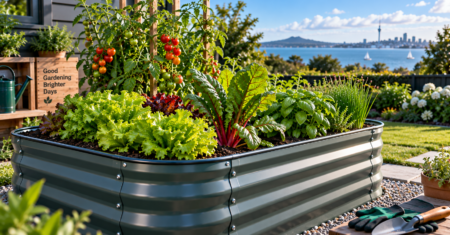
Raised beds create a deeper layer of improved growing medium above poorly drained native soil. If you’re considering this approach, our complete guide to raised garden beds in NZ explains the main materials, sizes and setup options for Kiwi gardens.
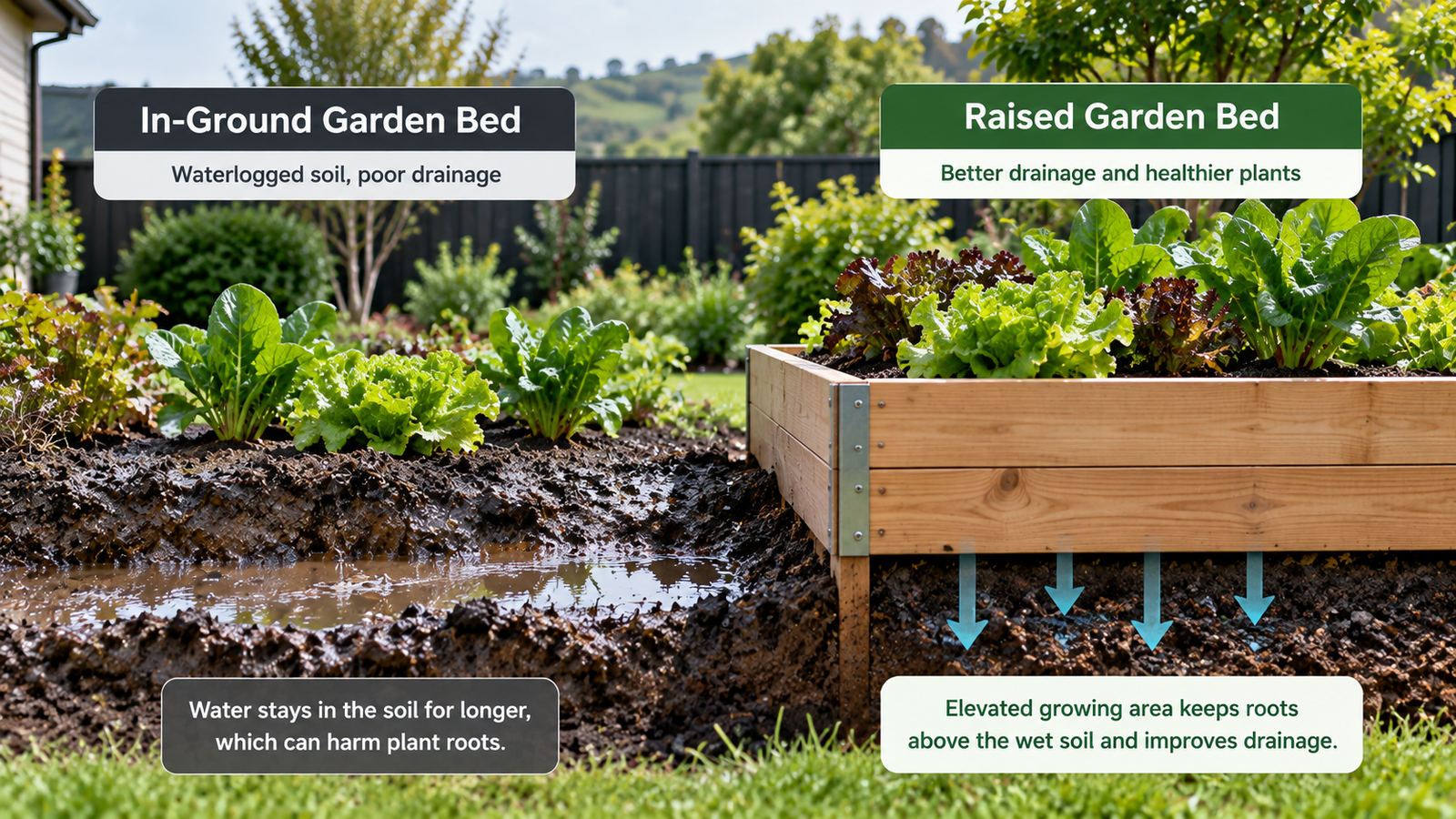
This can be particularly useful for:
- vegetable gardens;
- herbs;
- plants sensitive to wet roots;
- sections with heavy clay;
- small areas where rebuilding underground drainage would be excessive.
Raised beds can be built from timber, steel, masonry or other suitable materials. If you’re considering a durable metal option, see our guide to metal raised garden beds in NZ for a closer look at the main choices for New Zealand gardens.
However, raising a bed does not mean ignoring the water below it. The base still needs an appropriate route for excess moisture, especially if the surrounding ground is severely waterlogged.
4. Fix Low Spots and Poor Surface Levels
Sometimes the soil isn’t the main problem at all.
Water naturally follows gravity, so even a relatively small depression can become the wettest part of a lawn.
Watch your garden during or immediately after substantial rainfall. You may notice water consistently travelling towards one particular spot.
Small lawn depressions may sometimes be corrected through appropriate levelling and topdressing. More significant grading problems require greater care.
The goal is not necessarily to make everything perfectly flat. A subtle, intentional fall can help water move away from vulnerable areas.
5. Manage Runoff from Hard Surfaces
Your soggy garden may not be receiving water only from the sky directly above it.
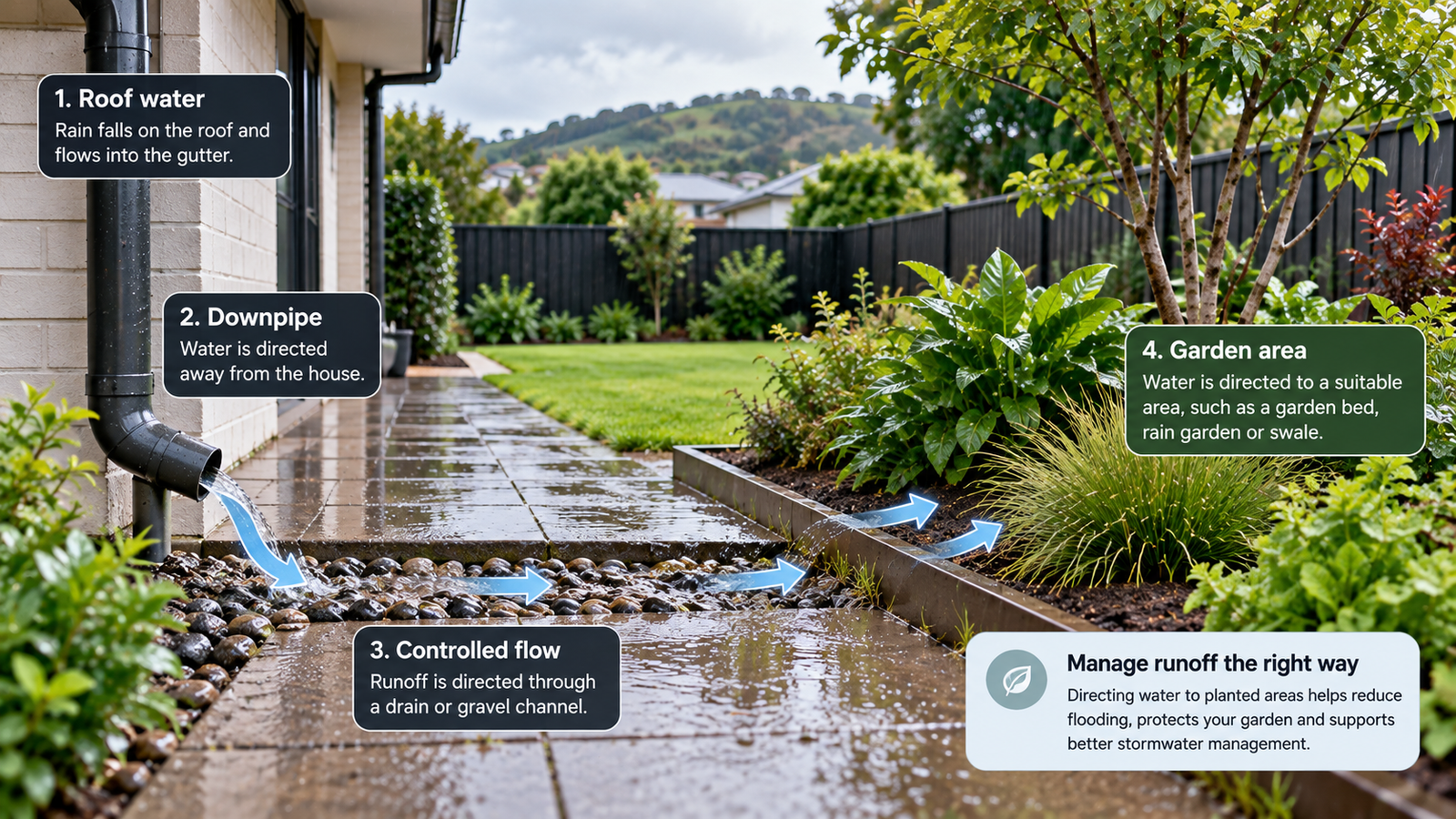
Roofs, driveways, patios and paths create impermeable surfaces. Instead of soaking into the ground where rain lands, water runs across these surfaces and becomes concentrated elsewhere.
During heavy rain, check:
- Where does water from the driveway go?
- Where do paths discharge water?
- Is runoff being directed towards a garden bed?
- Are existing drains clear and functioning?
- Where is roof water being discharged?
You may discover that fixing the source of the runoff is more effective than trying to make one garden bed absorb an unreasonable amount of water.
6. Consider a French Drain or Drainage Coil
When water persistently collects in the same area despite improving soil and surface conditions, a dedicated drainage system may be necessary.
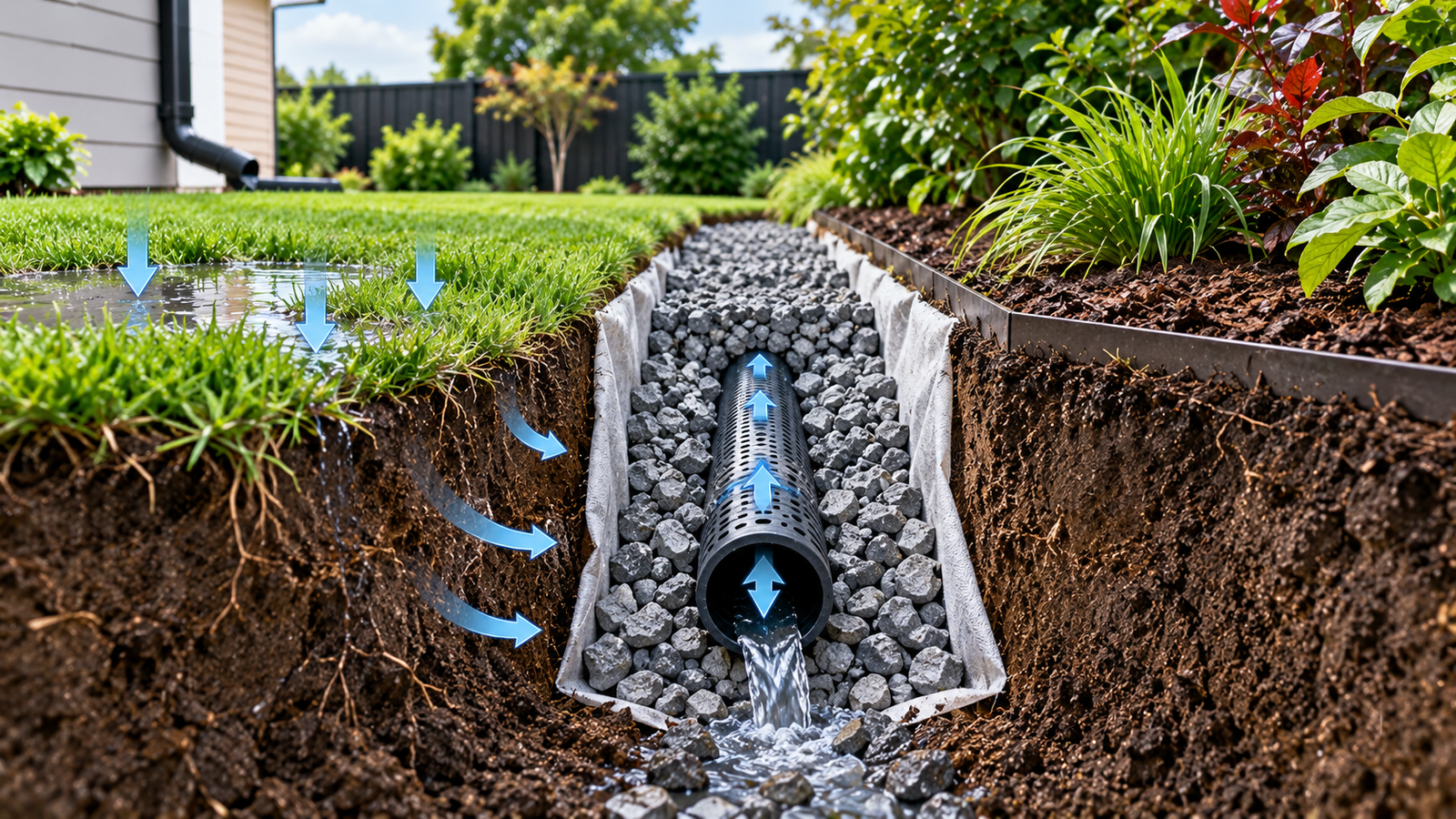
A common approach uses perforated drainage pipe installed within a trench containing free-draining aggregate. Water enters the system and is carried towards an appropriate discharge point.
You’ll often hear this type of system referred to as a French drain, although designs and installation requirements can vary.
But the pipe itself is only half the equation. You still need somewhere appropriate for that water to go.
This becomes particularly important when drainage work connects with stormwater infrastructure, changes natural runoff or could affect neighbouring land.
7. Use a Rain Garden or Swale
Not every drop of water needs to disappear underground as quickly as possible.
Sometimes the smarter approach is to slow it down, spread it out and allow it to soak into an appropriate part of the landscape.
Two useful landscaping approaches are rain gardens and swales.
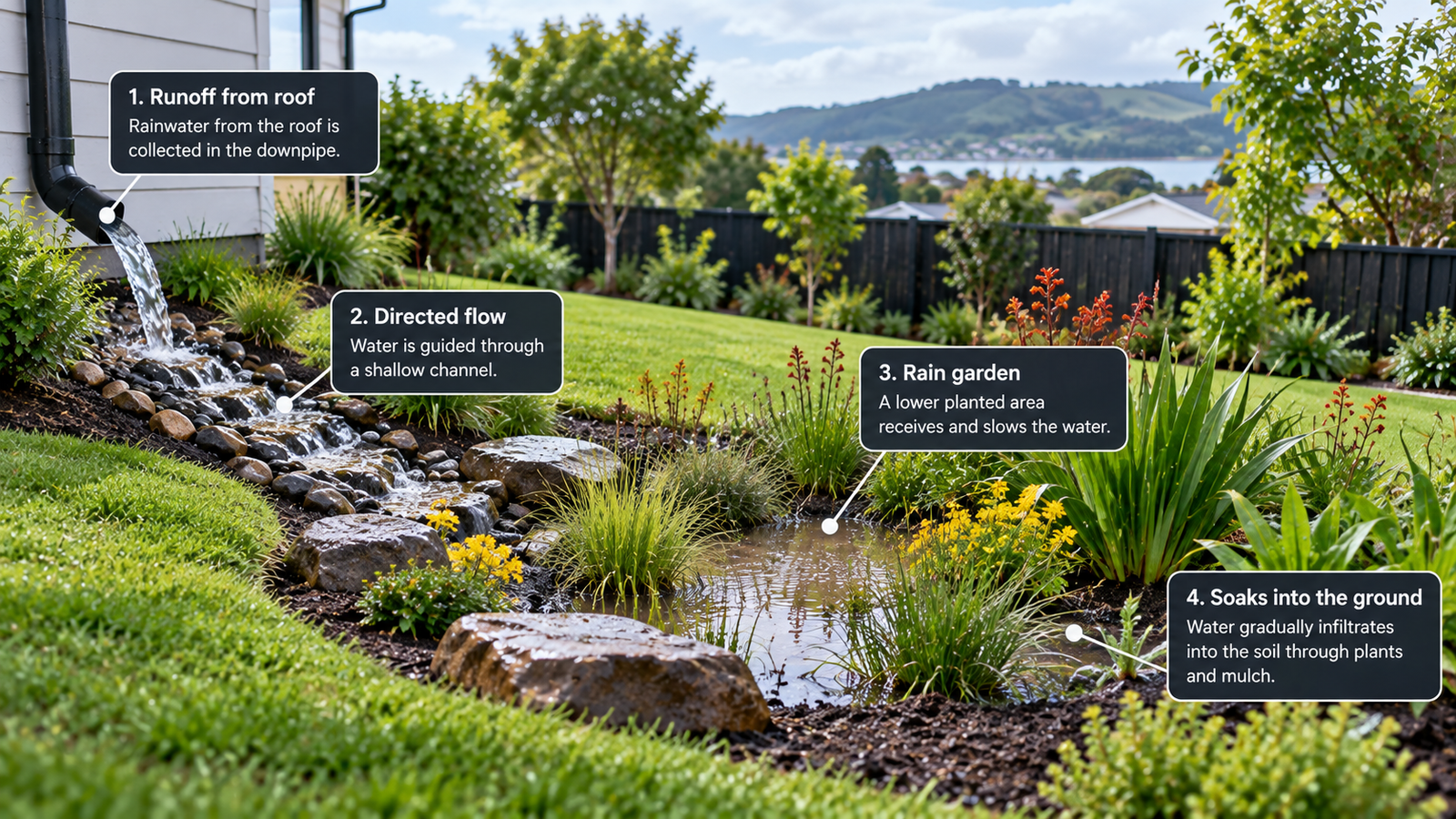
A rain garden is a planted area designed to temporarily receive runoff and allow water to filter through the soil and planting system.
A swale is a broad, shallow vegetated channel that can slow and guide water while encouraging infiltration where conditions allow.
These solutions can become attractive landscape features rather than looking like conventional drainage infrastructure.
Clay Soil and Garden Drainage NZ
Clay deserves special attention because it behaves differently from lighter soils.
When wet, clay can become sticky, dense and slow draining. When very dry, it can become hard and difficult to work.
Regular additions of compost and appropriate organic matter can gradually improve its structure. Avoid unnecessarily digging or repeatedly walking over saturated clay, as this can contribute to further compaction.
For severe clay conditions, raised beds can be one of the most practical options because they establish a better root zone above the poorly drained native soil.
The important thing is not to expect an overnight transformation. Improving heavy clay is usually a long-term soil-management project.
Garden Bed Drainage vs Lawn Drainage
Although both can become waterlogged, lawns and garden beds shouldn’t automatically receive the same treatment.
| Area | Check first | Possible solutions |
|---|---|---|
| Garden beds | Soil structure, compaction, planting level and incoming runoff | Organic matter, raised beds, improved surface drainage |
| Lawns | Compaction, low spots, clay soil and runoff | Aeration, levelling, topdressing or dedicated drainage |
| Hardscape edges | Where water leaves patios, paths and driveways | Redirect runoff appropriately or improve stormwater management |
| Persistently wet areas | Water source and available discharge point | Drainage coil, French drain, swale or rain garden where appropriate |
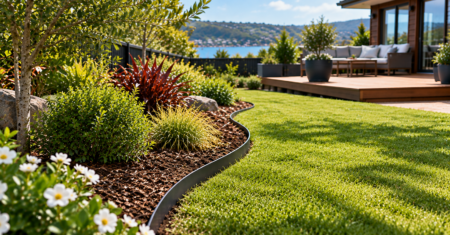
If you’re also redesigning the boundary between your lawn and planting areas, our Garden Edging NZ guide compares practical edging options for Kiwi gardens.
What About Drainage in Raised Garden Beds?
Raised beds generally provide much better control over the growing medium, but they can still drain poorly.
Common causes include:
- unsuitable soil or growing medium;
- a completely sealed base;
- severe drainage problems underneath;
- blocked drainage outlets in containers;
- excessive watering.
A raised bed placed directly over soil will normally benefit from retaining a connection with the ground below rather than being unnecessarily sealed with an impermeable layer.
For very wet sites, however, the surrounding drainage problem should still be addressed. A raised bed shouldn’t simply become an island surrounded by standing water.
Common Garden Drainage Mistakes
Installing drainage before finding the cause
A drain isn’t automatically the solution. If a blocked outlet, poorly directed downpipe, compacted lawn or low spot is causing the problem, address that first.
Working clay soil while it’s saturated
Wet clay compacts easily. Digging and repeatedly walking over saturated ground can make the soil structure worse.
Sending water towards the neighbour
Solving your drainage problem by creating one somewhere else isn’t a solution. Always consider where redirected water will ultimately go.
Making everything impermeable
More concrete doesn’t necessarily mean fewer water problems. Increasing impermeable surfaces can increase runoff and place greater pressure on the property’s stormwater management.
Assuming every wet garden needs a French drain
Many smaller problems can be improved through soil management, aeration, raised beds or correcting surface levels without immediately excavating the garden.
When Should You Call a Professional?
Basic soil improvement and small-scale garden work are reasonable DIY projects. Professional advice becomes more valuable when:
- water is collecting close to the house;
- flooding is frequent or severe;
- large areas remain waterlogged;
- you don’t know where drainage can appropriately discharge;
- major excavation is required;
- neighbouring properties could be affected;
- you’re altering stormwater infrastructure;
- the property is on a significant slope.
Stormwater isn’t only a gardening issue. Poor management can contribute to erosion, flooding and problems beyond your own property, so larger projects deserve proper planning.
The right garden drainage NZ solution depends on the source of the water, your soil type and where excess water can safely drain.
The Root & Yard Verdict
There is no universal fix for a wet New Zealand garden because good drainage starts with identifying where the water is coming from and why it isn’t leaving.
For heavy garden soil, begin with organic matter and gradual soil improvement. If plant roots remain too wet, consider raising the garden bed.
For a compacted lawn, aeration and correcting low areas may help. If water is flowing into the area from roofs, paths or paving, deal with that runoff rather than expecting the soil to absorb everything.
When the problem involves persistent pooling, significant runoff or large volumes of stormwater, a properly planned drainage system, swale or rain garden may be more appropriate.
Most importantly, don’t just make water disappear from one part of the section. Know where it is going next.
Frequently Asked Questions About Garden Drainage NZ
How do I improve drainage in a waterlogged garden?
Start by identifying the cause. Compacted soil may benefit from aeration, while heavy garden soil can be gradually improved with organic matter. Raised beds can help keep plant roots above poorly drained ground. Persistent pooling may require surface-level changes or dedicated drainage.
How can I improve drainage in clay soil?
Regularly adding compost and other appropriate organic matter can improve clay soil structure over time. Avoid working clay while it is very wet because this can increase compaction. Raised beds are another practical option where the underlying clay drains very slowly.
Will adding sand improve clay soil drainage?
Adding a small amount of sand to heavy clay is not a universal drainage fix. For home garden beds, improving soil structure with organic matter or creating a raised growing area is generally a more practical approach.
Do raised garden beds help with drainage?
Yes. Raised beds allow plants to grow above poorly drained native soil and give you greater control over the growing medium. They can be particularly useful on sites with heavy clay or persistently wet planting areas.
How do I improve lawn drainage?
Check for compaction, low spots and runoff first. Aerating compacted soil can help, while persistent wet areas may require levelling, topdressing or drainage infrastructure depending on the underlying cause.
What is a French drain?
A French drain is a drainage trench typically containing free-draining aggregate and a perforated pipe. It collects excess water and directs it towards an appropriate discharge point.
Do I need council approval for garden drainage in NZ?
Routine garden maintenance will not necessarily require approval, but significant stormwater work, earthworks or changes to existing drainage can be affected by local requirements. Check with your local council when a project goes beyond ordinary garden maintenance or could affect stormwater systems or neighbouring properties.
Related Articles
2 Comments
[…] water regularly remains on the surface, see our Garden Drainage NZ guide. If you’re dealing with dense clay, our Clay Soil NZ guide explains how to improve heavy […]
[…] wet soil is interfering with lawn establishment, our Garden Drainage NZ guide explains how to diagnose waterlogging and improve […]