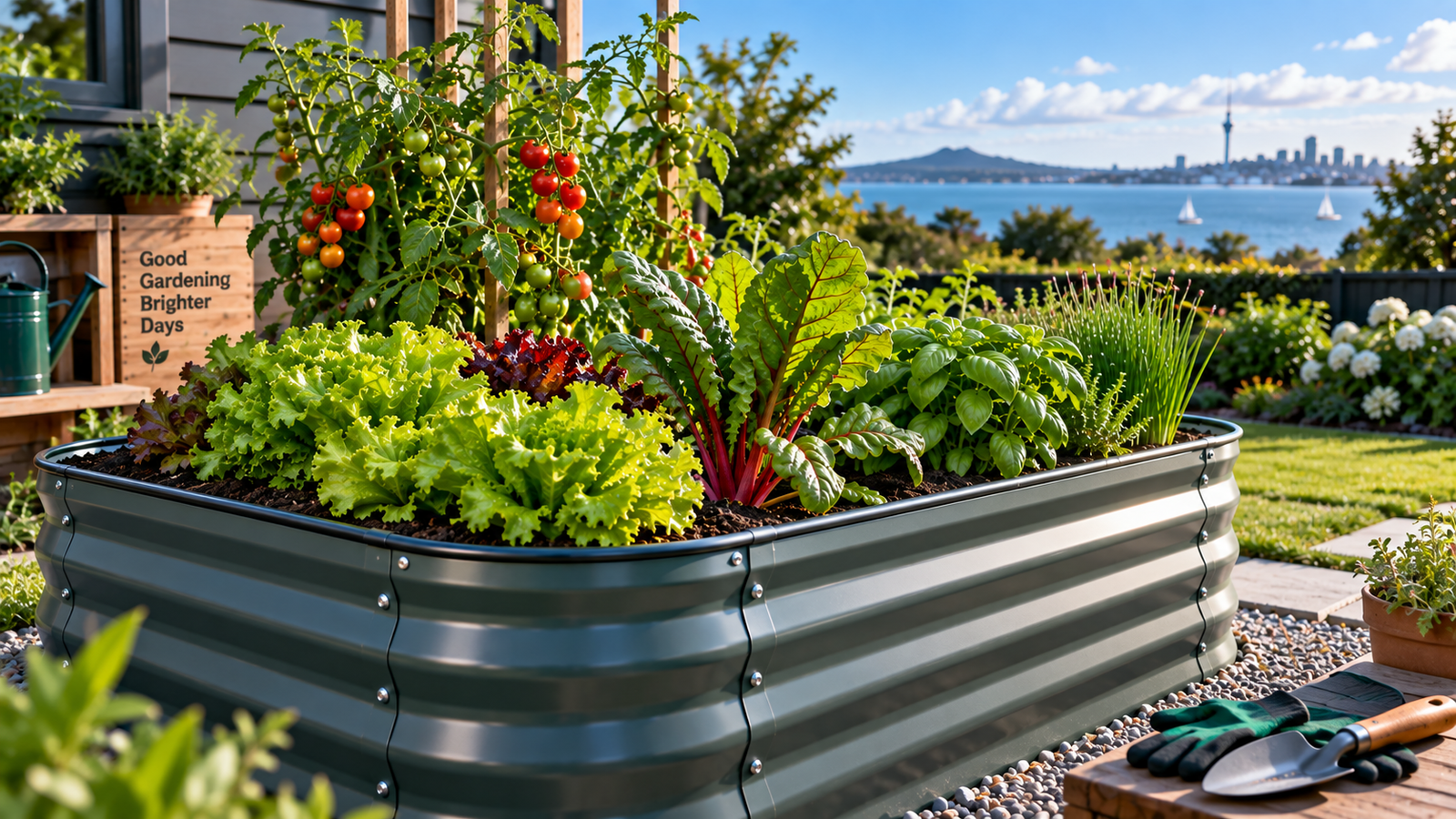
Metal raised garden beds NZ gardeners can buy range from lightweight galvanised kits to premium Aluzinc and heavy Corten steel planters. They may all contain steel, but their coatings, thickness, construction and price can be very different — and those differences matter in New Zealand conditions.
If you are still deciding between timber, metal and other materials, start with our broader Raised Garden Beds NZ guide. This guide focuses specifically on metal and steel options.
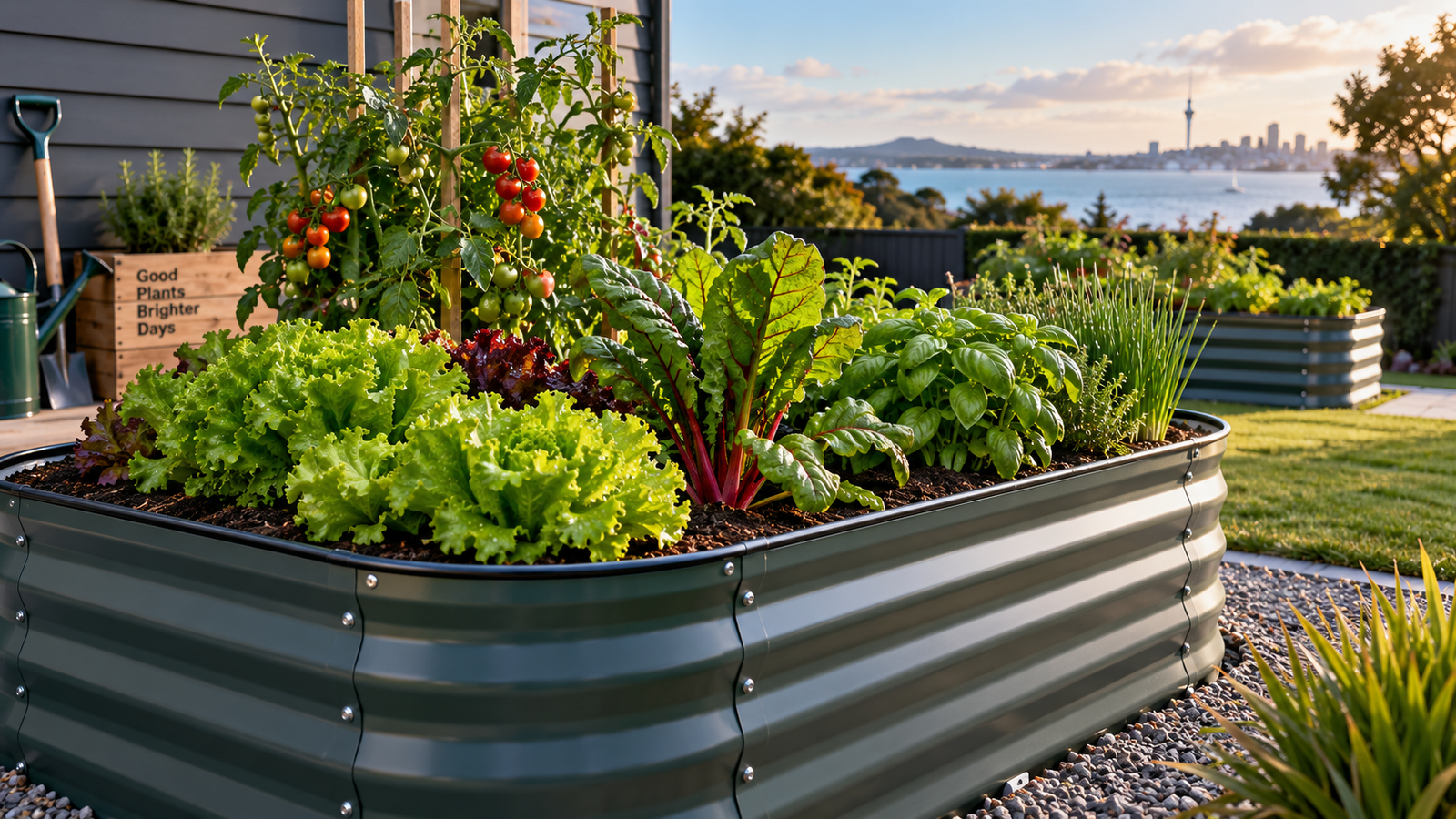
Types of metal raised garden beds in NZ
“Metal” is a broad shopping term. Most products are steel beds with some form of corrosion protection, while Corten uses a deliberately weathering steel surface.
Galvanised steel
Galvanised steel uses a zinc coating to protect the underlying steel. It is common in affordable kitset beds because the panels can be relatively light, transportable and quick to assemble. For a typical backyard vegetable garden, it is often the practical value option.
Quality still varies. Look beyond the word galvanised: panel rigidity, coating quality, fixings, bracing and edge finishing can affect both durability and ease of use.
Powder-coated steel
Powder coating creates a coloured finished surface and adds another barrier over the underlying metal system. Dark grey, green and wood-look finishes can integrate neatly into residential gardens.
A coating is not indestructible. Scratches and damaged edges can become weak points, so inspect panels during assembly and follow the maker’s instructions for damaged finishes.
Aluzinc steel
Aluzinc uses an aluminium-zinc alloy coating. Premium modular systems sold in New Zealand combine it with powder coating, stainless-steel fasteners, rolled upper edges and, on larger configurations, bracing.
Corten / weathering steel
Corten is designed to develop a rust-coloured weathering layer. Its orange-brown patina is a major reason it appears in contemporary landscape design. It can also be substantially heavier and more expensive than thin kitset beds.
For context, one current NZ Corten bed uses 2 mm steel and weighs 36 kg at 120 × 40 × 40 cm — a very different product from a lightweight bolt-together kit.
Metal raised bed comparison
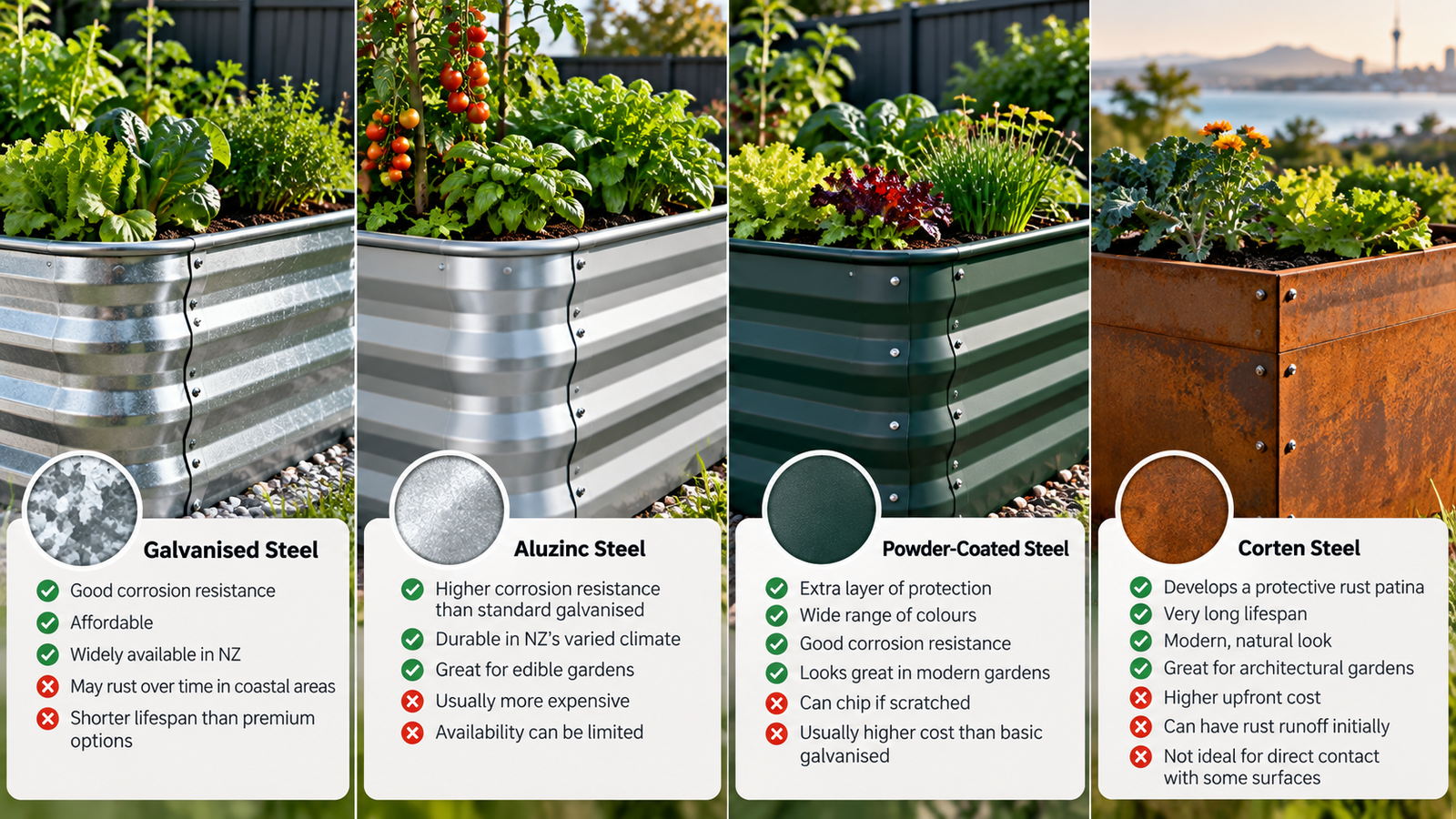
| Type | Best for | Strength | Watch for |
|---|---|---|---|
| Galvanised steel | Budget-conscious gardens | Value, low weight | Quality varies |
| Powder-coated steel | Visible residential gardens | Clean coloured finish | Coating damage |
| Aluzinc | Premium modular beds | Upgraded coated-steel system | Higher price |
| Corten | Architectural landscapes | Patina, substantial construction | Cost, weight, rust runoff |
Pros and cons of steel raised garden beds
Advantages
- Low routine maintenance: no regular timber staining is normally required.
- Kitset convenience: many systems arrive as panels that bolt together.
- Height choices: tall beds can reduce bending and provide a deep contained growing zone.
- Thin walls: more internal growing area than thick sleepers at the same outside dimensions.
- Design choice: coloured coatings, galvanised finishes and Corten create very different looks.
Disadvantages
- Thin long panels may bow if the system lacks suitable bracing.
- Protective finishes can be damaged during transport, assembly or gardening.
- Corten can release rust-coloured runoff while weathering.
- Premium systems can cost several times more than entry-level kits.
- Metal surfaces in direct sun can become hot to touch.
Are galvanised steel raised beds safe for vegetables?
A galvanised surface uses zinc as its protective coating. Zinc is also a naturally occurring element and an essential plant micronutrient, although excessive concentrations of any metal in soil are undesirable.
For home gardeners, the practical approach is to buy a reputable product designed for growing plants, maintain its protective surface, use suitable garden soil and avoid repurposing unidentified painted, industrial or contaminated sheet metal.
Some manufacturers explicitly market their coated steel beds as suitable for food growing. That is useful product information, but it should not be converted into an independent scientific guarantee for every metal bed.
Do metal raised garden beds get too hot?
Metal exposed to direct sunlight can heat quickly, especially a dark surface. That does not mean the whole soil volume reaches the same temperature. Soil mass, moisture, mulch, bed size, wind, orientation and sun exposure all influence the root zone.
Raised beds can warm earlier than surrounding ground, but they can also lose moisture faster during hot, dry weather. Manage the growing environment rather than judging the bed only by how hot its wall feels.
- Mulch to reduce moisture loss.
- Water according to soil moisture rather than a fixed calendar.
- Avoid allowing shallow beds to dry completely in hot spells.
- Consider lighter finishes where intense afternoon sun is a concern.
- Match crop position to the site’s microclimate.
Will steel raised garden beds rust in New Zealand?
Exposure matters. Galvanised and alloy-coated systems use protective coatings to slow corrosion; Corten is intentionally designed to weather at its surface. New Zealand gardens range from sheltered inland sites to salt-exposed coastal properties, and salt can make conditions more aggressive for metals.
A current NZ retailer selling Corten beds specifically warns that sea air can accelerate the patina process and recommends removing excess salt build-up.
Corten runoff
During early weathering, Corten can produce rust-coloured runoff. The same retailer advises customers to expect some rust bleeding during roughly the first 3–12 months, especially after rain. This matters beside pale concrete, pavers or other porous finishes that may stain.
What to look for before buying
1. Material and coating
Check whether the product is galvanised, powder-coated, Aluzinc or weathering steel. “Metal” alone tells you very little.
2. Height and soil volume
Taller beds reduce bending but require much more fill. One premium 970 mm diameter × 740 mm high round bed sold in NZ lists about 0.55 m³ of volume; large tall configurations can exceed 2 m³. Calculate fill before buying.
3. Width and reach
Keep the centre reachable without stepping into the growing soil. Beds accessed from one side should generally be narrower than those accessible from both sides.
4. Bracing
Long or tall beds carry substantial outward soil pressure. Look for cross-bracing or a structural system designed to control bowing.
5. Top edge
Rolled edges or purpose-made safety strips are preferable to exposed sharp sheet-metal edges, especially beside busy paths or around children.
6. Fasteners
Check the supplied hardware and replacement availability. Some premium systems use stainless-steel nuts and bolts.
7. Warranty and coastal conditions
Do not assume “rust resistant” means rust-proof everywhere. Coastal gardeners should check for distance limits, cleaning requirements and warranty exclusions.
How to fill a metal raised garden bed
One of the easiest costs to underestimate is the growing medium. A tall steel bed can hold a surprisingly large volume, so it is worth calculating the space before buying bags of soil.
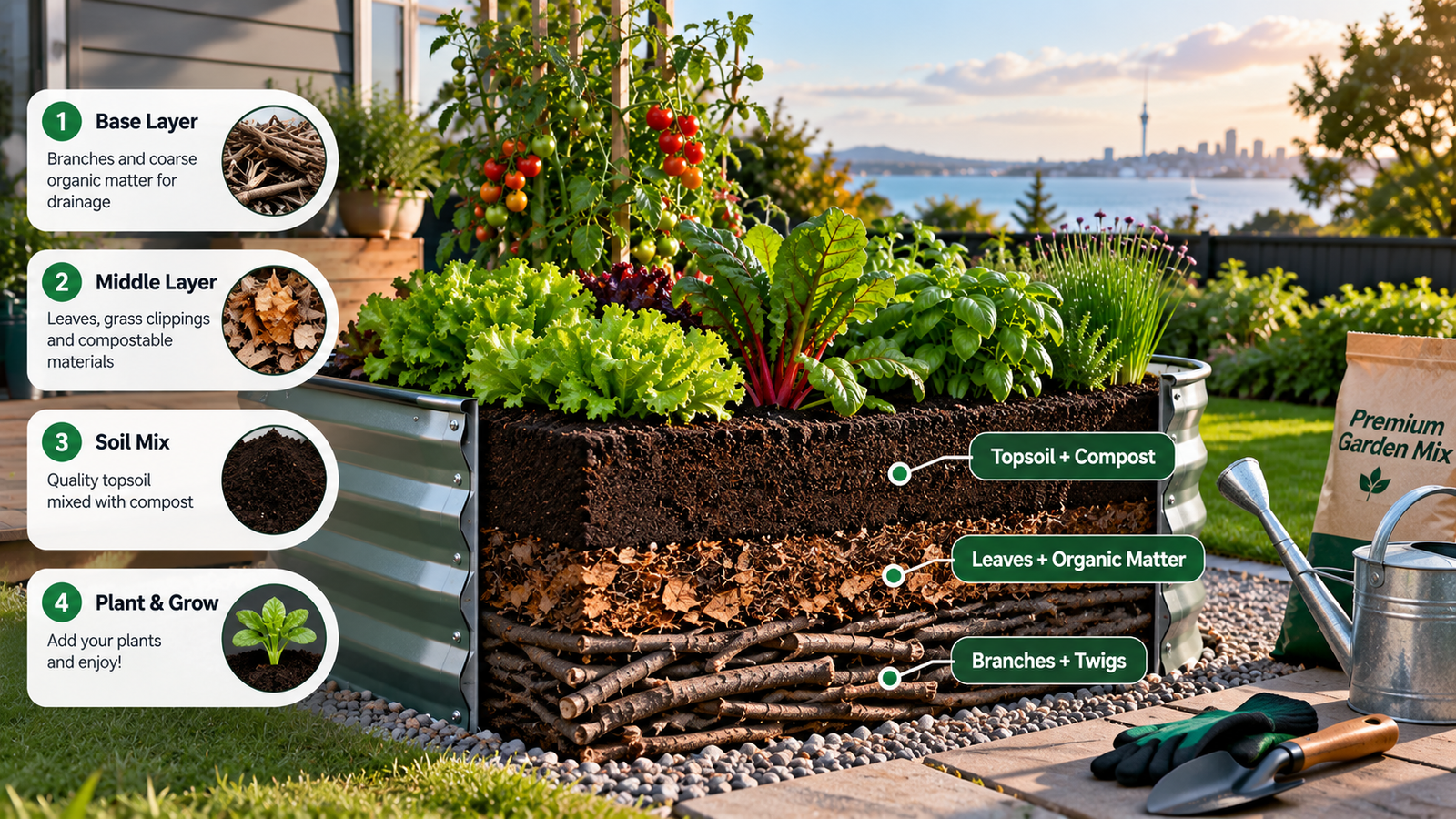
For a shallow bed, filling the full depth with a suitable garden or vegetable mix is the simplest approach. For a much taller bed, some gardeners reduce the amount of premium mix required by using coarse organic material in the lower section and keeping the best-quality growing medium in the active root zone.
Also remember that organic lower layers can settle as they decompose, so the soil level may need topping up over time. If you want a deeper explanation of soil blends and filling methods, that is better handled in a dedicated raised-bed soil guide rather than turning this material guide into a second article on the same search intent.
How much do metal raised garden beds cost in NZ?
Prices vary dramatically by size and construction. In a September 2026 snapshot, a major NZ retailer listed compact raised beds from about NZ$49 and common 120 cm formats around NZ$79–89. Its 2 mm Corten examples were NZ$269 for 120 × 40 × 40 cm and NZ$329 for 120 × 90 × 40 cm. A premium medium-tall Aluzinc system from another NZ seller was listed at NZ$389.
| Segment | Observed examples | Typical reason to choose |
|---|---|---|
| Entry-level steel | From ~NZ$49 | Simple budget setup |
| Common steel/coated bed | ~NZ$79–89 | Everyday backyard use |
| Premium modular coated steel | ~NZ$300–400+ | Height, configurations, construction |
| Corten examples | ~NZ$269–329 | Heavy steel and architectural finish |
These are examples checked in September 2026, not permanent market ranges. Promotions, sizes and availability change.
Is Corten worth the extra money?
For vegetable production alone, usually not. A cheaper, well-made galvanised or coated bed can perform the core job of containing productive soil. Corten makes more sense when the bed is also a permanent landscape feature and its weathered appearance is part of the design.
Metal vs timber raised garden beds
| Factor | Metal | Timber |
|---|---|---|
| Look | Modern to architectural | Natural/traditional |
| Wall thickness | Thin | Thicker |
| DIY modification | Kit-dependent | Easy to cut/customise |
| Routine finishing | Generally low | Depends on timber/finish |
| Key durability issue | Coating and corrosion exposure | Decay and treatment |
Neither material wins universally. Timber suits custom construction and a natural look; steel suits thin walls, kitset assembly and low routine finishing. See our main raised garden bed guide for the wider material comparison.
Common mistakes
- Buying on colour without checking the material/coating.
- Ignoring the cost and volume of soil needed.
- Choosing a long, tall bed without adequate bracing.
- Putting fresh Corten beside stain-sensitive paving.
- Assuming corrosion-resistant means corrosion-proof.
- Using unidentified scrap metal for food-growing beds.
- Choosing a bed too wide to reach comfortably.
FAQ
What is the best metal for raised garden beds in NZ?
For many households, galvanised or quality coated steel offers the strongest balance of cost, availability and low maintenance. Aluzinc suits premium modular systems; Corten makes sense when its architectural weathered appearance is a priority.
Is galvanised steel suitable for a vegetable garden?
Purpose-made galvanised beds are widely sold for vegetable growing. Choose a reputable garden product, maintain its coating and follow its instructions rather than using unidentified industrial metal.
Does Corten steel keep rusting?
Weathering steel is intended to form a rust-like patina. Its behaviour depends on environmental exposure, and coastal salt can complicate weathering. Follow the supplier’s siting and maintenance guidance.
Do I need to line a metal raised bed?
Not automatically. It depends on the product, base and intended use. Avoid adding an impermeable liner that traps water unless the system is designed for it; drainage remains essential.
How long will a steel raised bed last?
There is no responsible universal number. Steel specification, coating condition, drainage, scratches, soil chemistry, coastal exposure and construction all influence service life.
Verdict
For most Kiwi gardeners, a quality galvanised or coated steel bed is the sensible starting point. It combines low maintenance, straightforward assembly and competitive pricing. Move to premium Aluzinc when modularity, height and construction justify the cost. Choose Corten when the bed is as much a landscape feature as a growing container.
Match the coating, structure, size and warranty to your site — particularly where salt-laden coastal air is a factor.
Sources & further reading
This guide was researched using current New Zealand product specifications and pricing from Birdies Garden Products NZ and Trade Tested NZ. Product-specific durability and food-growing claims are treated as manufacturer claims rather than independent guarantees. Prices were checked in September 2026 and may change.
Related Articles
1 Comment
[…] masonry or other suitable materials. If you’re considering a durable metal option, see our guide to metal raised garden beds in NZ for a closer look at the main choices for New Zealand […]