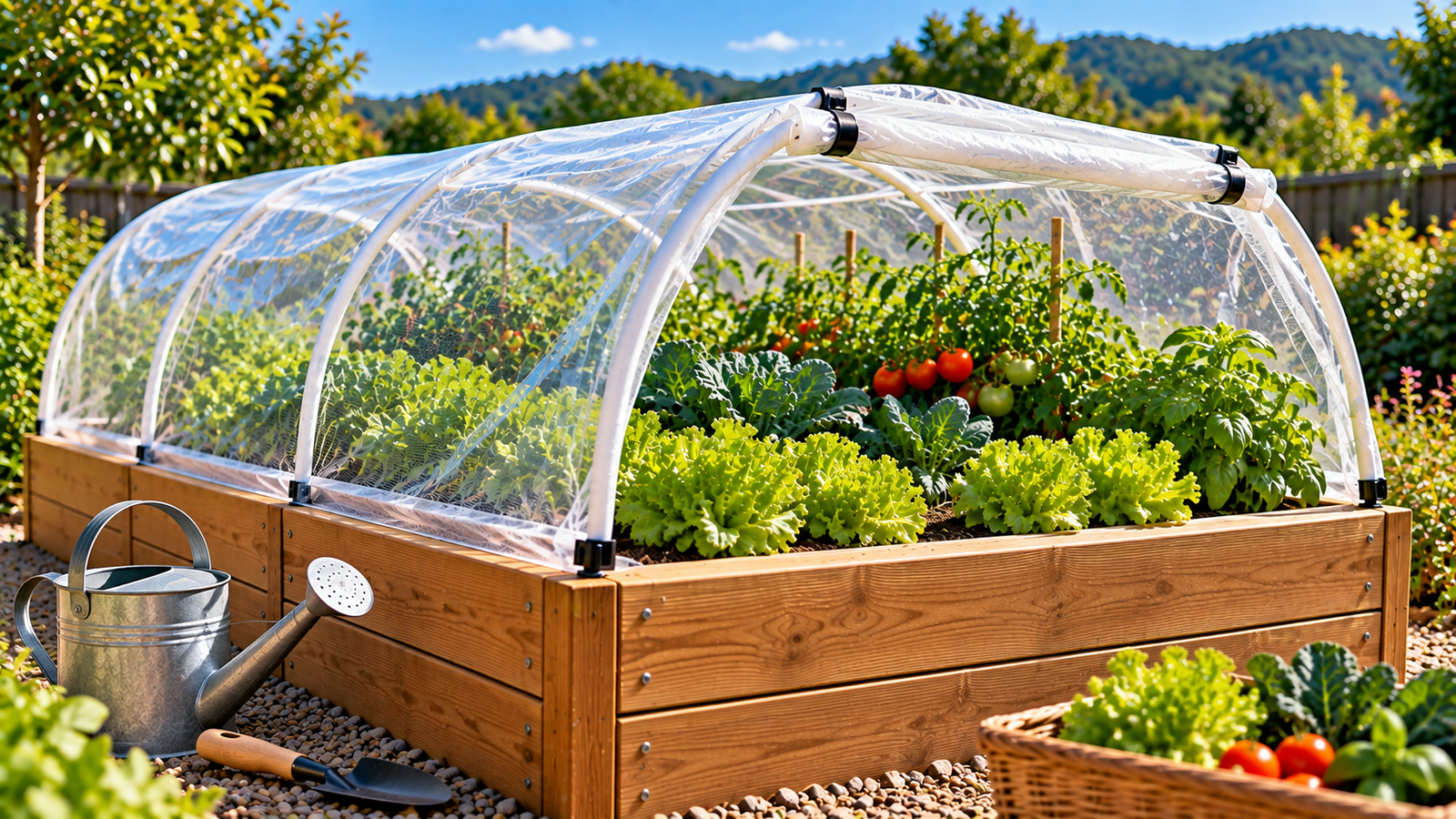
A raised garden bed with cover can solve several very different problems in a New Zealand vegetable garden — but only if you use the right cover. Fine insect mesh, frost cloth, bird netting and clear plastic may look similar when stretched over hoops, yet they do very different jobs.
The best setup therefore isn’t simply a raised bed with something thrown over the top. Start with the problem you are trying to solve, then choose the cover and supporting frame around it.
Why put a cover over a raised garden bed?
A cover turns an ordinary raised bed into a more controllable growing space. Depending on the material, it can exclude insects, discourage birds, reduce frost exposure or create a warmer microclimate around young plants.
That flexibility is particularly useful because New Zealand gardens don’t share one climate. Frost exposure, wind, rainfall and pest pressure can vary considerably between regions — and even between two parts of the same property.
The frame itself can stay in place while the covering changes through the season. That is often more useful than building a permanent enclosure designed to solve only one problem.
Which raised garden bed cover should you use?
| Cover | Best for | Main advantage | Watch for |
|---|---|---|---|
| Fine insect mesh | Flying insect pests | Physical barrier without relying on sprays | Must be properly sealed; can exclude pollinators |
| Frost cloth | Cold and frost | Helps protect tender plants on cold nights | Not a substitute for fine pest mesh |
| Bird netting | Bird damage | Protects vulnerable seedlings and crops | Needs secure and responsible installation |
| Clear plastic / cloche | Warming soil and protected growing | Creates a warmer microclimate | Can overheat without ventilation |
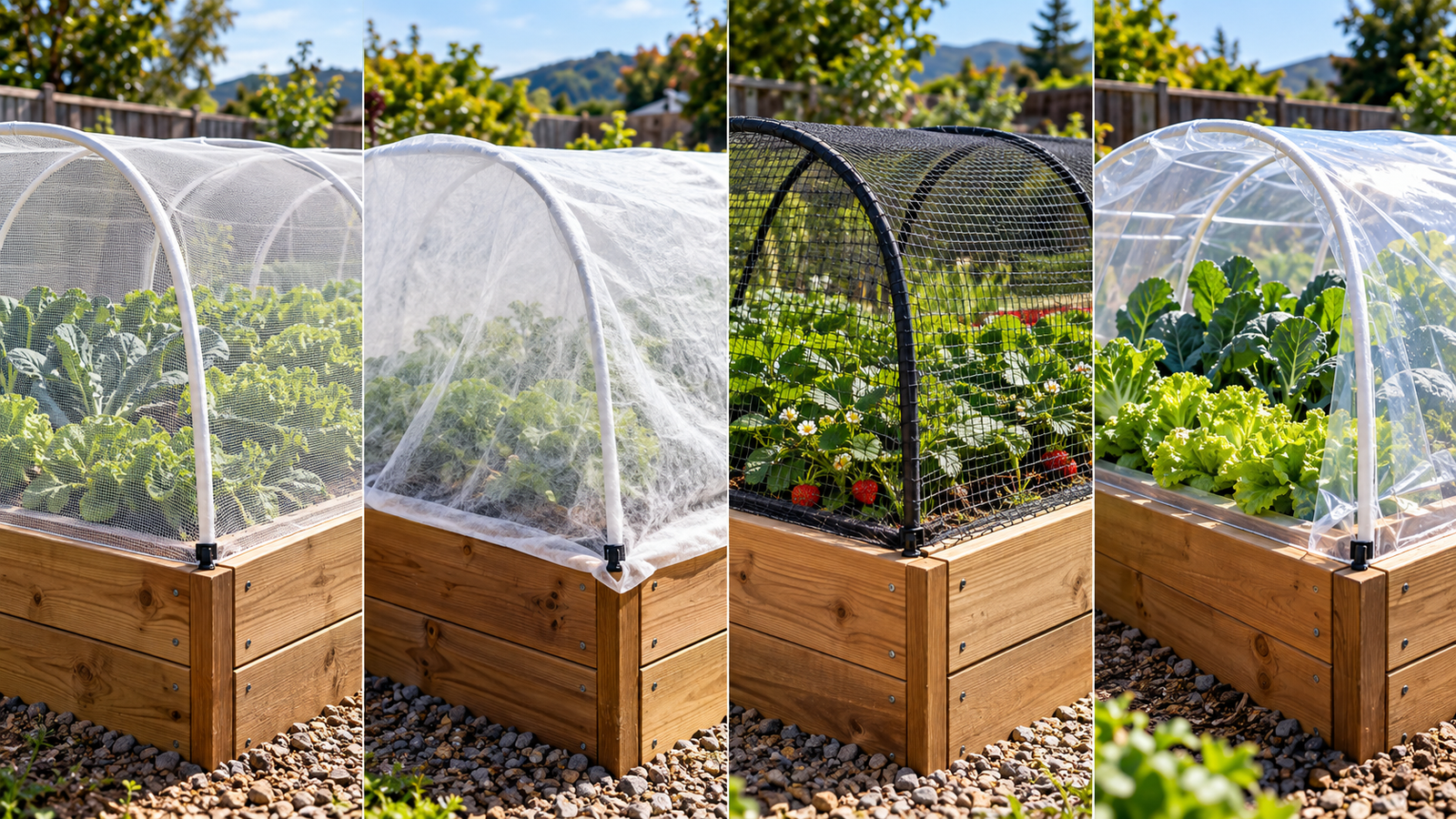
The biggest mistake is expecting one material to do everything. Pest-control mesh and frost cloth, for example, are designed for different jobs. Fine mesh is primarily a physical barrier against pests, while frost cloth is intended to provide protection during cold conditions.
Fine insect mesh: best for pest exclusion
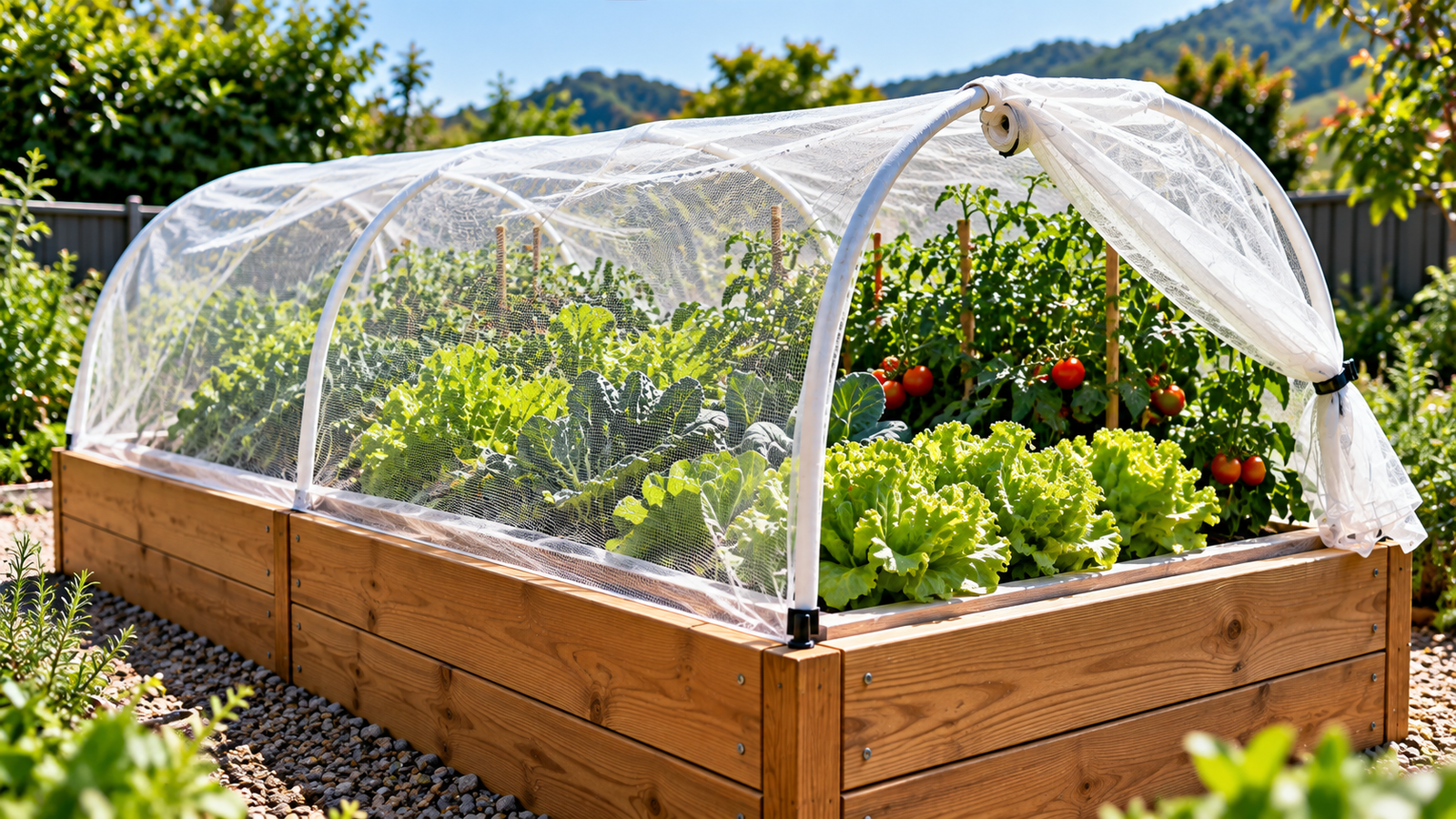
If caterpillars, psyllids and other insect pests are the problem, fine mesh is one of the most useful covers available for a vegetable bed.
The principle is simple: create a physical barrier between the crop and the pest. But the effectiveness depends heavily on installation.
The mesh needs to completely protect the crop, including around the perimeter. If insects can enter beneath an unsecured edge, the cover loses much of its purpose.
When should you install insect mesh?
Ideally, install it before the target pest reaches the crop. Covering plants after pests or eggs are already underneath can simply trap the problem inside.
Inspect seedlings and soil, position the hoops, drape the mesh over the entire growing area and secure the perimeter.
Frost cloth: best for cold nights
Frost cloth serves a different purpose. If your raised bed contains tender seedlings or frost-sensitive vegetables, it can provide temporary protection when temperatures fall.
A tent-like or hoop frame keeps the material above the growing area and makes the cover easier to install when cold conditions are expected.
Do you leave frost cloth on all day?
Not necessarily. Think of it as weather protection rather than a permanent roof. Conditions change through the day, so access, airflow and temperature still need attention.
For gardeners in frost-prone areas, a removable system is much more flexible than permanently attaching one material to the frame.
Bird netting: useful when birds are the real problem
Not every damaged seedling has an insect problem. Birds can disturb newly planted beds, target seedlings and go after developing crops.
In this situation, you usually don’t need ultra-fine insect mesh simply to create a bird barrier. A dedicated crop-protection net can be supported over hoops or a taller frame.
Keep the netting properly tensioned and maintained rather than leaving loose material around the garden. The objective is a deliberate physical barrier, not a tangled layer resting directly over plants.
Clear plastic and cloches: useful, but ventilation matters
A transparent cloche works differently again. Instead of primarily excluding a pest, it modifies the growing environment.
A clear cover can help create a warmer protected space around seedlings and vegetables. But that extra warmth introduces another consideration: ventilation.
Sunshine can increase temperatures rapidly beneath a transparent cover. A setup that helps on a cold morning can become excessively warm later in the day.
Use transparent material when light matters
If you are creating a protected growing tunnel rather than simply covering plants overnight, the crop still needs adequate light. Transparent material allows light into the growing area while providing a physical layer between the plants and outside conditions.
What should support the cover?
For most home raised beds, you don’t need an elaborate permanent structure. Simple hoops create enough clearance to keep material above seedlings and provide useful growing space beneath the cover.
Depending on the bed design, gardeners commonly use flexible hoops or a simple lightweight frame secured to the sides of the bed.
The important considerations are:
- Height: allow enough room for the crop you intend to grow.
- Wind resistance: exposed gardens need stronger attachment points.
- Access: you should be able to uncover part of the bed without dismantling everything.
- Smooth surfaces: avoid sharp edges that can tear cloth or mesh.
- Cover changes: ideally the same frame should accept mesh, frost cloth or another seasonal cover.
If you’re building the bed itself from timber, our Best Timber for Raised Garden Beds NZ guide compares the main timber options and their trade-offs.
How to make a simple covered raised garden bed
A useful cover system doesn’t need to be complicated. The goal is to create a structure that is secure enough to protect the crop but simple enough to open whenever you need to water, inspect or harvest.
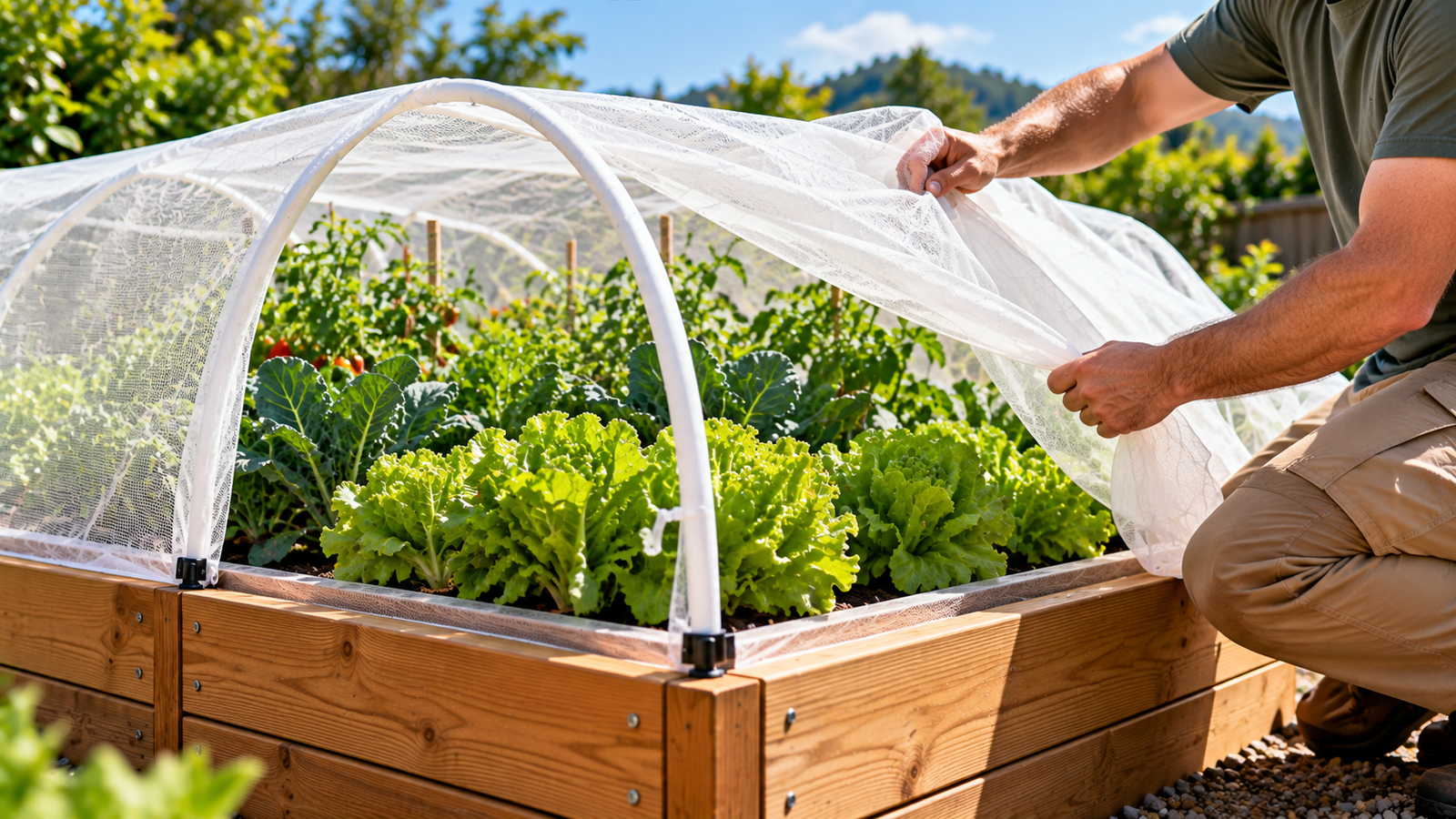
- Identify the problem first.
Decide whether you are trying to stop insects, birds, frost or cold weather. Don’t buy the covering before answering this. - Measure the bed.
Measure width and length, then allow extra material to travel over the hoops and reach the edges securely. - Install the hoops.
Space them closely enough that the cover won’t collapse heavily between supports or flap excessively in wind. - Drape the correct cover.
Keep it reasonably taut without stretching lightweight material to the point of damage. - Secure the perimeter.
This is particularly important for insect exclusion. Gaps around the edges can undermine the entire system. - Create easy access.
Use clips or another removable fixing method so watering, harvesting, inspection and ventilation don’t become frustrating. - Check the system regularly.
Look for tears, gaps, overheating, trapped pests and plants beginning to outgrow the structure.
Should the cover touch the plants?
It depends on the material and crop. Some lightweight mesh can rest over sturdy crops, while young or delicate plants benefit from a supporting structure.
For a general-purpose home setup, hoops are particularly useful because they create working space around the crop, reduce abrasion and make it easier to swap materials.
What about watering under a cover?
Many fine mesh covers allow rain and irrigation water to pass through, although you should always check the specifications of the product you are using.
Clear plastic is different because it acts as a physical rain barrier. You will need to monitor soil moisture and provide water beneath the cover.
Raised beds can already dry more quickly than surrounding ground in some situations, so don’t assume that protected automatically means moist.
7 common raised-bed cover mistakes
1. Buying the cover before identifying the problem
Fine insect mesh, frost cloth and plastic are not interchangeable. Start with the purpose.
2. Leaving gaps around insect mesh
A beautiful mesh tunnel with an open edge is an invitation for pests to enter.
3. Forgetting about pollinators
A barrier that excludes unwanted insects may also exclude beneficial ones.
4. Leaving clear plastic closed on warm days
Protected spaces can heat quickly. Make ventilation part of the design from day one.
5. Building hoops too low
The frame needs to accommodate the mature crop, not just today’s seedlings.
6. Ignoring wind
New Zealand gardens can be exposed. Loose covers can flap, tear or disappear entirely if poorly secured.
7. Making access difficult
If checking the plants requires dismantling the structure, routine maintenance becomes annoying. Build in easy access.
Root & Yard verdict
For the most versatile raised garden bed with cover, we prefer a permanent but simple hoop frame with interchangeable coverings. Use fine mesh when insect pressure is the issue, frost cloth for cold nights, and transparent cloche material when you deliberately want a warmer protected environment.
The key isn’t finding one “best” cover. It’s building a system that lets you use the right cover at the right time.
Frequently asked questions
What is the best cover for a raised vegetable garden?
There isn’t one universal best cover. Fine mesh is best when insect exclusion is the priority, frost cloth is designed for cold protection, bird netting targets birds, and transparent cloche material can create a warmer growing environment.
Does insect mesh protect plants from frost?
Insect mesh is primarily intended as a physical pest barrier and shouldn’t be treated as a replacement for proper frost protection. When frost is the main concern, choose material designed for cold protection.
Can I water through insect mesh?
Many crop meshes allow rain and irrigation through. Check the specifications of the particular product you buy, as materials and mesh sizes vary.
Can I leave my raised garden bed covered all the time?
That depends on the cover and crop. Insect mesh may remain in place for extended periods where appropriate, but pollination requirements need consideration. Plastic cloches require temperature and ventilation management, while temporary frost covers can be removed when protection isn’t required.
Will mesh stop pollinators?
Fine pest mesh can exclude pollinating insects as effectively as pests. Crops that rely on insect pollination may require the cover to be removed during flowering or another pollination strategy.
Do I need hoops for a raised garden bed cover?
Not always, but hoops make the system much easier to manage. They keep material above delicate crops, create growing room and allow you to swap between different covers.
Final thoughts
A raised garden bed with cover becomes far more useful when the covering system is designed around changing conditions rather than one permanent material.
For many Kiwi vegetable gardeners, the most practical solution is a simple raised bed with reusable hoops. Fine insect mesh can go on when pest exclusion matters. Frost cloth can replace it during cold weather. A transparent cover can create a temporary cloche when extra warmth is genuinely useful.
Whatever system you choose, keep three things in mind: access, airflow and the actual problem you’re trying to solve. A well-designed cover should make growing easier — not turn the raised bed into something you have to fight every time you water, inspect or harvest your vegetables.
Continue planning your raised garden
Start with our complete Raised Garden Beds NZ guide for sizing, materials, drainage and soil, then see Best Timber for Raised Garden Beds NZ if you’re building the frame yourself.
BHU Future Farming Centre — guidance on mesh crop covers and physical pest exclusion.
Royal New Zealand Institute of Horticulture — guidance on protecting vegetable planter boxes from frost.
Tui Garden — New Zealand gardening guidance on cloches, protected growing and ventilation.
Related Articles

1 Comment
[…] a covered bed as well? See our raised garden bed with cover guide for options to protect plants from pests and […]