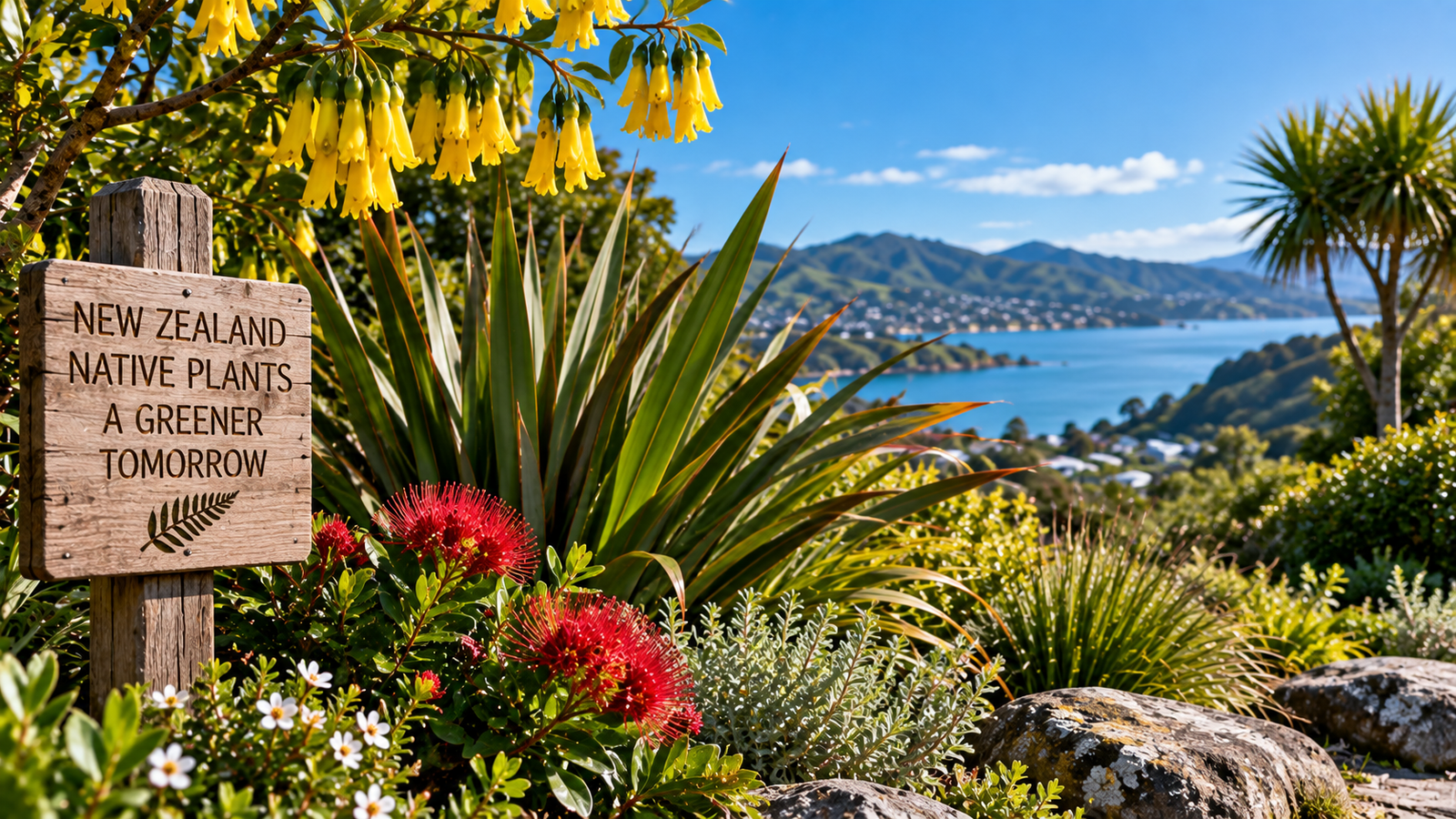
New Zealand native plants can make a garden feel as though it truly belongs in the landscape rather than simply sitting on top of it. Better still, many natives can become remarkably resilient once established, while also providing food and shelter for local wildlife.
But “native” does not automatically mean “plant it anywhere and forget about it”. New Zealand stretches across very different climates, and a plant that thrives in a mild coastal garden may struggle with hard inland frosts or poorly drained soil.
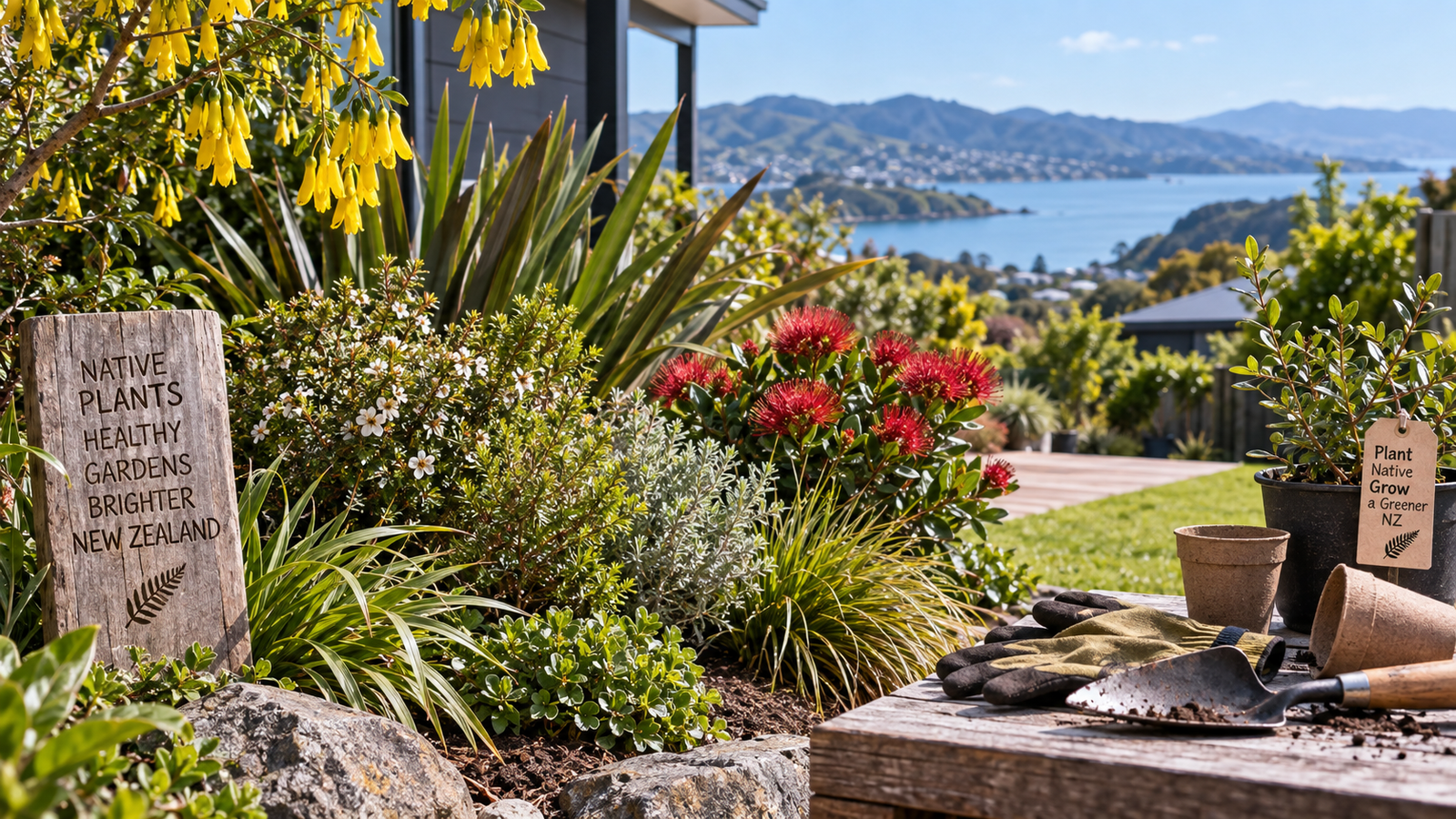
15 native plants for New Zealand gardens at a glance
| Plant | Best for | Typical preference | Maintenance |
|---|---|---|---|
| Kōwhai | Flowers & native birds | Sunny, well-drained sites | Low–moderate |
| Harakeke | Structure & wildlife | Sun; many forms tolerate moisture | Low |
| Koromiko / Hebe | Small gardens & borders | Varies by species | Low |
| Mānuka | Pollinators & exposed gardens | Highly adaptable | Low |
| Kānuka | Larger naturalistic gardens | Well-drained ground | Low |
| Tī kōuka | Architectural height | Adaptable | Low |
| Coprosma | Hedges & tough sites | Species dependent | Low |
| Kāpuka | Screening & hedging | Well-drained sites | Low |
| Kawakawa | Shady gardens | Sheltered/semi-shade | Low |
| Pōhutukawa | Coastal character | Sun & suitable mild sites | Low once established |
| Rātā | Flowers & native character | Depends on species | Moderate |
| Horoeka | Architectural interest | Suitable sheltered sites | Low |
| Rengarenga | Groundcover & shade | Part shade/shelter | Low |
| Muehlenbeckia | Groundcover & informal planting | Varies | Low |
| Chatham Island forget-me-not | Feature foliage & flowers | Cool, moist, sheltered conditions | Moderate |
Growing conditions vary between species and cultivars. Treat this table as a starting point rather than a substitute for checking the requirements of the exact plant you buy.
The 15 best native plants for a New Zealand garden
1. Kōwhai
Few plants say New Zealand quite like a kōwhai in flower. Its bright yellow spring display is spectacular, but the tree is also valuable to native wildlife. Tūī, korimako/bellbirds, kākā and kererū can all benefit from kōwhai.
There are several species rather than one universal kōwhai, so mature size can vary considerably. That makes checking the species particularly important before planting one beside a house, driveway or boundary.
2. Harakeke — New Zealand flax
Harakeke (Phormium tenax) provides strong vertical foliage and immediately gives a garden a distinctly New Zealand feel.
It is particularly useful where you want a substantial native plant without the canopy of a large tree. Flowering plants are also valuable in wildlife-friendly gardens.
3. Koromiko / native hebes
Native hebes — many now botanically classified within Veronica — are among the most useful groups for residential gardens because there is such a broad range of forms and sizes.
Compact varieties can work in borders and smaller urban sections where a full-sized native tree would simply be impractical.
4. Mānuka
Mānuka (Leptospermum scoparium) deserves its reputation as a tough native. Mature plants can tolerate a surprisingly broad range of conditions, including drought, strong wind, frost and even wetter ground.
Its flowers provide nectar and pollen for insects, giving mānuka a useful ecological role as well as ornamental value.
5. Kānuka
Kānuka may look similar to mānuka at first glance, but it is a different plant and can eventually become much larger.
It tolerates wind, drought and frost and performs across a range of soil types, although waterlogged ground is not ideal. Because of its potential mature size, kānuka generally makes more sense where there is room for it to develop naturally.
6. Tī kōuka — cabbage tree
Tī kōuka (Cordyline australis) is instantly recognisable and adds height without creating the same dense visual mass as many broad-canopied trees.
It is considered one of New Zealand’s hardy pioneering natives and can be an excellent choice for informal, naturalistic planting.
7. Coprosma
The genus Coprosma gives NZ gardeners a huge range of possibilities, from shrubs suitable for screening to lower-growing plants.
The important point is to shop by species and final size rather than simply buying something labelled “Coprosma”. Different species naturally occupy very different habitats.
8. Kāpuka — Griselinia
Kāpuka, particularly Griselinia littoralis, is a familiar choice where a dense green screen or hedge is wanted.
Its foliage provides a softer appearance than a fence and makes it useful for defining outdoor spaces while maintaining a planted feel.
9. Kawakawa
Not every part of a garden receives blazing sunshine. Kawakawa can be particularly useful in sheltered planting where a woodland-like feel is wanted.
Its heart-shaped leaves have tremendous character and work beautifully beneath taller planting.
10. Pōhutukawa
The iconic crimson-flowering pōhutukawa is an obvious candidate for a New Zealand coastal-style garden — but this is one plant where planning for the future really matters.
A full-sized tree needs genuine room. For an urban property, investigate appropriately sized cultivars rather than planting a potentially large tree in a space that cannot accommodate it.
11. Rātā
Native rātā can deliver extraordinary red flowers and strong New Zealand character. However, “rātā” covers different species with different habits and regional suitability.
This is therefore a plant to select deliberately rather than by appearance alone. Check the exact species and its requirements before purchasing.
12. Horoeka — lancewood
Horoeka is for gardeners who enjoy something a little unusual. Juvenile lancewoods have narrow, dramatic downward-pointing leaves and eventually transform considerably as they mature.
That changing form can make horoeka a fascinating architectural feature in a native planting scheme.
13. Rengarenga — New Zealand rock lily
Rengarenga (Arthropodium cirratum) is one of the most useful choices when you need a softer plant beneath shrubs or along a sheltered border.
Its strap-like foliage and sprays of pale flowers contrast nicely with heavier native shrubs and trees.
14. Muehlenbeckia
Muehlenbeckia can bring a loose, textural quality to native gardens and is useful where rigid formal planting is not the goal.
As with several plants on this list, different species have different growth habits. Confirm what you are buying before deciding where it belongs.
15. Chatham Island forget-me-not
For something dramatically different, the Chatham Island forget-me-not (Myosotidium hortensia) combines broad glossy foliage with striking flowers.
It is not the “plant anywhere” option on this list. It is much better treated as a feature plant for conditions that suit it, particularly where it can avoid excessive heat and drying.
Which native plants are best for small NZ gardens?
A small garden does not mean giving up on natives. It simply makes mature dimensions more important.
Compact koromiko/hebes, smaller Coprosma selections, rengarenga and appropriately sized cultivars can provide native character without overwhelming the section.
Which natives help attract birds?
If bringing more life into the garden is one of your goals, choose plants for what they provide throughout the year rather than flowers alone.
Kōwhai is particularly notable. Its flowers and foliage benefit native birds including tūī, korimako/bellbirds, kākā and kererū.
A diverse garden containing plants of different heights and flowering or fruiting periods is generally more useful than relying on a single “bird-friendly” species.
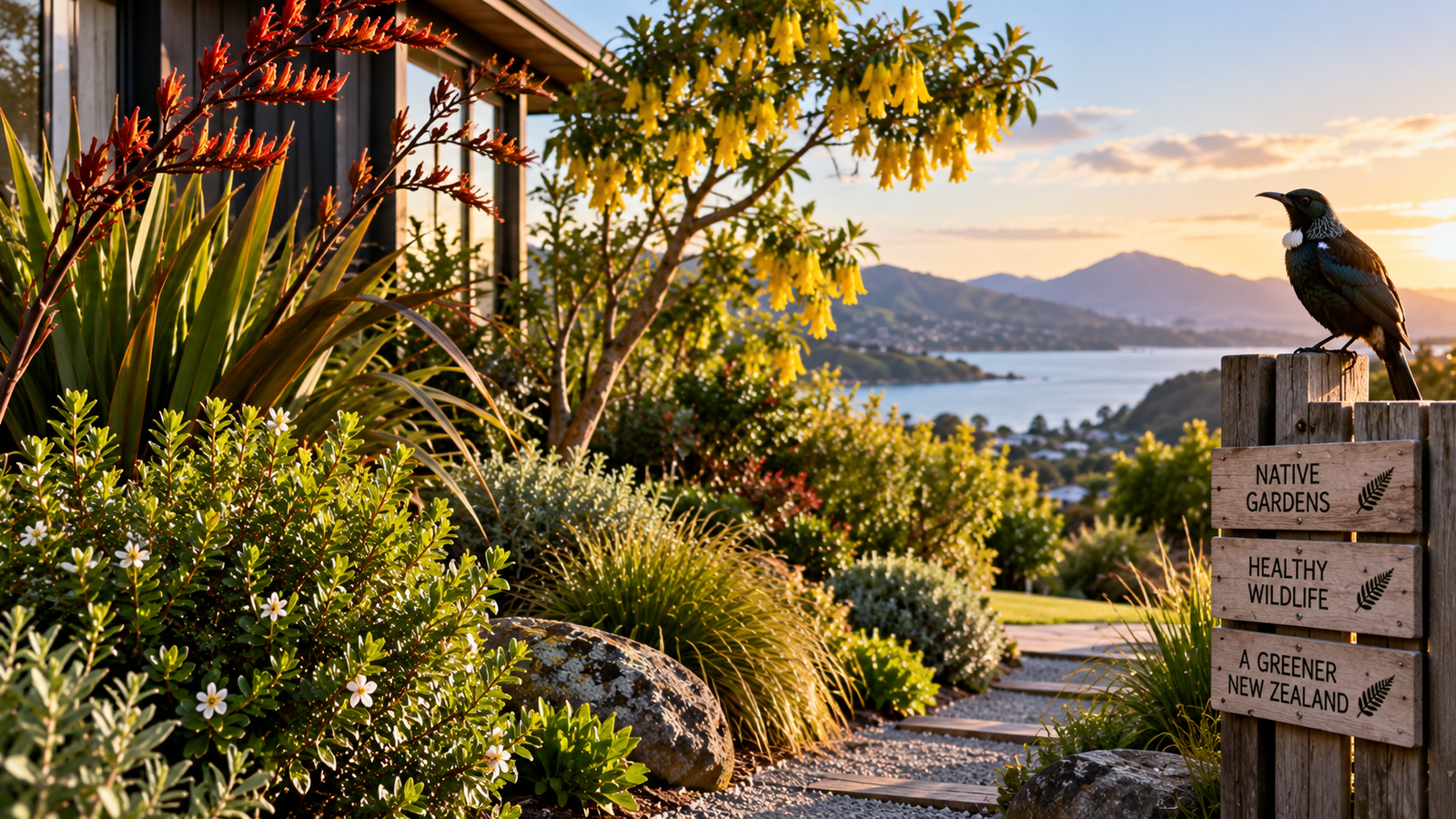
What about coastal or exposed NZ gardens?
Wind, salt exposure, drainage and summer dryness can completely change what succeeds in a coastal garden.
Mānuka is especially interesting for difficult conditions because established plants tolerate strong winds and drought. Kānuka is also tolerant of wind and drought, although it dislikes waterlogged soil.
The safest strategy is still to look at what grows naturally in your district and choose species suited to your exact site.
When is the best time to plant natives in New Zealand?
For general home-garden planting, the Department of Conservation recommends the cooler periods of April–May or August–September. Planting during hotter weather can dramatically increase watering requirements.
Regional climate still matters. A gardener dealing with hard frosts in Central Otago faces different conditions from someone gardening in Auckland or coastal Northland.
How to establish native plants successfully
Plant choice is only half the job. Good establishment can make the difference between a native that struggles for years and one that becomes largely self-sufficient.
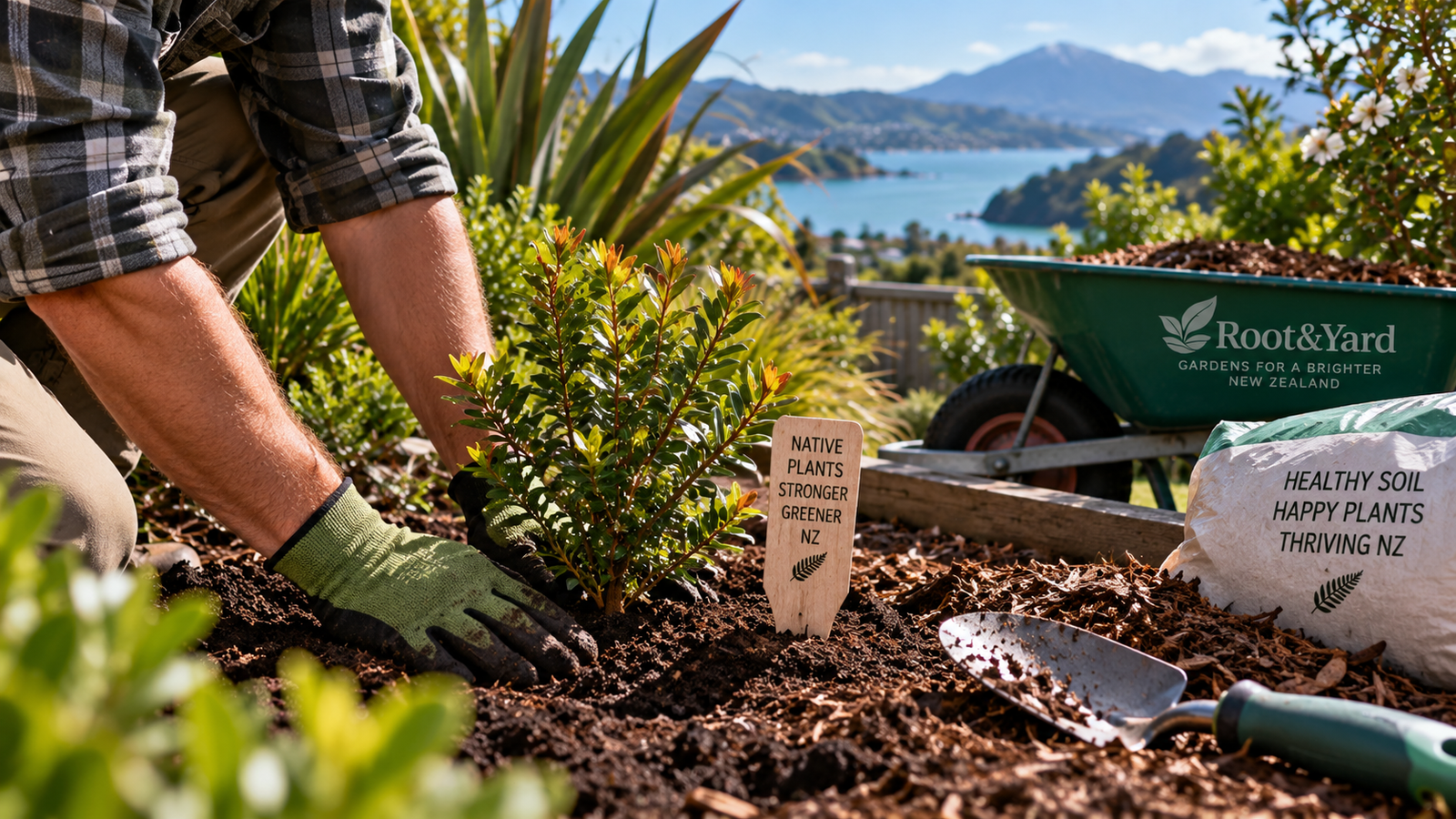
Prepare the area by controlling competing weeds, plant into moist but not saturated soil, water thoroughly after planting and use organic mulch to help conserve moisture.
The DOC recommends a mulch layer around native trees and shrubs while keeping the material away from the stems. Weed control remains particularly important during the establishment period.
How to choose the right NZ native plant
Before heading to the nursery, answer five questions:
- How much sun does the site receive?
- Does water drain freely or remain after heavy rain?
- How exposed is the site to wind or salt?
- How much space will the plant have in 5–10 years?
- Which native species naturally occur in your region?
That last question is particularly valuable. Locally appropriate native plants are often a much better starting point than selecting purely from a nationwide “best plants” list.
Are native plants really low maintenance?
They can be, but “native” and “zero maintenance” are not synonyms.
Young plants still need help establishing. Weed competition can rob them of moisture and nutrients, and watering may be necessary during dry periods. Some plants used as formal hedges will obviously require regular pruning.
The payoff comes later: a well-chosen plant growing in conditions that suit it can become considerably easier to manage once established.
Our verdict
The best native garden isn’t necessarily the one with the greatest number of species. It’s the one where the plants match the site.
For a beginner, hardy choices such as mānuka, tī kōuka and suitable Coprosma or koromiko can be excellent starting points. Kōwhai is particularly compelling when wildlife and spring colour are priorities, while rengarenga can solve smaller-scale and sheltered planting needs.
Start with your soil, climate, exposure and available space — then choose the plant. Do that, and a native garden can become both distinctly New Zealand and surprisingly easy to live with.
Related Articles
2 Comments
[…] frost risk or stressful weather unless there’s a clear reason. For indigenous species, our NZ native plants guide can help you plan what to grow before deciding how to maintain […]
[…] other seasonal projects, see our guide to native plants for New Zealand gardens and our ground cover plant […]