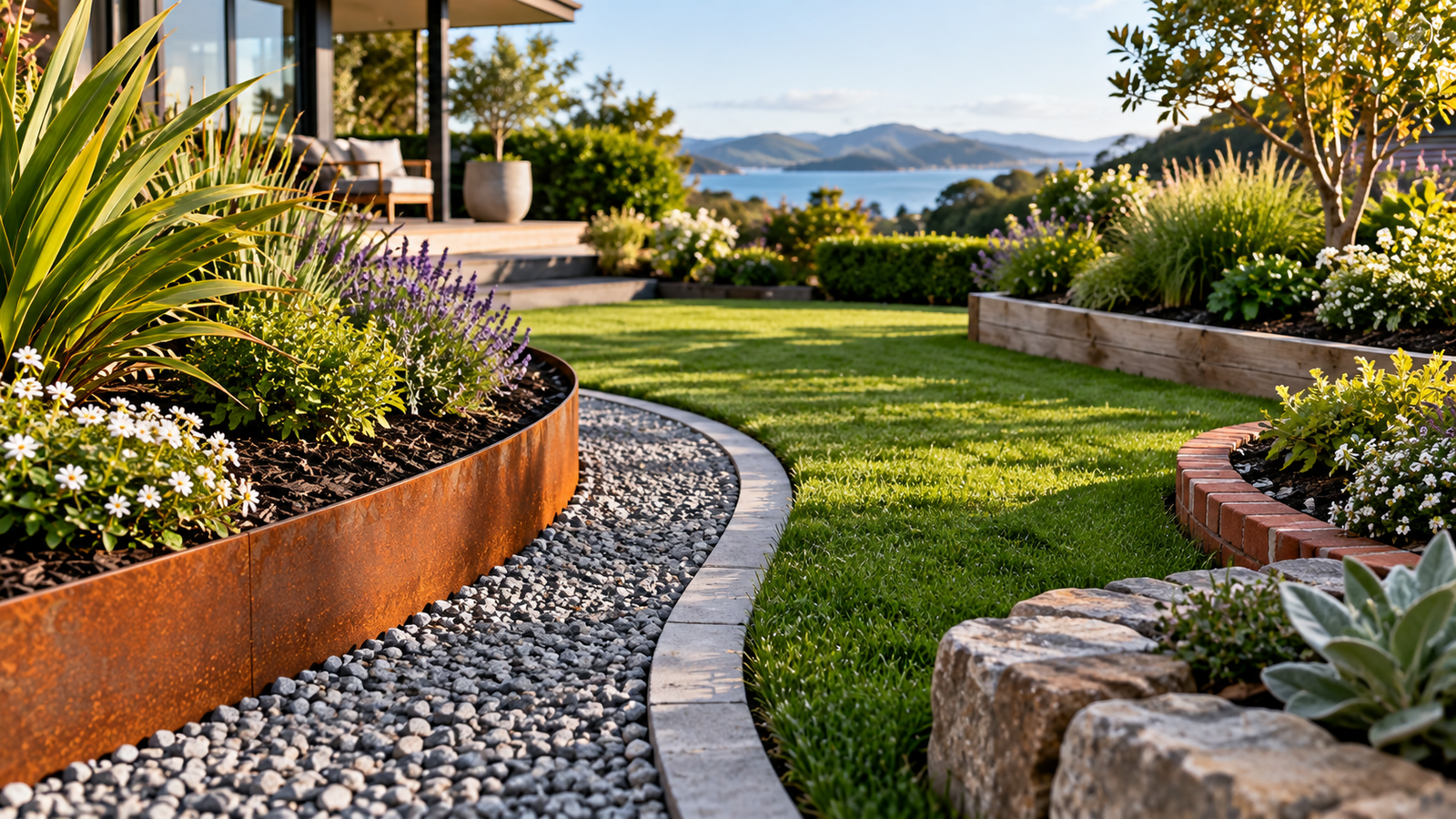
Garden Design · New Zealand Inspiration · Updated October 2026
A well-chosen garden edge can make an ordinary New Zealand backyard feel more intentional. It can frame a lawn, soften a path, highlight planting or simply stop mulch and gravel from spreading where they shouldn’t.
But not every garden needs the same border. A compact Auckland courtyard may suit slim black steel, while a relaxed rural garden might look better with timber, stone or a simple cut lawn edge.
These 15 garden edging ideas for NZ homes cover modern, traditional, budget-friendly and natural landscaping styles, with practical advice on where each idea works best.
Quick Answer
What Are the Best Garden Edging Ideas in NZ?
For modern gardens: black steel, recessed metal and neat concrete borders create clean lines.
For natural gardens: timber, stone and gently curved edges complement relaxed planting.
For budget DIY projects: a spade-cut lawn edge or suitable flexible edging can be practical starting points.
For easy mowing: a flush paver or concrete mowing strip may reduce trimming.
Choose a Garden Edging Style That Suits Your Home
Before choosing a material, look at the overall style of your garden. Edging is most effective when it feels connected to the house, pathways, planting and existing outdoor materials.
Choose thin steel, simple concrete or recessed edging with restrained colours and clean geometry.
Brick, stone and weathered timber can create a softer, established appearance.
Natural stone, weathering steel and broad curves can complement grasses and layered native planting.
Low-profile edging helps define compact spaces without making the garden feel crowded.
15 Garden Edging Ideas for New Zealand Gardens
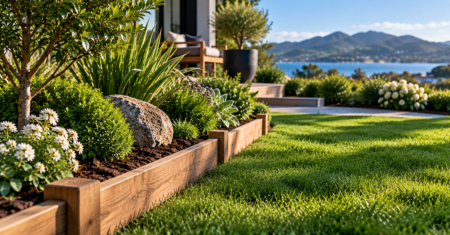
1. Natural Timber Edging for Straight Garden Beds
Timber is an easy way to introduce a warm, structured edge without making the garden look overly formal. It works especially well beside lawn, bark mulch and vegetable gardens.
Use straight lengths to define rectangular planting beds or run a tidy border alongside a fence. Timber also connects visually with decks, raised beds and other wooden garden structures.

Make it work: Keep the top line consistent, use suitable stakes or supports and choose timber specified for its exposure. In New Zealand, H4-treated timber is commonly used for ground-contact landscaping, but confirm the product’s intended use.
Watch out for: Timber deterioration in persistently damp ground and the difficulty of forming smooth, tight curves with rigid boards.
For more detail, see our timber garden edging guide.
2. Black Steel Edging for a Modern Lawn
Black steel edging creates a sharp separation between green lawn and planting. Because the profile can be visually slim, the eye focuses on the landscape rather than the edging material.
Use it around a rectangular lawn, alongside a gravel path or to define a modern planting bed with repeated grasses and shrubs.
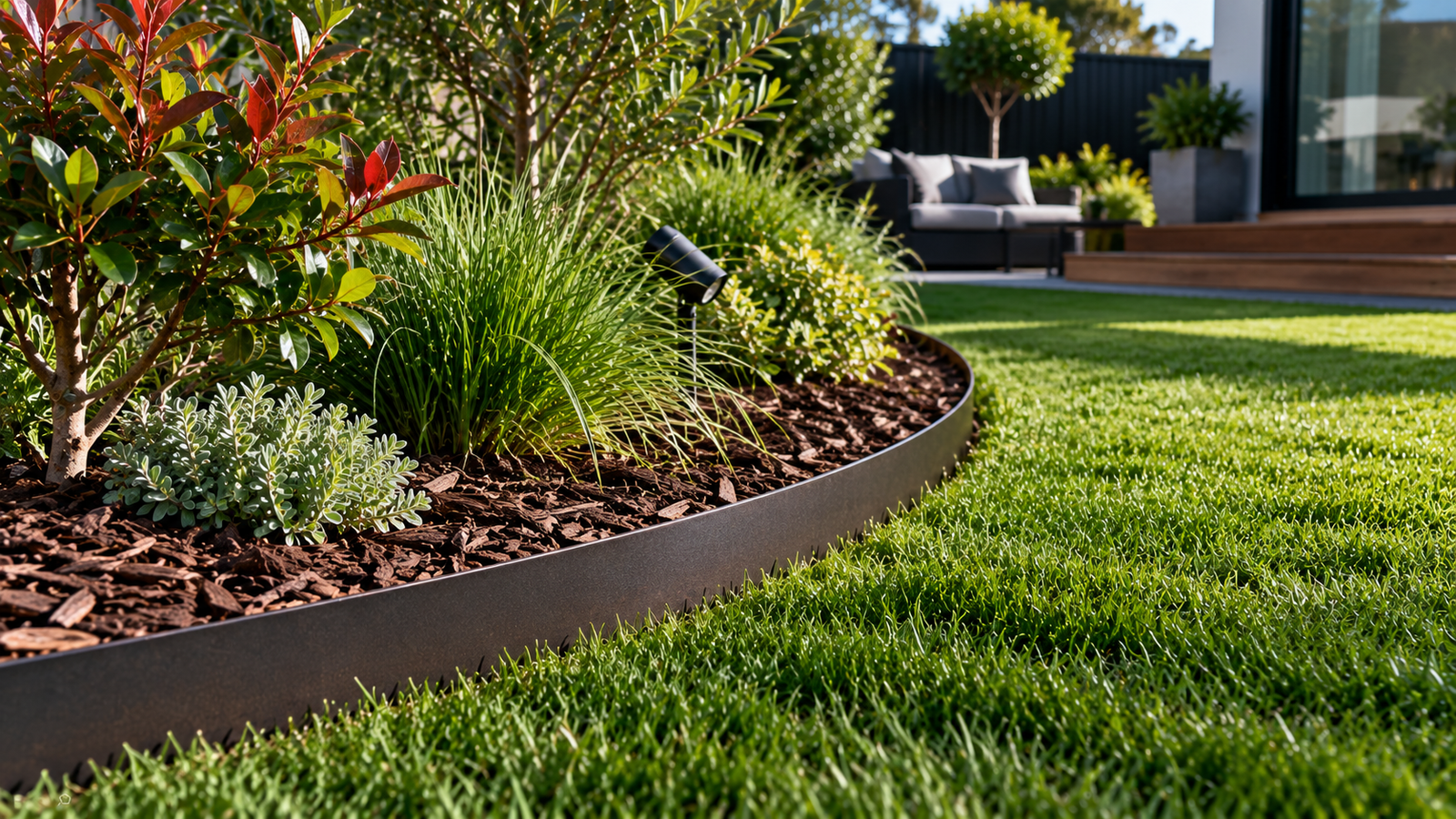
Make it work: Choose a suitable coated product and follow the manufacturer’s recommendations for joining, staking and installation height.
Watch out for: Scratched coatings, exposed edges and products that are unsuitable for coastal conditions.
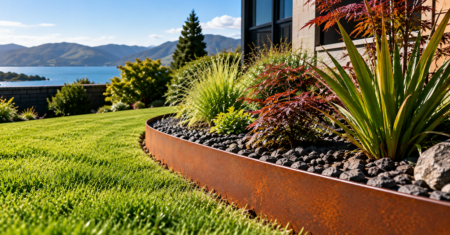
3. Weathering Steel for Warm Architectural Contrast
Weathering steel adds a warm, earthy contrast to green planting and pale gravel. It can be particularly striking beside ornamental grasses and informal native-inspired landscapes.
The material develops a weathered surface over time, giving it a different character from black-coated or galvanised steel.
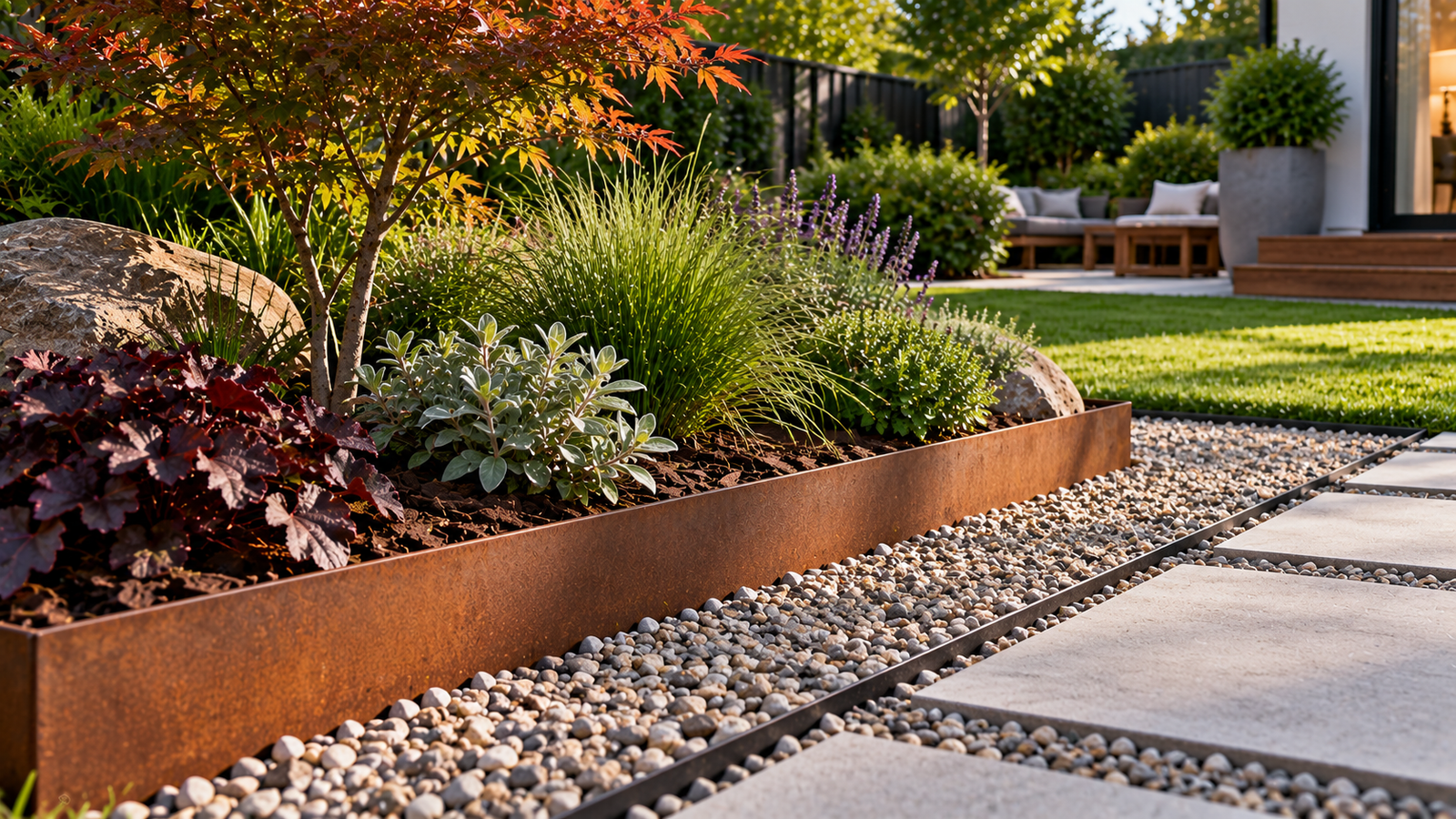
Make it work: Pair the steel with a restrained planting palette and allow the weathered finish to become one of the main visual accents.
Watch out for: Rust-coloured runoff that may stain nearby paving, concrete or other light surfaces. Check suitability for the site’s exposure.
4. Concrete Edging for a Permanent, Clean Finish
Concrete edging works well where the garden layout is unlikely to change. It creates a strong, defined border that can complement driveways, paths and modern outdoor entertaining areas.
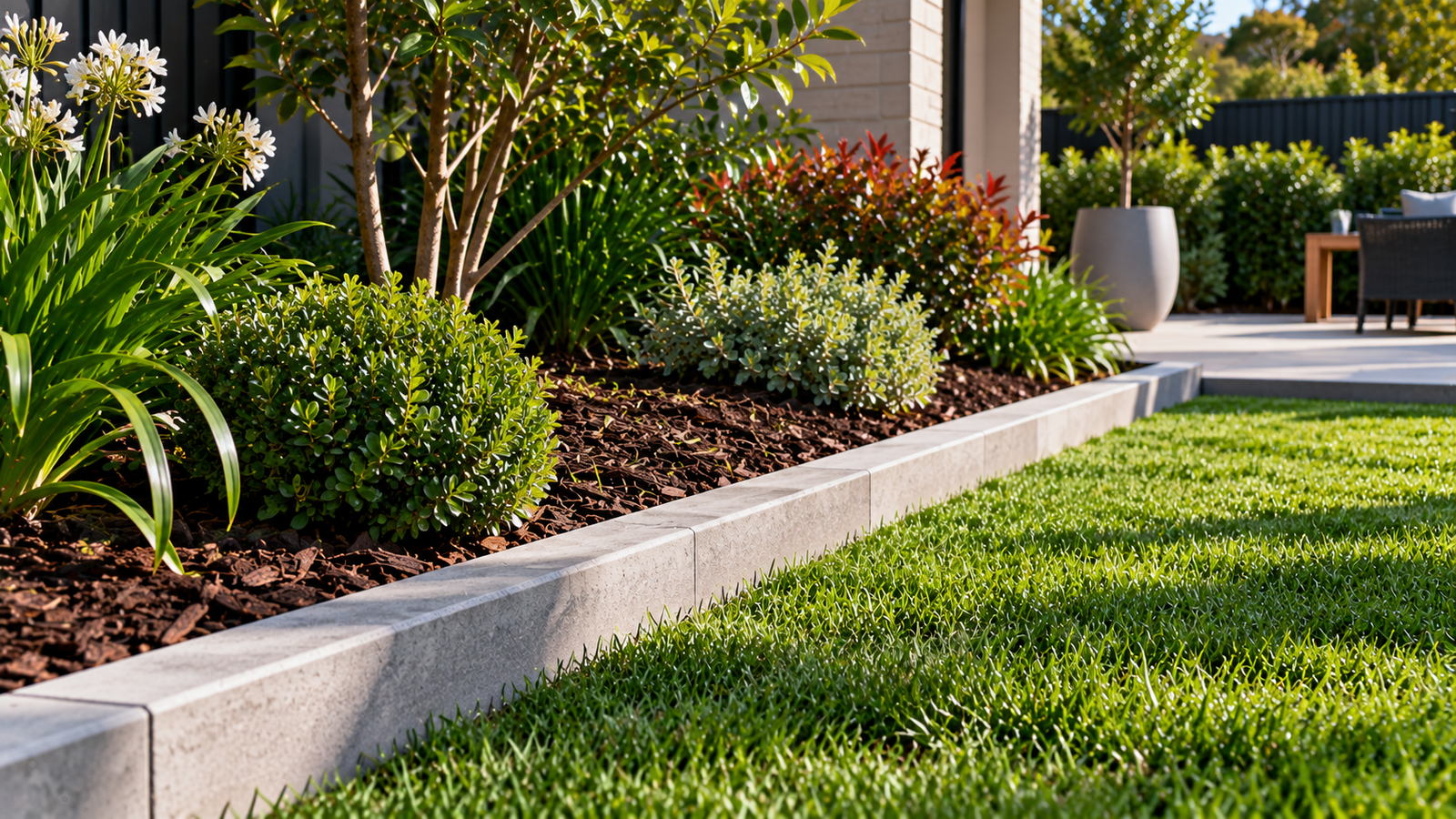
Make it work: Coordinate the concrete colour and finish with nearby paving rather than introducing an unrelated surface.
Watch out for: Settlement, cracking and the difficulty of altering the border later.
5. Brick Edging for Cottage Garden Character
Brick edging adds a sense of age and character to flower beds. It pairs well with flowering perennials, established shrubs and older homes.
Bricks can be arranged in different patterns, including flat-laid mowing strips or more visible upright borders.
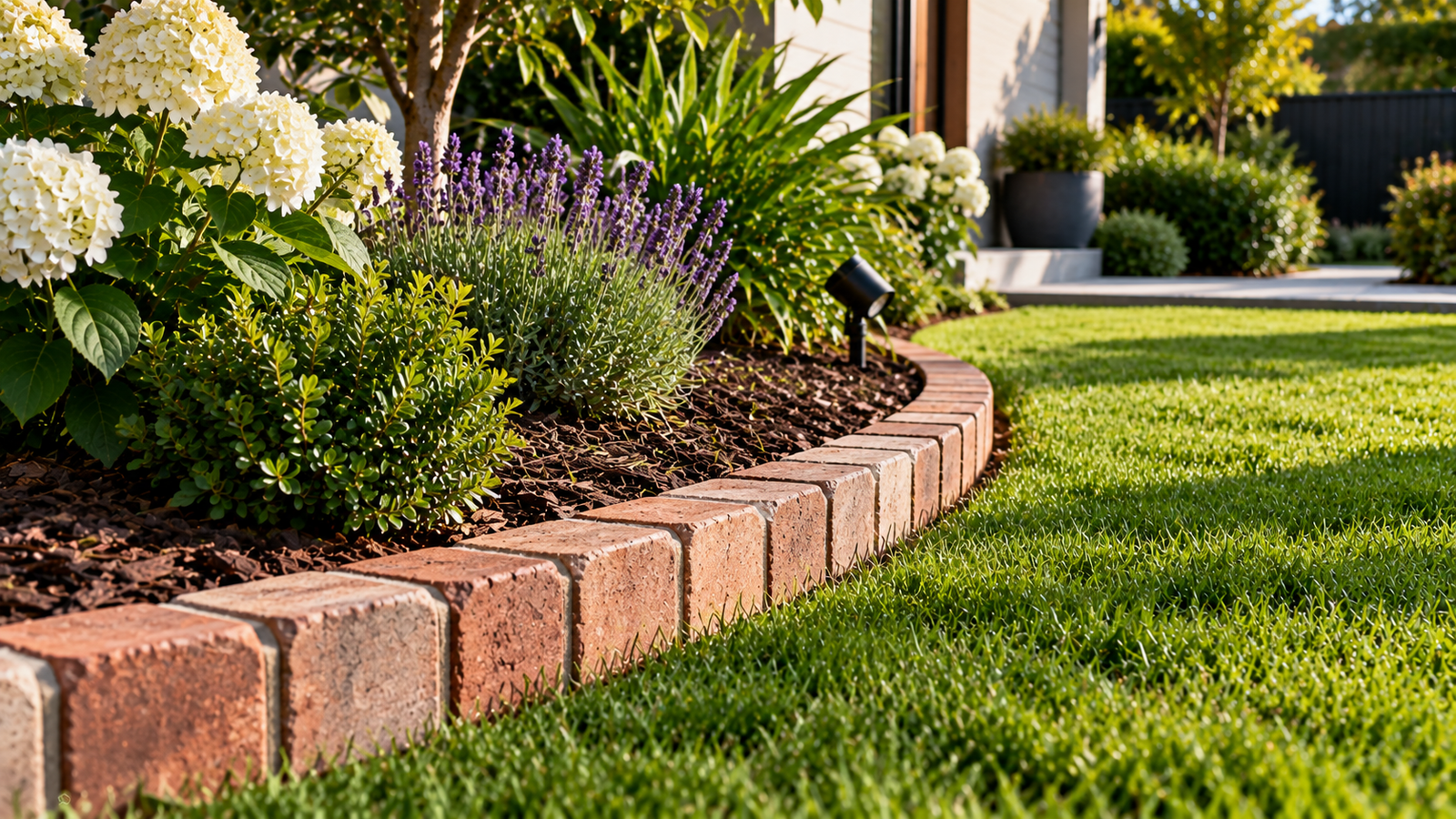
Make it work: Repeat brick tones already present in the home or paving. Prepare a suitable base to keep the finished edge level.
Watch out for: Uneven settling, movement and weeds appearing between poorly maintained joints.
6. Natural Stone for an Organic Garden Border
Stone edging can make a garden feel more connected to its surroundings. It is especially effective with layered planting, informal paths and larger garden beds.
Unlike a perfectly uniform manufactured border, natural stone introduces variation in shape, colour and texture.
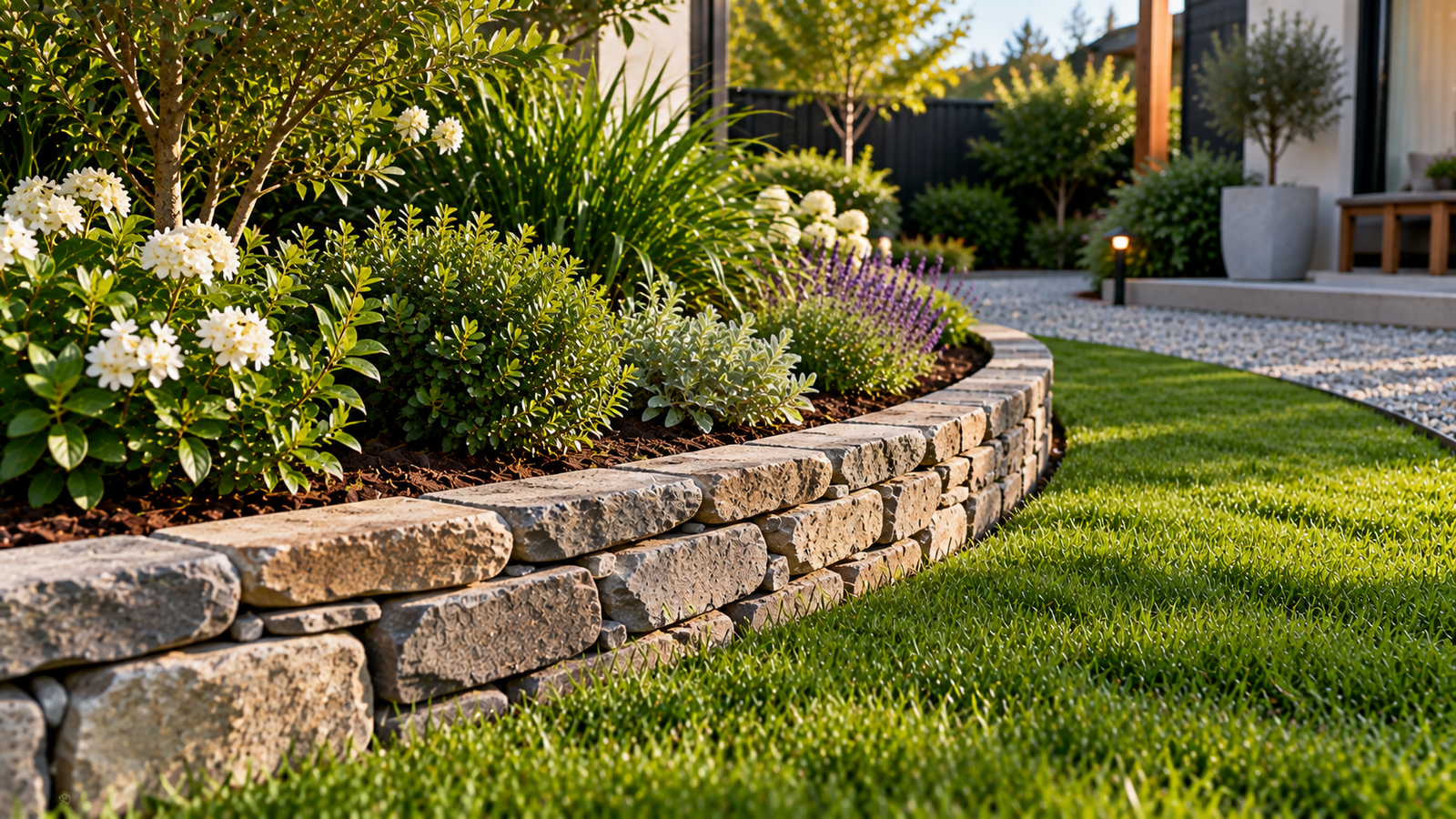
Make it work: Choose stones with a consistent overall character, even when individual pieces vary.
Watch out for: Uneven surfaces that interfere with mowing or allow loose material to escape through gaps.
7. Nearly Invisible Metal Edging
Sometimes the best edging is the kind you barely notice. A suitable thin metal profile can create a clean separation between lawn and garden without becoming a decorative feature itself.
This works particularly well in contemporary gardens where planting, paving and lawn geometry provide the main visual interest.
Make it work: Keep the exposed profile consistent and follow the manufacturer’s minimum installation depth.
Watch out for: Installing the edging too low to contain mulch or too high for comfortable mowing.
8. Flexible Recycled-Plastic Edging for DIY Curves
Flexible plastic edging is useful for curved flower beds, tree surrounds and irregular garden layouts.
It is lightweight and can be easier to handle than heavier masonry products, particularly for a small DIY project.
Make it work: Choose an outdoor-rated product with suitable UV resistance, adequate rigidity and a reliable anchoring system.
Watch out for: Lightweight profiles that lift, buckle or move when they are not secured correctly.
9. A Simple Spade-Cut Lawn Edge
You don’t always need to buy edging. A carefully cut trench between lawn and planting can create a surprisingly clean result.
This approach is particularly appealing in informal gardens where a manufactured border might look out of place.
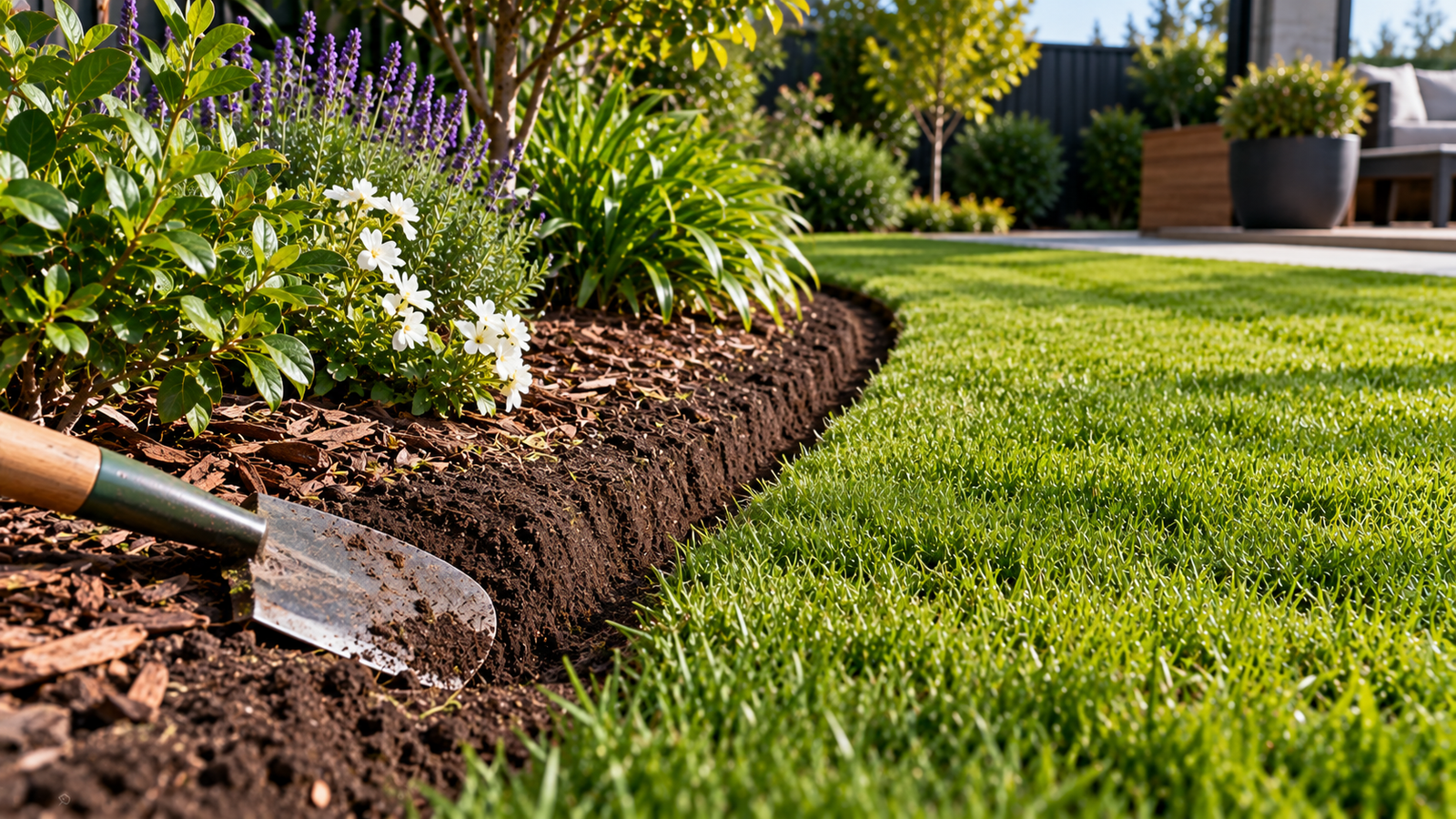
Make it work: Use a sharp edging spade, establish a smooth line and maintain the boundary before grass spreads too far into the bed.
Watch out for: Frequent maintenance and reduced effectiveness where grass spreads aggressively through runners.
10. Gravel Paths With Slim Metal Edging
Gravel and slim metal edging can create a clean transition between lawn, paths and planting beds.
The edging performs an important practical function by helping contain loose aggregate while keeping the path’s shape defined.
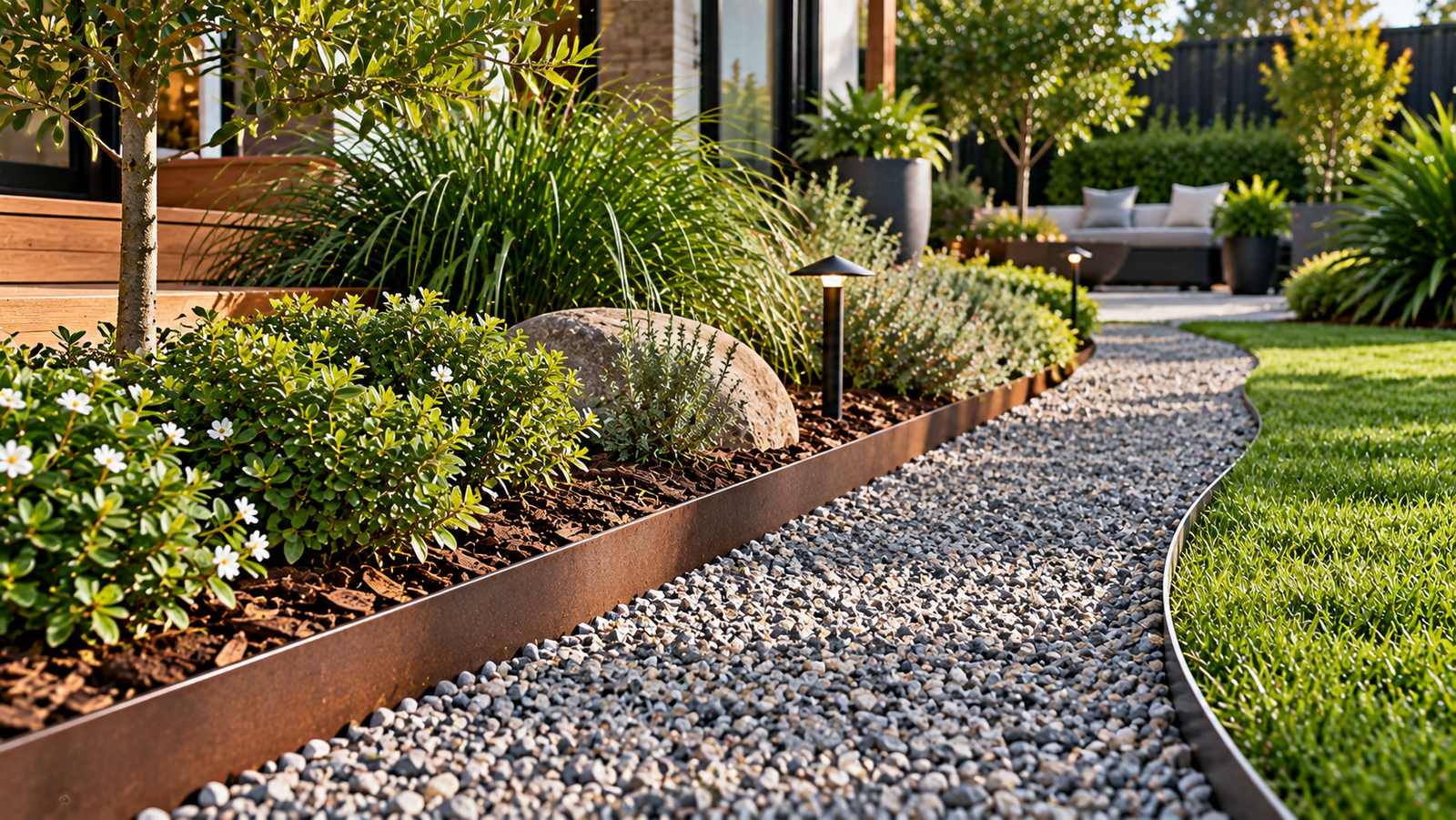
Make it work: Choose a profile with sufficient height and anchoring for the gravel and expected foot traffic.
Watch out for: Gravel escaping over low borders or poor drainage causing the path surface to become unstable.
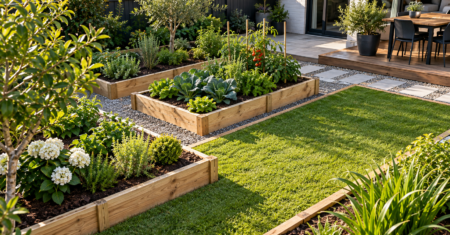
11. Timber Sleeper Borders for Substantial Planting Areas
Timber sleepers create a heavier visual edge than narrow landscaping boards. They can suit vegetable gardens, broad planting beds and larger outdoor spaces.
Used thoughtfully, they can help connect raised growing areas with timber paths, steps and other landscape features.
Make it work: Use appropriately specified timber and a design that supports the expected soil loads.
12. Paver Mowing Strips for Easier Lawn Care
A flat strip of pavers can create a defined boundary while giving mower wheels a firm surface to travel along.
This idea works particularly well beside lawns, flower beds and fences where ordinary raised edging would require additional line trimming.
Make it work: Keep the finished paving height compatible with the surrounding lawn and prepare a stable base.
Watch out for: Uneven pavers, settling and gaps that encourage weed growth.
13. Sweeping Curved Steel Borders
Broad curves can soften the straight lines of a house, fence or rectangular lawn.
Suitable flexible steel edging creates a continuous boundary around planting beds, making the design feel deliberate rather than assembled from short segments.
Make it work: Lay a hose along the proposed curve, then view it from the house, lawn and main pathway before committing to the shape.
Watch out for: Curves tighter than the edging system can accommodate and inconsistent spacing around planting beds.
14. Raised Borders for Layered Garden Design
A raised border can make a planting area more prominent and introduce a sense of depth to a flat garden.
Timber, steel, masonry and stone can all contribute to this look, although the required construction depends on the height and loads involved.
Make it work: Keep the border proportionate to the garden and allow enough space for plants to mature.
Watch out for: Poor drainage and treating decorative edging as a structure capable of retaining significant soil pressure.
15. Mixed-Material Edging for Different Garden Zones
One material does not need to work everywhere. You might use timber around a productive vegetable garden, steel around a curved lawn and paving beside an outdoor seating area.
The secret is to keep the palette consistent. Repeating colours, textures or profiles can make different garden zones feel connected.
Make it work: Limit the number of dominant materials and use repeated details to tie the design together.
Watch out for: Too many unrelated finishes competing for attention.
Garden Edging Ideas Compared
The table below helps match each style to a practical landscaping goal.
| Edging idea | Best for | Visual style | Main consideration |
|---|---|---|---|
| Timber | Straight garden beds | Natural | Ground-contact suitability |
| Black steel | Modern lawns | Minimal | Coating and fixings |
| Weathering steel | Architectural gardens | Warm and textured | Runoff staining |
| Concrete | Permanent layouts | Structured | Hard to change |
| Brick | Cottage gardens | Traditional | Base preparation |
| Natural stone | Informal landscapes | Organic | Uneven profiles |
| Recessed metal | Discreet borders | Minimal | Installation height |
| Flexible plastic | DIY curves | Practical | Anchoring and UV resistance |
| Spade-cut edge | Budget lawn borders | Natural | Regular recutting |
| Gravel with metal | Paths | Contemporary | Aggregate containment |
| Sleepers | Substantial borders | Rustic | Structural loads |
| Paver strip | Easy mowing | Neat | Stable base |
| Curved steel | Flowing lawn shapes | Contemporary | Bending radius |
| Raised border | Layered planting | Structured | Drainage and support |
| Mixed materials | Multiple garden zones | Personalised | Visual consistency |
Design Tips for New Zealand Gardens
For Wet or Poorly Drained Sites
Choose materials suited to repeated moisture exposure and avoid installing a border that traps water against lawn, paths or structures.
If water regularly pools in the garden, deal with the drainage issue rather than relying on edging to contain it.
For Coastal Gardens
Salt-laden air can affect metal finishes and fasteners. Check whether the exact edging system is suitable for coastal exposure before buying.
For Sloping Properties
Follow the natural landform where practical. Stepped or appropriately supported sections may look better and perform more reliably than trying to force a level border across a steep slope.
For Small Gardens
Use fewer materials, restrained colours and low-profile edging. Broad, deliberate curves or simple straight lines often look cleaner than multiple small bends.
For Native-Inspired Planting
Consider natural stone, weathering steel or discreet metal edging. Allow enough space for plants to mature so the border does not crowd the planting.
How to Plan a Garden Edging Budget
Before purchasing, calculate the total length of edging and compare the complete cost of each system.
- Measure the border. Use a tape for straight sections or a hose and string for curves.
- Allow for waste. An initial allowance of around 10% can help with cuts and changes, depending on the product.
- Compare the cost per metre. Divide the price by the usable length supplied.
- Add accessories. Include stakes, joins, corner pieces, base materials and fixings.
- Include labour. Masonry and complex installations may need more preparation than simple edging strips.
Simple Budget Example
If your proposed border measures 15 metres, adding a 10% allowance gives:
15 × 1.10 = 16.5 metres
If the edging is sold in 3-metre lengths, you would need to round up to 6 lengths, assuming the pieces can be cut and joined appropriately.
Multiply the number of lengths by the current supplier price, then add fixings, delivery and other materials.
For a more detailed comparison of materials and their practical trade-offs, read our Garden Edging NZ buying guide.
Five Design Mistakes to Avoid
1. Choosing a Border That Makes Mowing Harder
A tall, awkward edge can create more maintenance work. Consider mower access before deciding on the profile.
2. Mixing Too Many Materials
Too many unrelated textures and colours can make a small garden look cluttered. Choose a consistent palette.
3. Ignoring Drainage
Garden edging should not unintentionally block the natural movement of water.
4. Creating Curves Without Planning
Mark the full shape before installing. Smooth, intentional curves tend to look more cohesive than random bends.
5. Using Decorative Edging to Retain Heavy Soil
Light edging can define boundaries and contain shallow mulch, but retaining substantial soil requires an appropriately designed structure.
Frequently Asked Questions
What are the most popular garden edging styles in NZ?
Timber, steel, concrete, brick, stone and flexible edging are common choices for New Zealand gardens. The best style depends on the property, landscape design and intended use.
What is the cheapest garden edging idea?
A spade-cut lawn edge generally has the lowest material cost. Basic timber and flexible plastic are also worth comparing for DIY projects, although prices vary by supplier and product.
What edging looks best in a modern garden?
Black steel, recessed metal and simple concrete borders can complement contemporary homes because they create clean, restrained lines.
What edging works best for curved garden beds?
Suitable flexible steel and plastic edging systems are useful for smooth curves. Always check the minimum bending radius of the selected product.
Can I combine different garden edging materials?
Yes. Different garden zones may benefit from different materials. Keeping colours and finishes consistent helps the overall landscape feel cohesive.
What edging is easiest to mow around?
A correctly installed flush mowing strip made from pavers or suitable concrete edging can allow mower wheels to pass along the boundary and reduce additional trimming.
Does garden edging stop weeds?
Edging can reduce grass encroachment and help maintain a defined boundary, but it cannot prevent all weeds or airborne seeds from entering garden beds.
Root & Yard Verdict
The best garden edging idea is one that looks right for your home and makes the garden easier to maintain.
Choose black steel or recessed edging for a restrained modern look, timber or stone for natural character, and brick or pavers where traditional styling or easy mowing matters.
If budget is limited, start with a carefully cut lawn edge rather than buying a product that does not suit the job.
Most importantly, keep the overall design consistent. A well-planned border should make the garden feel complete without distracting from the plants themselves.
Further Reading
Related Articles
2 Comments
[…] Looking for more inspiration? See our separate collection of 15 Garden Edging Ideas for NZ Gardens. […]
[…] For visual inspiration, explore our 15 Garden Edging Ideas for NZ Homes. […]