Garden Materials · New Zealand Buying Guide · Updated October 2026
Steel garden edging is one of the simplest ways to give a New Zealand garden a clean, professionally finished appearance. It creates crisp borders around lawns, planting beds and gravel paths without the bulk of timber sleepers or concrete edging.
However, not all steel edging performs the same way. Galvanised, powder-coated and weathering steel offer different finishes, installation requirements and levels of suitability for particular environments.
This steel garden edging NZ guide explains the main types, typical costs, practical product considerations and installation steps, helping you choose the right edging for your garden and budget.
Quick Answer
What Is the Best Steel Garden Edging in NZ?
For most residential gardens, galvanised or suitably powder-coated steel edging is a practical all-round choice. It offers a slim profile, neat appearance and a range of designs for straight or curved borders.
For contemporary landscaping: black-coated steel creates an understated finish.
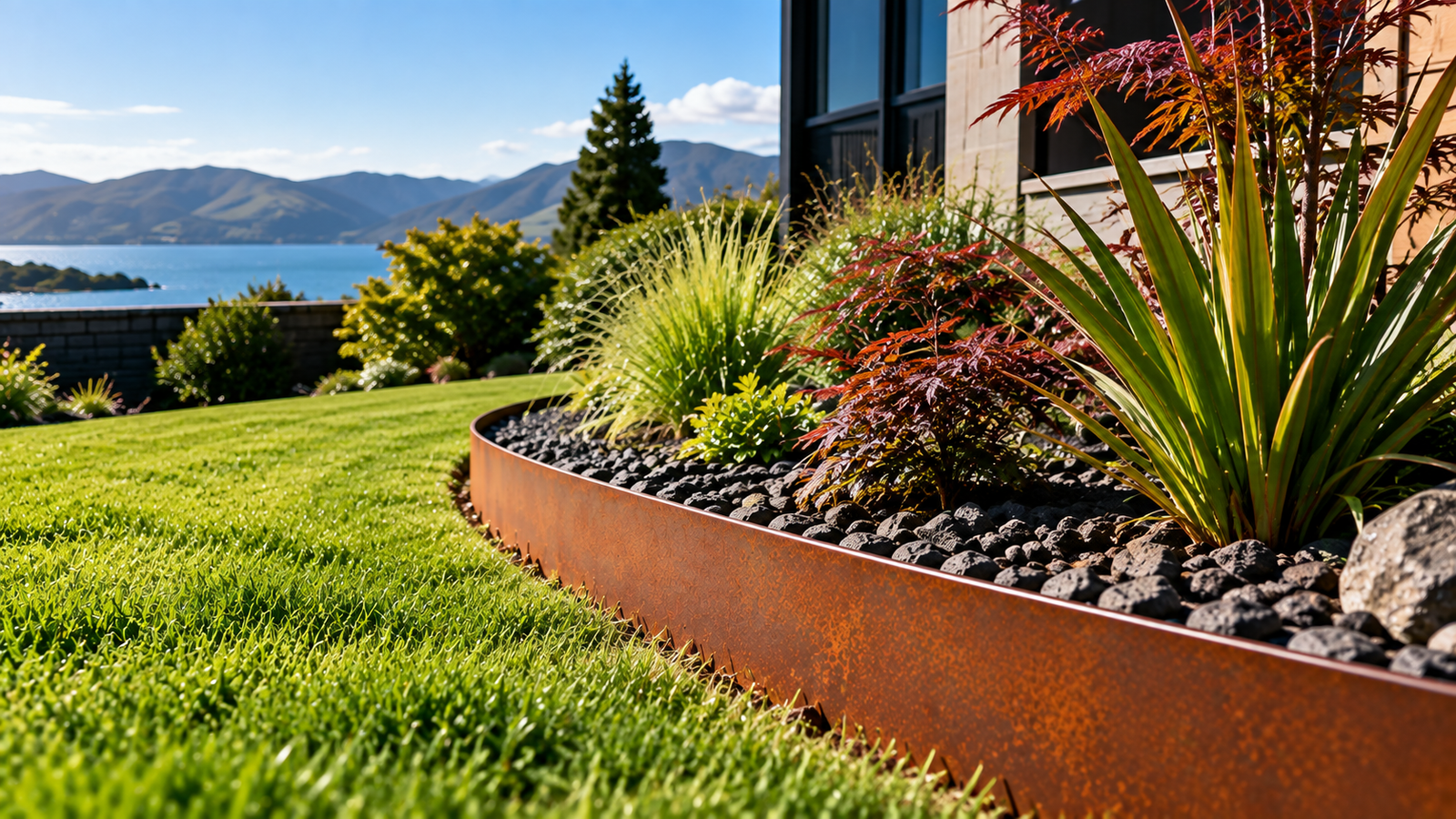
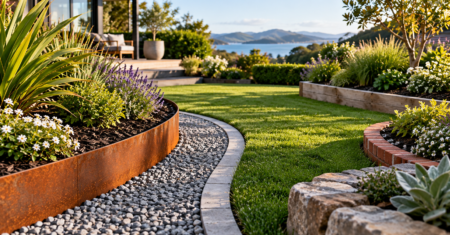
For a distinctive architectural look: weathering steel, often called Corten steel, develops a warm rust-coloured surface.
For coastal gardens: choose a product whose manufacturer specifically confirms suitability for the site’s exposure conditions.
Why Choose Steel Garden Edging?
A well-defined garden border does more than improve appearance. It separates different surfaces, helps contain loose landscaping materials and makes the garden layout easier to understand.
Steel is particularly useful when a narrow, discreet border is preferred over a wide timber or masonry edge.
Slim profiles create crisp boundaries without distracting from planting.
Suitable systems can form straight borders, sweeping curves and irregular bed shapes.
Correctly installed edging helps keep mulch, soil and gravel within designated areas.
Products selected for the site’s conditions can provide a durable garden boundary.
Steel edging is especially effective when combined with simple planting schemes, gravel paths, ornamental grasses or neatly maintained lawns.
Types of Steel Garden Edging Available in NZ
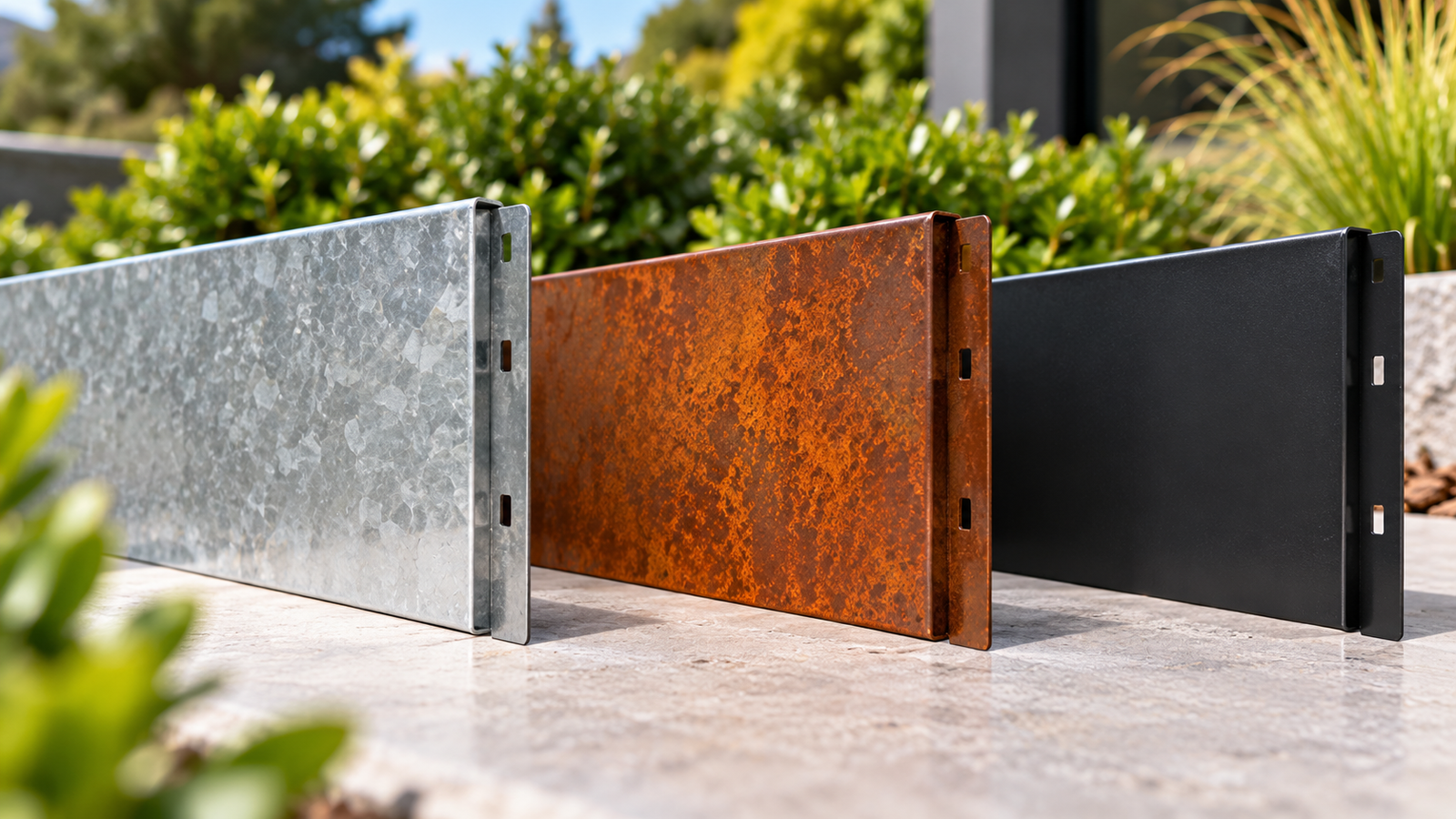
1. Galvanised Steel Garden Edging
Galvanised steel is protected by a zinc coating designed to resist corrosion. It is commonly used for practical landscaping applications, including lawn borders, garden beds and paths.
Its appearance is generally more understated than decorative weathering steel, making it suitable for gardens where the edging should blend into the overall design.
Best for: Practical borders, lawn separation and general landscaping.
Consider: The coating specification, steel thickness, fixing system and suitability for local exposure conditions.
2. Powder-Coated Steel Garden Edging
Powder-coated steel is available in coloured finishes, with black being particularly popular in contemporary landscaping.
A dark border can visually recede against soil and mulch, allowing the plants and lawn to remain the main focus.
Some systems combine galvanising with powder coating, while others use different protective systems. Check the full product specification rather than relying on colour alone.
Best for: Modern homes, formal lawns and minimalist garden designs.
Consider: Scratches, cut edges and coating suitability for the installation environment.
3. Corten and Weathering Steel Edging
Weathering steel develops a distinctive orange-brown patina when exposed to suitable atmospheric conditions.
Its warm colour contrasts with green planting, pale gravel and concrete, making it an attractive choice for architectural gardens.
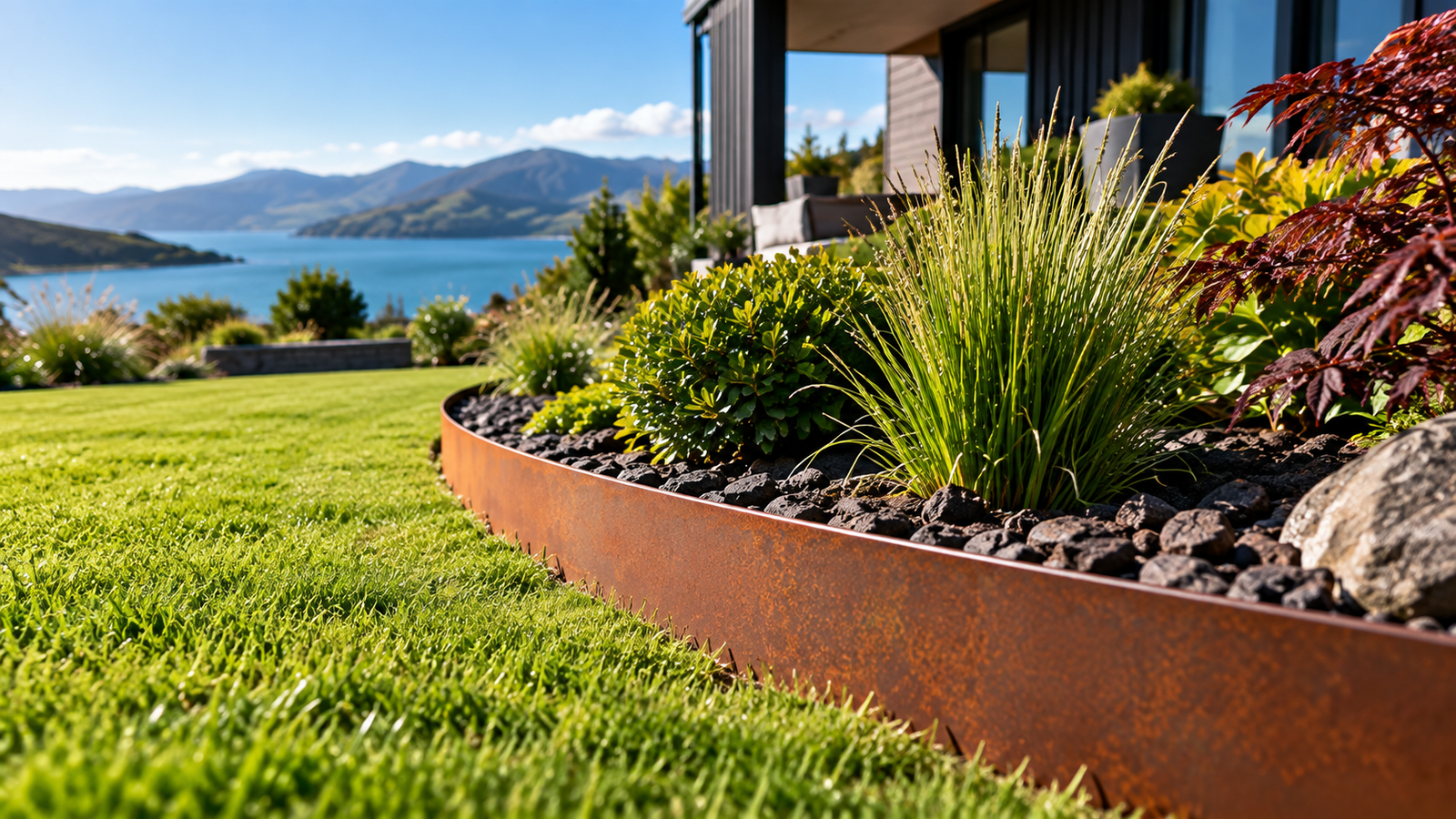
Weathering steel is often referred to as Corten, although the exact steel grade and specification should always be checked.
Best for: Contemporary landscapes, ornamental grasses, gravel gardens and feature planting beds.
Consider: Rust-coloured runoff, nearby paving and whether the site allows the protective patina to develop appropriately.
4. Rigid and Heavy-Duty Steel Edging
Some steel edging systems use thicker or reinforced profiles to maintain straight lines or create more substantial garden boundaries.
These products may be useful for long, formal borders or specific landscaping applications.
However, thicker decorative edging should not automatically be treated as a retaining structure.
Best for: Long straight runs and applications requiring a stiffer edging profile.
Consider: Weight, installation requirements, available lengths and the intended load capacity.
Galvanised vs Powder-Coated vs Corten Steel
Each finish offers a different balance of appearance, protection and maintenance considerations.
| Feature | Galvanised Steel | Powder-Coated Steel | Weathering Steel |
|---|---|---|---|
| Appearance | Metallic or subdued | Uniform coloured finish | Rust-toned patina |
| Visual style | Practical and discreet | Modern and minimalist | Architectural and natural |
| Protection | Zinc coating | Protective coating system | Patina under suitable conditions |
| Curved borders | Product-dependent | Product-dependent | Product-dependent |
| Main consideration | Coating and exposure | Scratches and cut edges | Runoff staining and moisture |
| Typical application | General garden edging | Contemporary landscaping | Feature garden borders |
For visual inspiration, explore our 15 Garden Edging Ideas for NZ Homes.
Steel Garden Edging Prices in New Zealand
The cost of steel garden edging depends on the material, finish, thickness, height, length and joining system.
When comparing products, focus on the effective installed cost per metre rather than simply the advertised price of an individual section.
Examples of Steel Edging Products in NZ
| Product | Key Features | Reference Price | Approx. Cost per Metre |
|---|---|---|---|
| EverEdge Classic | Galvanised and powder-coated steel; integrated spikes | From NZ$26.45 per 1 m section | From NZ$26.45/m |
| EverEdge Cor-Ten | Weathering steel garden edging | NZ$40.25 per 1 m section | NZ$40.25/m |
| Corten NZ 150 mm Edging | 600 mm long, 150 mm high, 3 mm thick | NZ$39.62 per section | Approx. NZ$66.03/m |
Indicative supplier price examples used for this October 2026 guide. These are not live quotes. Confirm current pricing, dimensions, GST, delivery and availability directly with EverEdge NZ or Corten NZ. The 600 mm product calculation assumes nominal panel length; effective coverage may differ at joins.
What Affects the Final Price?
- Steel thickness: Heavier profiles may require more material and different installation methods.
- Finish: Coatings and decorative weathering steel can affect price.
- Height: Taller edging generally uses more material.
- Accessories: Stakes, connectors and corner pieces may be sold separately.
- Delivery: Freight can become significant for heavy or long steel sections.
- Labour: Difficult ground conditions and complex curves can increase installation costs.
Steel Garden Edging Budget Examples
To illustrate the difference between finishes, the following examples use the indicative EverEdge prices above.
10 × NZ$26.45
Edging material only.
10 × NZ$40.25
Edging material only.
20 × NZ$26.45
Edging material only.
20 × NZ$40.25
Edging material only.
These figures exclude delivery, additional accessories, installation labour and any allowance for waste or changes to the layout.
How to Calculate Your Own Budget
- Measure the complete edging line in metres.
- Confirm the usable installed length of each section.
- Calculate how many sections you need, rounding up to whole pieces.
- Add an appropriate allowance for cuts and waste.
- Include fixings, connectors, freight and installation costs.
Worked Example
Suppose your garden requires 15 metres of edging and you allow an additional 10% for planning purposes.
15 × 1.10 = 16.5 metres
For a product supplied in 1-metre effective lengths, you would round up to 17 sections.
At an indicative NZ$26.45 per section:
NZ$449.65
Illustrative edging-only calculation. The appropriate waste allowance and final quantity depend on the product and layout.
What Height of Steel Garden Edging Should You Choose?
One of the most common buying mistakes is choosing edging based on appearance without considering how much of the profile needs to remain above ground.
A low lawn separator has different requirements from a border intended to contain gravel or mulch.
| Application | Recommended Approach | Main Consideration |
|---|---|---|
| Lawn border | Low-profile edging | Mowing access and stability |
| Mulched garden bed | Enough exposed height to contain mulch | Material spilling onto the lawn |
| Gravel path | Stable edging matched to aggregate depth | Gravel containment |
| Raised soil border | Purpose-designed structural solution | Soil pressure and drainage |
Remember that a product’s total height may include spikes or buried sections. Always distinguish between total product height and the visible border height.
Steel Garden Edging for Straight Lines and Curves
Straight Garden Borders
Long straight edging lines suit contemporary homes, rectangular lawns and formal planting beds.
For the cleanest result, use string to establish the line before installation and choose a system with sufficiently rigid sections and reliable joins.
Curved Garden Borders
Curved edging can soften a garden dominated by straight fences, walls or paving.
Flexible steel profiles are particularly useful for sweeping borders around lawns, ornamental grasses and mixed planting beds.
However, not all steel products bend equally. Check the manufacturer’s minimum bending radius before purchasing.
How to Install Steel Garden Edging
Steel edging can be a manageable DIY project, but the installation method depends on the system.
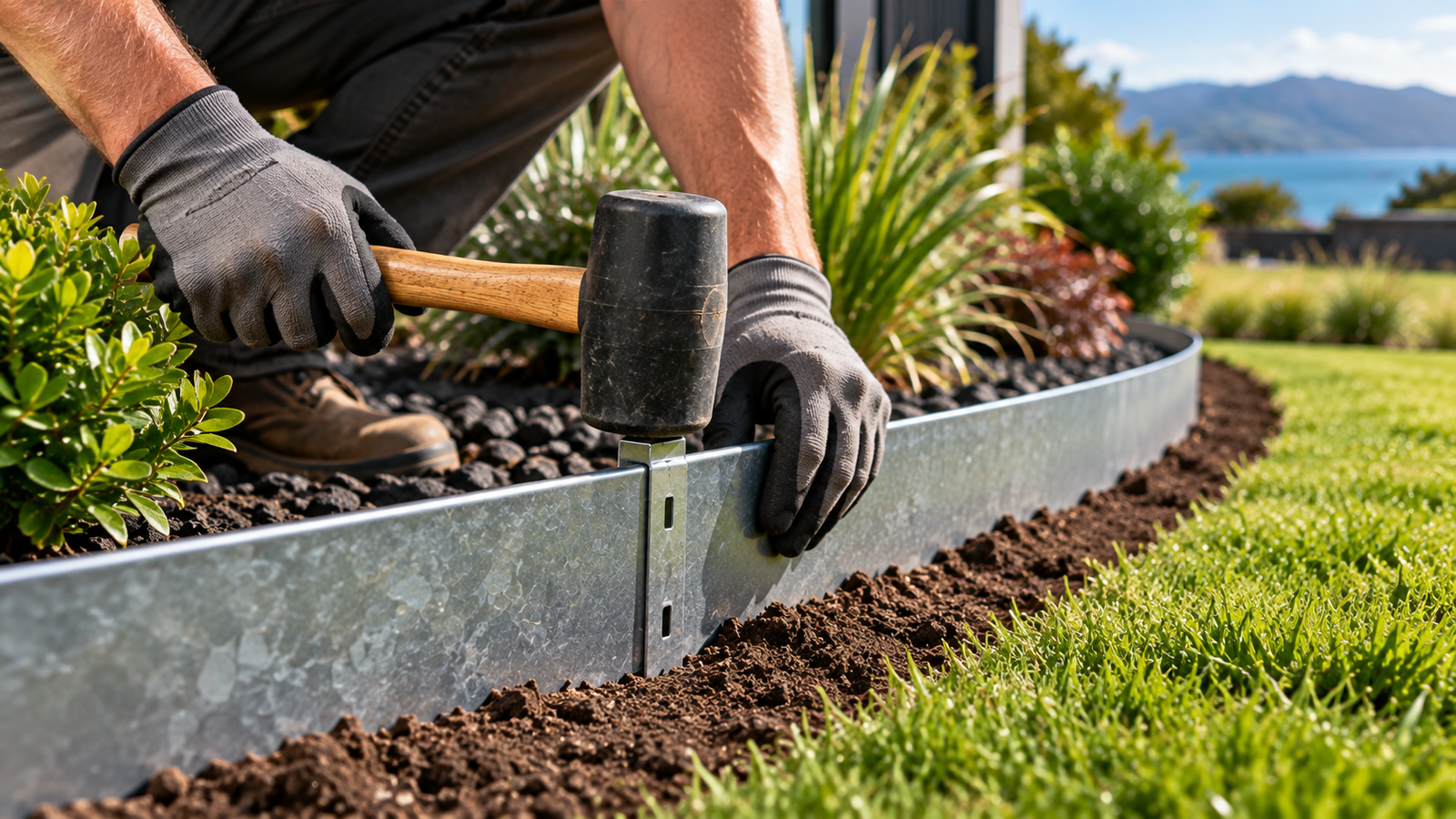
Some products have integrated spikes, while others require separate stakes, connectors or a prepared trench.
Tools You May Need
- Tape measure
- String line or garden hose
- Edging spade
- Gloves and eye protection
- Rubber mallet, where recommended
- Spirit level
- Manufacturer-specified stakes and connectors
- Appropriate cutting tools, if sections need trimming
Step 1: Mark the Edging Line
Use string for straight borders or a flexible hose for curves.
Check the proposed line from different viewpoints and make sure it leaves enough room for lawn mowing and plant growth.
Step 2: Measure the Required Length
Measure the full border, including curves and corners.
Confirm how sections connect and whether joins reduce the usable length.
Step 3: Check the Ground
Before digging or driving stakes, identify any buried irrigation lines, electrical cables or other underground services.
Remove stones, roots and obstructions where appropriate.
Step 4: Prepare the Trench or Fixing Points
Follow the manufacturer’s instructions for the required depth and preparation.
Do not assume that every edging product needs the same trench dimensions.
Step 5: Position and Connect the Sections
Place the edging along the marked line and connect the pieces using the specified joining method.
Check alignment as you work rather than waiting until the full border is installed.
Step 6: Secure the Edging
Use the supplied spikes or appropriate stakes according to the product instructions.
Ensure the edging is stable and that exposed edges do not create avoidable hazards.
Step 7: Backfill and Finish
Firm the surrounding soil, check the finished height and inspect the full border.
Make sure the edging contains the intended material without interfering with mowing or drainage.
For a broader step-by-step overview covering multiple materials, see our How to Install Garden Edging guide.
Where Steel Garden Edging Works Best
1. Between Lawn and Garden Beds
Steel edging creates a defined line between grass and planting, giving the lawn a more intentional shape.
A suitably installed profile can also help reduce grass spreading into garden beds, although it will not eliminate every weed.
2. Along Gravel Paths
Gravel can spread into nearby soil and lawn without a suitable border.
Steel edging helps define the path and contain loose aggregate when the profile height and installation are appropriate.
3. Around Curved Planting Areas
Flexible steel systems can create flowing garden shapes without the angular joins often associated with rigid timber boards.
4. Around Contemporary Homes
Black steel can complement dark window frames, modern cladding and minimalist outdoor spaces.
For a more expressive appearance, weathering steel can introduce warm colour and texture.
5. Around Native-Inspired Planting
Steel edging can work well with ornamental grasses, low-growing shrubs and layered planting.
Broad curves and a restrained material palette help maintain a natural-looking landscape.
Is Steel Garden Edging Suitable for Coastal NZ Gardens?
New Zealand’s coastal environments can be challenging for metal products because of salt-laden air, moisture and exposure.
The performance of steel edging depends on the exact product, protective coating, fasteners and local conditions.
For coastal properties, check the manufacturer’s environmental suitability information before purchasing.
Coastal Buying Checklist
- Confirm whether the product is recommended for marine exposure.
- Check the galvanising or coating specification.
- Ask whether cut edges need additional protection.
- Use compatible connectors and fixings.
- Check warranty exclusions and maintenance instructions.
- Avoid assuming weathering steel will perform equally well in every coastal environment.
Steel vs Timber vs Concrete Garden Edging
Steel is not automatically the best option for every garden. Timber and concrete may be more appropriate depending on the desired appearance and intended function.
| Factor | Steel | Timber | Concrete |
|---|---|---|---|
| Appearance | Slim and contemporary | Natural and warm | Solid and structured |
| Curved borders | Good with flexible systems | Often segmented | Possible with suitable construction |
| DIY cutting | May need metalworking tools | Usually straightforward | Often more demanding |
| Main durability concern | Corrosion and coating damage | Decay and moisture exposure | Cracking and settlement |
| Future layout changes | Depends on fixing system | Often manageable | Can be difficult |
If you prefer a natural finish, read our Timber Garden Edging NZ guide.
For a wider overview of materials and practical considerations, visit Garden Edging NZ.
Seven Steel Garden Edging Mistakes to Avoid
1. Choosing by Price Alone
Compare effective length, thickness, height, finish and included accessories before deciding which product offers better value.
2. Using Rigid Edging for Tight Curves
Not every steel system is designed to bend. Check the minimum radius before buying.
3. Ignoring Coastal Exposure
Salt and moisture can affect steel finishes. Choose a product suitable for the actual installation environment.
4. Installing the Border at an Uneven Height
Inconsistent edging height can make a long lawn border look untidy and may interfere with mowing.
5. Using Too Few Stakes
Inadequate fixing can allow sections to move or lift. Follow the manufacturer’s requirements.
6. Overlooking Rust-Coloured Runoff
Weathering steel may stain pale concrete, stone or paving as its surface develops.
7. Using Decorative Edging as a Retaining Wall
Thin edging is designed primarily to define borders and contain shallow landscaping materials, not to retain substantial soil loads.
How Long Does Steel Garden Edging Last?
There is no single lifespan that applies to every steel edging product.
Longevity depends on material specification, protective coating, exposure, installation and maintenance.
For example, a product installed in a sheltered inland garden may experience different conditions from one exposed to salt spray or persistently wet soil.
Maintenance Tips
- Inspect joints and stakes periodically.
- Check for movement after heavy rain or ground settlement.
- Avoid unnecessary damage to protective coatings.
- Follow the manufacturer’s instructions for scratches or cut edges.
- Remove excessive soil or debris where it causes persistent moisture accumulation.
- Monitor nearby paving if using weathering steel.
Where to Buy Steel Garden Edging in NZ
Steel garden edging is available through specialist landscaping suppliers and selected home improvement retailers.
Before ordering, compare the exact dimensions, effective length, fixing system, delivery options and environmental suitability.
- EverEdge NZ — specialist steel edging systems.
- Corten NZ — weathering steel edging products.
- Bunnings New Zealand — garden and landscaping supplies.
- Mitre 10 New Zealand — garden edging and outdoor materials.
Availability and product ranges vary. Check current listings and specifications before purchasing.
Frequently Asked Questions
Is steel garden edging worth it?
Steel edging can be a worthwhile investment when you want a narrow, defined border around lawns, planting beds or paths. Its value depends on choosing the correct product and installing it properly.
Does steel garden edging rust?
Galvanised and coated steel use protective systems to resist corrosion. Weathering steel intentionally develops a rust-coloured patina under suitable conditions. All steel products require appropriate selection for their environment.
Is Corten steel good for garden edging?
Weathering steel can be an attractive choice for architectural gardens and naturalistic planting. However, its suitability depends on moisture exposure, coastal conditions and the risk of runoff staining.
How deep should steel edging be installed?
Installation depth depends on the selected system. Some products have integrated spikes, while others require separate stakes or a trench. Follow the manufacturer’s instructions rather than using a universal depth.
Can steel garden edging be curved?
Yes. Many flexible steel edging products can form smooth curves. Check the product’s minimum bending radius, thickness and joining method.
What is the cheapest type of steel garden edging?
Basic galvanised systems can be less expensive than decorative or heavier-duty products, but prices vary. Compare the complete installed cost per metre, including fixings and delivery.
Is steel edging better than timber?
Steel often suits slim borders and smooth curves, while timber offers a warmer, natural appearance and can be easier to cut. The better choice depends on your garden design, budget and maintenance preferences.
Can steel edging stop grass spreading into garden beds?
Properly installed edging can help reduce grass encroachment by creating a physical boundary. However, effectiveness depends on the grass species, installation depth and ongoing maintenance.
How much does steel garden edging cost in NZ?
Costs vary by product. Indicative examples in this guide include EverEdge Classic from NZ$26.45 per metre and EverEdge Cor-Ten at NZ$40.25 per metre. Confirm current supplier pricing and allow for installation and accessories.
Root & Yard Verdict
For most New Zealand homeowners, a suitable galvanised or powder-coated steel edging system offers a strong balance of appearance, practicality and design flexibility.
Choose black-coated steel when you want the border to blend into a modern garden. Consider weathering steel when its warm patina is an intentional part of the landscape design.
Before purchasing, focus on five essentials: height, flexibility, corrosion protection, fixing method and total installed cost.
The right edging should make your garden look more cohesive while helping keep lawns, planting beds and paths clearly defined.
Related Guides and Sources
Related Articles
1 Comment
[…] Read more: Steel Garden Edging NZ: Types, Costs & Best Options. […]