Grow · New Zealand vegetable gardening
When to Plant Potatoes in NZ: Month-by-Month Guide for Every Region
Wondering when to plant potatoes in NZ? The right date depends on where you live, how quickly your soil warms up, and whether you want fresh new potatoes for Christmas or a larger crop to store. This guide makes the timing simple.
For many New Zealand home gardens, September to December is the main spring-to-early-summer planting window. Mild, frost-free coastal gardens may start earlier; cold inland and southern gardens often need to wait until late spring. Plant when the soil has warmed, is not waterlogged, and emerging shoots can be protected from frost. For Christmas potatoes, choose a suitable early variety and work backwards from its expected maturity date.
Potato planting calendar for New Zealand
New Zealand’s seasons are the reverse of those in the Northern Hemisphere. Spring runs from September through November, summer from December through February, autumn from March through May, and winter from June through August. Use the calendar below as a planning guide, not a fixed planting instruction: altitude, frost exposure and soil conditions can change the best date even within one town.
| Month | What to consider | Typical home-garden approach |
|---|---|---|
| July–August | Cold soil and frost are common in many areas. | Buy certified seed potatoes and start chitting. Only plant outdoors in reliably mild, protected locations. |
| September | Early spring; frost risk remains inland and in the south. | Plant in warmer districts if the soil is workable; protect shoots from cold snaps. |
| October | Soil is warming across much of the country. | A useful planting month for many regions, especially for early crops. |
| November | Generally warmer conditions, although late frosts remain possible in exposed places. | Plant main crops and later early varieties; water consistently as growth accelerates. |
| December | Early summer; warmer and sometimes drier. | Later plantings may suit some gardens; allow enough growing time and plan for irrigation. |
| January–February | Heat, drought pressure and variable autumn frost timing. | Late crops are possible in selected mild districts, but are not a universal NZ recommendation. |
| March–June | Cooling soils and increasing frost or wet-weather risk. | Harvest and store mature crops; plan next season rather than planting in cold or saturated ground. |
When to plant potatoes by NZ region
Local microclimates matter. The ranges below are broad starting points for outdoor planting, not guarantees. A sunny urban garden can warm earlier than a shaded rural property nearby.
| Region / climate | Indicative planting window | Important caution |
|---|---|---|
| Northland and other very mild northern coastal sites | Late winter to spring, often August–November | Avoid cold, sodden soil and check local disease pressure. |
| Auckland and warmer northern districts | September–November, sometimes into December | Early planting still needs protection in frost-prone pockets. |
| Waikato, Bay of Plenty and central North Island lowlands | September–November | Inland frosts can delay safe planting. |
| Wellington, Wairarapa and exposed southern North Island gardens | September–November, often October onwards in colder sites | Wind and late frosts affect young shoots. |
| Nelson, Marlborough and sheltered northern South Island | September–November | Watch for local frost pockets and dry spring weather. |
| Canterbury, Otago and Southland | October–December in many gardens | Wait until frost risk has eased; inland sites may need a later start. |
| High-altitude and alpine districts | Late spring to early summer | Use the local last-frost date and choose quicker-maturing varieties. |
These are deliberately approximate ranges. For your property, local frost history and a soil thermometer provide a more reliable decision than a nationwide planting date.
When to plant potatoes for Christmas in NZ
Freshly dug new potatoes are a Kiwi Christmas favourite. The trick is to choose an early-maturing seed potato, check the estimated number of days to harvest on the packet, and count backwards from late December. Maturity estimates are guides rather than promises: cold spells, water stress and growing conditions can slow development.
| Estimated time to harvest | Approximate planting target for Christmas | Best suited to |
|---|---|---|
| About 70–90 days | Late September to mid-October | Quick early potatoes in suitable conditions |
| About 90–110 days | Early to late September | Early varieties with a longer development period |
| Longer-maturing maincrop varieties | Often too slow for a late-spring start | Harvests later in summer or autumn |
For example, a variety that usually needs around 90 days could be planted in late September for a late-December harvest, provided your soil and frost conditions allow it. In colder parts of the South Island, protecting young plants or choosing a later harvest may be more realistic.
Early, second-early and maincrop potatoes: what’s the difference?
Potato varieties are often grouped by how quickly they mature. An early potato is usually harvested sooner, often while the skins are tender. Second-earlies take a little longer, while maincrop potatoes generally need a longer growing season and are often better suited to storage. The exact timing depends on the named variety and conditions.
- Early potatoes: useful for smaller gardens, quicker harvests and Christmas plans.
- Second-earlies: a middle ground between early harvest and crop size.
- Maincrop potatoes: better when you have a longer frost-free period and want a substantial harvest.
When buying seed potatoes, check the supplier’s current New Zealand variety description and maturity estimate. Common names and classifications can vary between sellers, so the packet is more useful than a generic online list.
How to plant potatoes in NZ: step by step
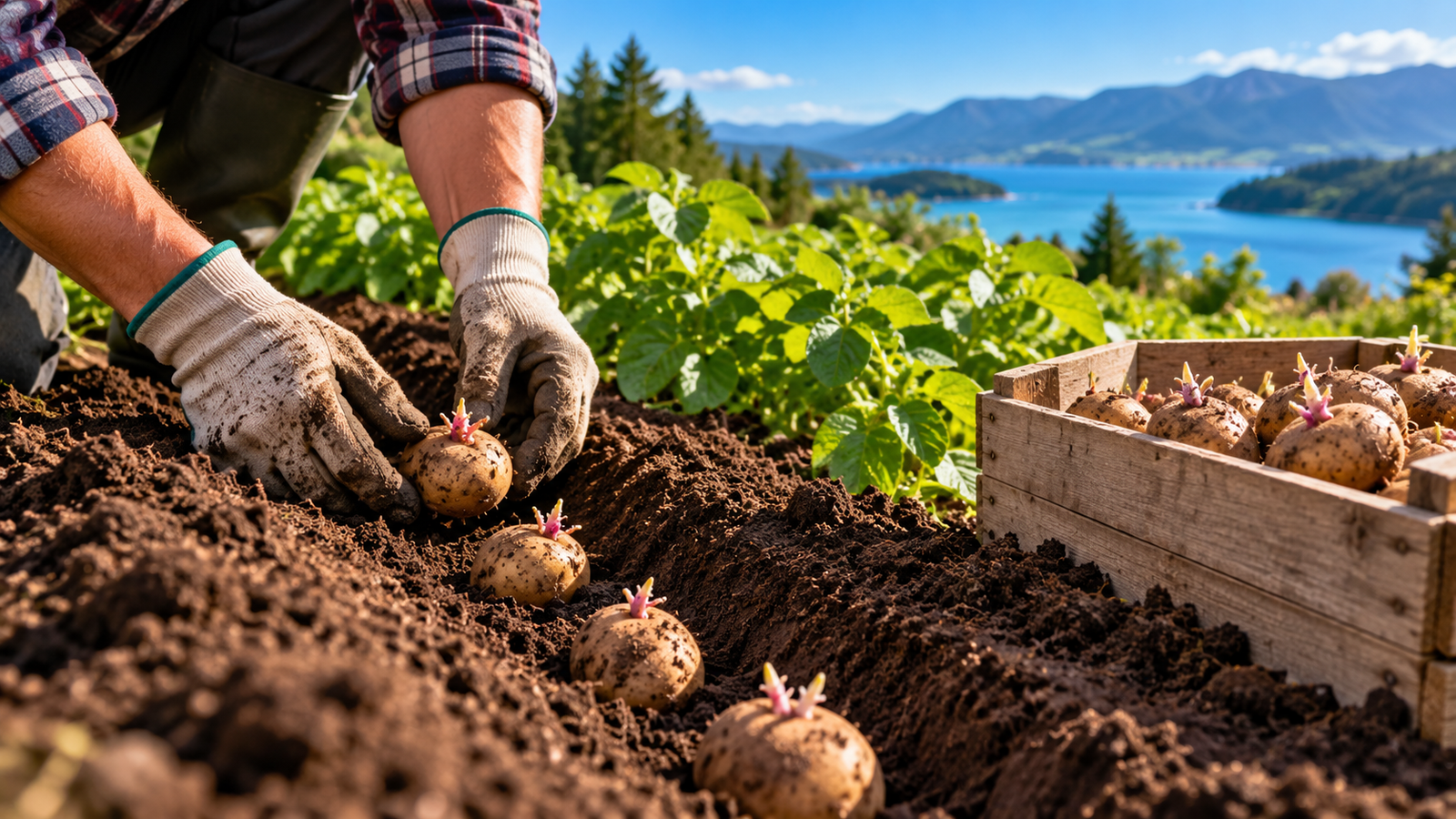
- Start with certified seed potatoes. Choose healthy, disease-free seed potatoes from a reputable garden supplier. Supermarket potatoes are not a reliable substitute.
- Chit if desired. Stand seed potatoes in a bright, cool, frost-free place for several weeks until short, sturdy shoots develop. Chitting is particularly helpful when planning an early crop.
- Choose a sunny site. Aim for at least six hours of sun and loose, well-drained soil. Avoid sites where potatoes or other nightshades have recently grown.
- Prepare the soil. Loosen compacted ground and work in well-rotted organic matter. Avoid excessive fresh manure or heavy nitrogen feeding.
- Plant shoots facing upwards. Set seed potatoes roughly 10–15 cm deep, around 30 cm apart, with approximately 60–75 cm between rows. Adjust to the variety and supplier’s instructions.
- Water and mulch. Water after planting if the soil is dry, but do not saturate it. Add mulch once growth is established to conserve moisture.
- Earth up as plants grow. Draw soil around the stems, leaving leafy growth exposed. This helps prevent developing tubers from receiving light and turning green.
Can you grow potatoes in pots or grow bags?
Yes. Containers are a practical option for patios, renters and small urban gardens. Choose a deep pot or grow bag with generous drainage holes; a container of roughly 40 litres or more is a useful starting point for a small crop, although capacity requirements vary by variety.
Fill the base with quality potting mix, place a modest number of seed potatoes without crowding them, cover with mix, and add more as the stems grow. Keep the container in sun and monitor moisture closely: pots dry out faster than garden beds but should never stay waterlogged.
Looking after potato plants
Watering
Keep soil evenly moist during active growth, especially when tubers are forming. Deep, occasional watering is generally preferable to frequent light sprinkling. Avoid letting the soil swing between very dry and saturated conditions.
Feeding
Use compost and a balanced fertiliser suitable for potatoes, following the label. Too much nitrogen can encourage leafy growth at the expense of tubers.
Earthing up and mulching
As stems grow, gently mound soil around their bases. This protects tubers from sunlight and helps suppress weeds. Mulch can reduce evaporation, but keep it clear of stems if conditions are persistently wet.
Frost and wind
Potato foliage is frost-sensitive. In colder districts, check forecasts and use appropriate frost cloth when necessary. Remove covers or ventilate them as conditions warm.
When are potatoes ready to harvest?
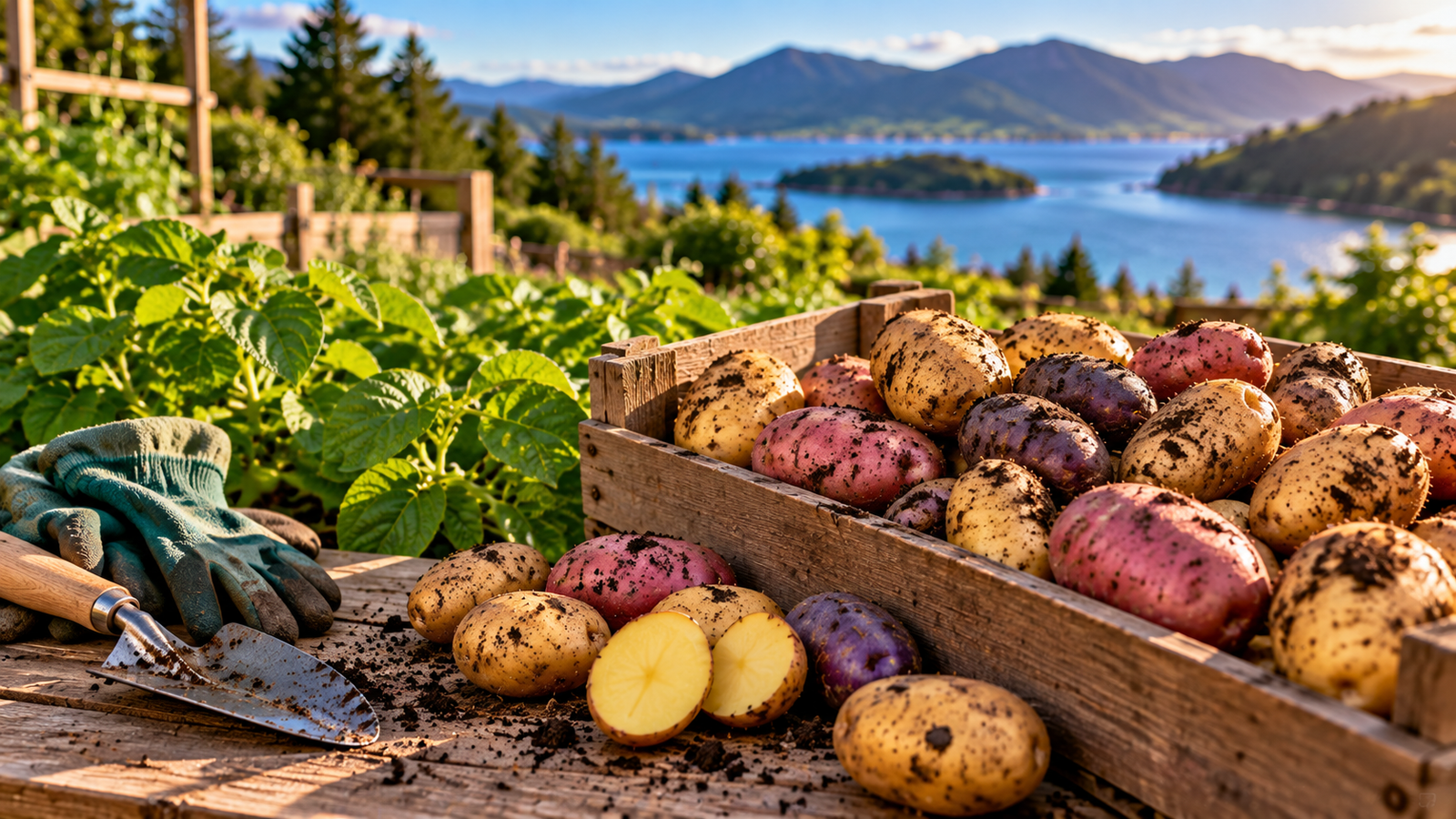
For new potatoes, carefully check around the edge of a plant once it reaches the variety’s expected early-harvest period. Small tubers with delicate skins can be lifted and eaten promptly. For mature storage potatoes, wait until foliage yellows and dies back naturally, then allow skins to firm before lifting in suitable dry weather.
Use a garden fork well away from the stems to avoid piercing tubers. Brush off loose soil rather than washing potatoes intended for storage. Cure and store only sound, mature potatoes in a cool, dark, ventilated place; use damaged ones promptly.
Common potato-growing problems in NZ
| Problem | Likely reason | What to do |
|---|---|---|
| Seed potatoes rot before sprouting | Cold, waterlogged soil or poor drainage | Wait for warmer conditions and improve drainage. |
| Leaves blacken after a cold night | Frost damage | Protect new growth; assess recovery once frost risk passes. |
| Lots of leaves, few potatoes | Too much nitrogen, insufficient sun or early harvest | Check feeding, light and variety maturity. |
| Green potatoes | Tubers exposed to sunlight | Earth up plants; discard green tubers. |
| Brown or collapsing foliage | Could be blight or another disease, drought or natural senescence | Inspect symptoms carefully and seek local diagnosis before treating. |
| Cracked or misshapen tubers | Uneven watering or variable growing conditions | Maintain steadier moisture and avoid waterlogging. |
Frequently asked questions
What is the best month to plant potatoes in New Zealand?
October is a useful general target for many home gardens, but there is no single best month nationwide. Mild northern areas may start earlier, while frost-prone southern and inland gardens may need to wait until November or later.
Can I plant potatoes in September in NZ?
Yes, if your soil is warming and you can protect emerging shoots from frost. September is less suitable for cold, wet or high-altitude sites.
When should I plant potatoes for Christmas?
Choose an early variety and count backwards from Christmas using its stated maturity period. Many gardeners aim for September or early October, but frost risk and soil temperature should determine the final date.
How deep should I plant seed potatoes?
About 10–15 cm is a common starting depth in garden beds, followed by earthing up as plants grow. Check the seed supplier’s instructions for your variety.
Can I grow potatoes from supermarket potatoes?
Certified seed potatoes are preferable because they are produced and sold for planting and help reduce the risk of introducing disease to your garden.
Can potatoes grow in containers in NZ?
Yes. Use a large, well-drained pot or grow bag, quality potting mix, enough sun and consistent watering. Avoid overcrowding.
Final thoughts
When deciding when to plant potatoes in NZ, start with your local frost risk and soil conditions, then choose a variety that suits your desired harvest date. A spring planting is the most practical approach for many New Zealand gardens, but timing it to your own microclimate is the key to a reliable crop.
Further reading: Tui Garden – Potato Growing Guide; Edible Backyard – How to Grow Potatoes; Tupu – Potatoes. Regional timing and maturity estimates in this article are indicative; always check local weather and seed-potato instructions.
0 Comments