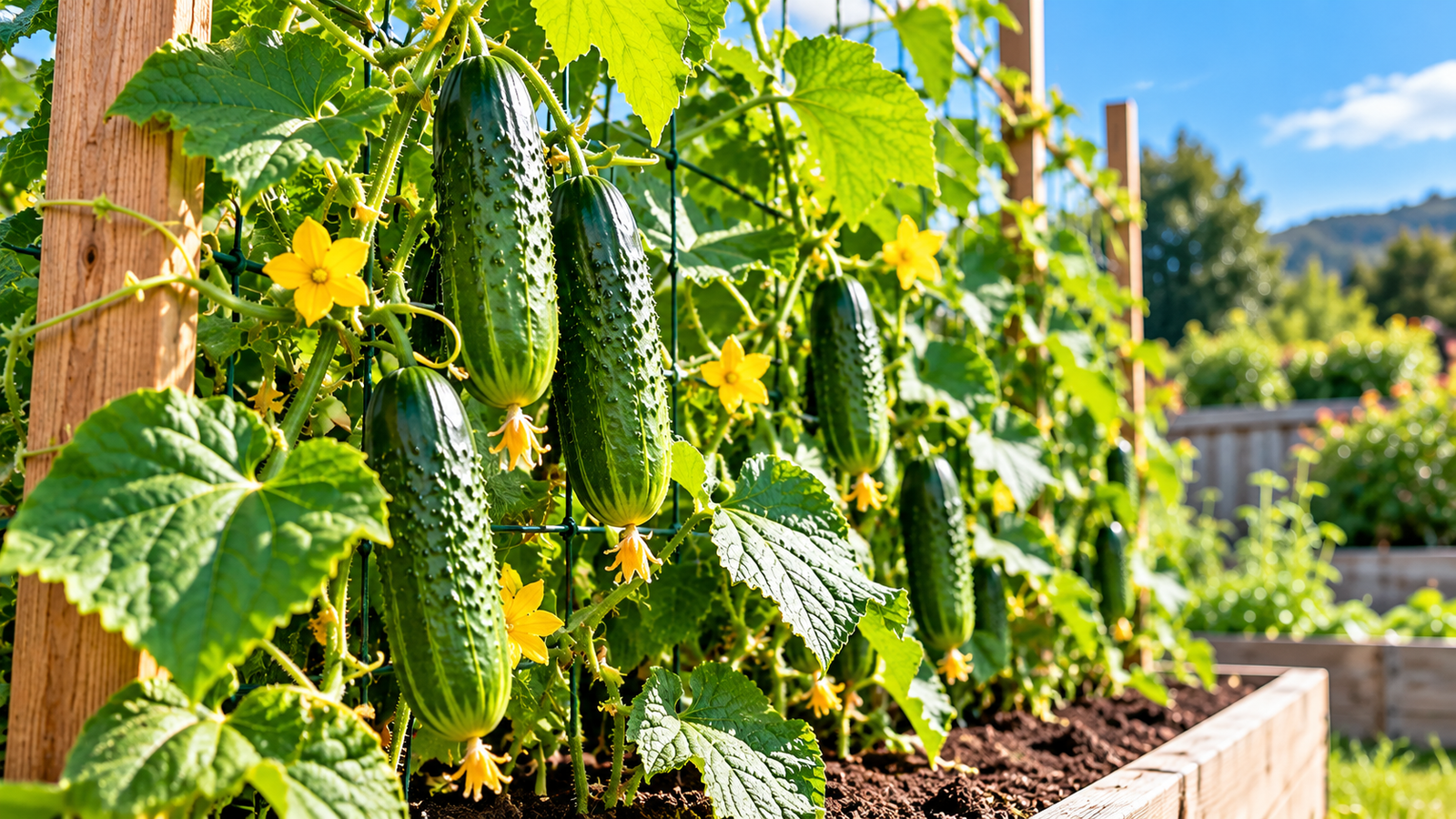
Root & Yard / Grow / New Zealand gardening
How to Grow Cucumbers in NZ: Planting Times, Trellises & Common Problems
Crunchy homegrown cucumbers are one of summer’s best rewards. But in New Zealand, a successful crop depends on more than putting seedlings in the ground: warm soil, the right planting window, steady watering and a sensible support system all matter.
This guide covers growing cucumbers in New Zealand, from Auckland’s relatively mild spring to the shorter outdoor season in Canterbury and Otago. Whether you have a raised bed, a small backyard or a single sunny container, here’s how to get started.
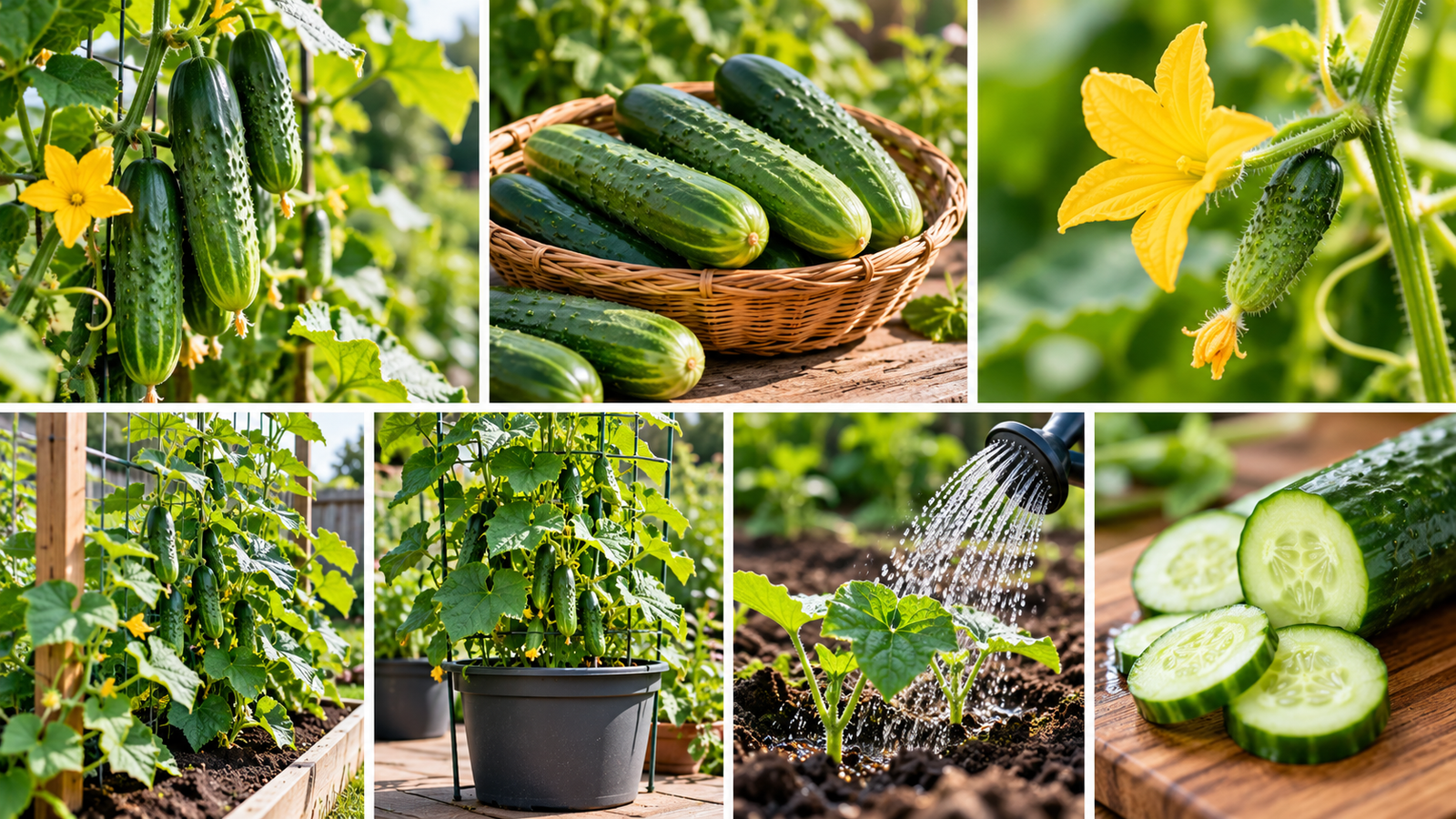
*Variety, weather and whether you’re counting from sowing or transplanting affect harvest timing. Always check the seed packet.
When to plant cucumbers in New Zealand
Cucumbers are frost-tender, warmth-loving plants. The most useful planting signal is not a date on the calendar but the combination of warm soil, mild nights and no likely late frost. Seedlings can stall or fail in cold, soggy conditions.
| Region | Indicative outdoor planting window | What to watch |
|---|---|---|
| Northland & sheltered Auckland | October–January | Cool spring nights and local frost pockets |
| Waikato & Bay of Plenty | October–January | Inland frost risk and soil warmth |
| Wellington & lower North Island | November–January | Wind exposure and cold nights |
| Nelson & Marlborough | November–January | Late frosts in inland gardens |
| Canterbury | November–December | Frost-prone areas and cool soil |
| Otago, Central Otago & Southland | Often December | Shorter season; consider a tunnel house |
These are broad planning windows, not guarantees. Coastal, inland, elevated and sheltered gardens can differ significantly even within the same region. The regional pattern is consistent with New Zealand planting guides, including Planting Season and Daltons.
Which cucumber variety should you grow?
Choose for the way you want to eat your harvest and the space you have. These types are commonly discussed by New Zealand seed and garden suppliers.
| Type | Best for | What to know |
|---|---|---|
| Lebanese | Everyday salads, small gardens | Shorter, crisp fruit; convenient to harvest regularly |
| Telegraph / Continental | Long slicing cucumbers | Vigorous climbing plants; check whether your chosen cultivar is intended for a greenhouse or outdoors |
| Apple cucumber | Something different | Rounded, pale fruit; harvest at the recommended size |
| Burpless | Mild-flavoured slicing fruit | Check the seed packet for growing habit and mature size |
| Compact or bush types | Containers and tight spaces | Look for a variety explicitly labelled compact; not every cucumber stays small |
Beginner pick: A Lebanese cucumber on a simple trellis is a practical starting point for many home gardens. If you want very long telegraph cucumbers, pay attention to the variety’s growing requirements and whether it prefers protected conditions.
How to plant cucumbers step by step
- Choose a warm, sheltered spot. Aim for full sun and protection from strong wind. Avoid low-lying spots where cold air settles.
- Prepare the soil. Work mature compost or well-rotted organic matter into a free-draining bed. Avoid planting into heavy, waterlogged soil.
- Put the support in first. Install a trellis before roots and vines spread, rather than forcing stakes into the bed later.
- Sow or transplant gently. Sow seed at the depth shown on the packet, or transplant seedlings without breaking up their root ball. Cucumbers dislike root disturbance.
- Allow space and airflow. Follow your cultivar’s spacing instructions. For many trellised vines, roughly 30–45 cm between plants is a useful planning range, but vigorous varieties may need more.
- Water thoroughly. Keep the root zone evenly moist during establishment without leaving it saturated.
- Mulch once the soil is warm. A light layer of organic mulch can help conserve moisture and reduce soil splash.
In colder districts, start seeds individually in pots under protection a few weeks before you expect to plant outside. Harden young plants off gradually before transplanting.
How to grow cucumbers vertically in NZ
Growing cucumbers vertically is especially useful for small gardens and raised beds. A sturdy trellis keeps fruit away from damp soil, makes harvesting easier and improves air circulation around the foliage.
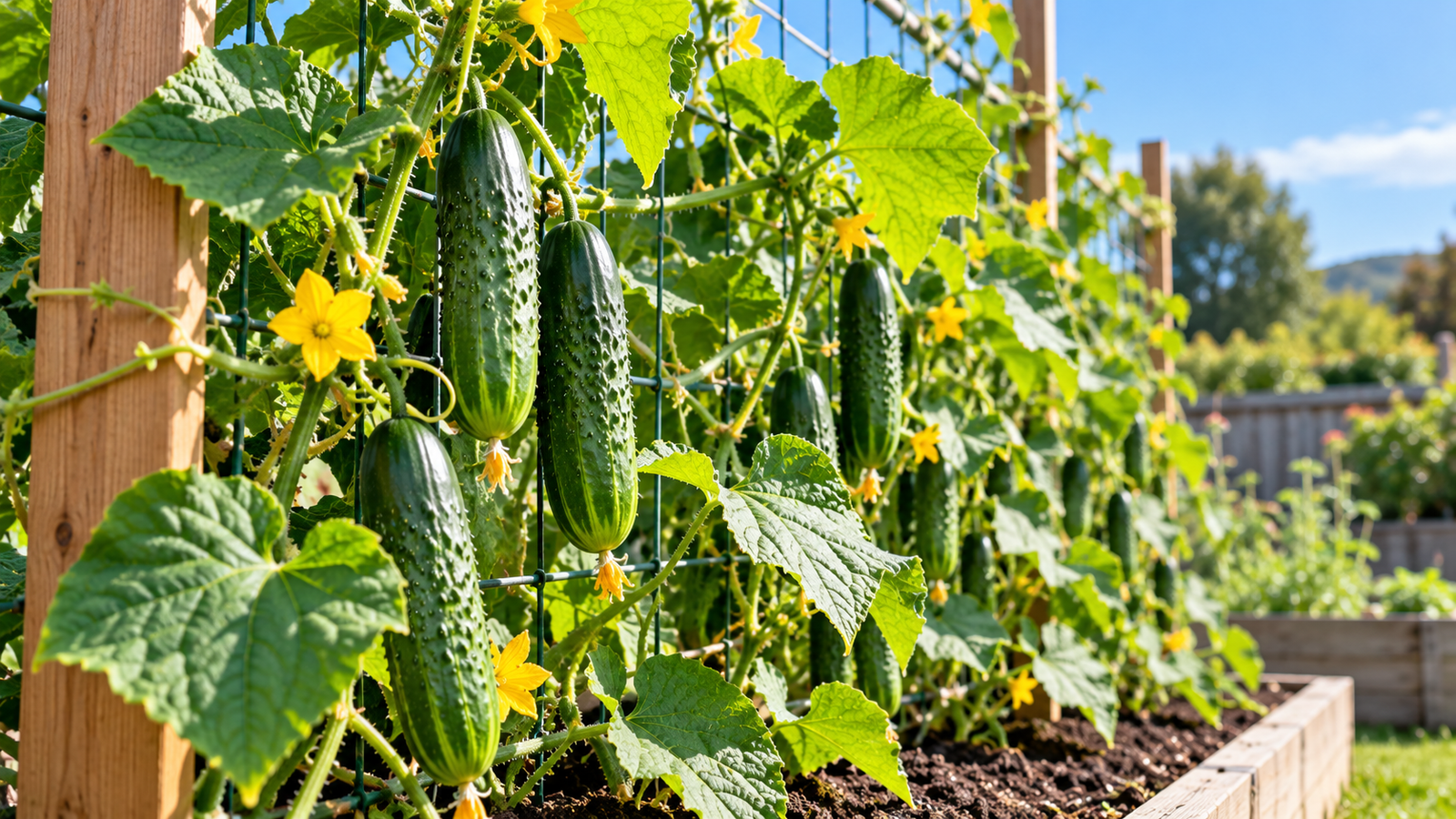
Three simple trellis options
- Fence-mounted mesh: Secure suitable garden mesh to a sturdy fence with space for the vines to climb.
- A-frame trellis: Two angled panels joined at the top provide support and can straddle a narrow bed.
- Freestanding panel: A rigid mesh panel fixed to strong posts works well beside a raised bed.
Place the trellis where it will not shade shorter crops unnecessarily. In windy locations, anchor it securely: mature vines, leaves and fruit add weight and catch the wind. Guide young stems gently onto the support, using soft ties if needed.
Growing cucumbers in pots and containers
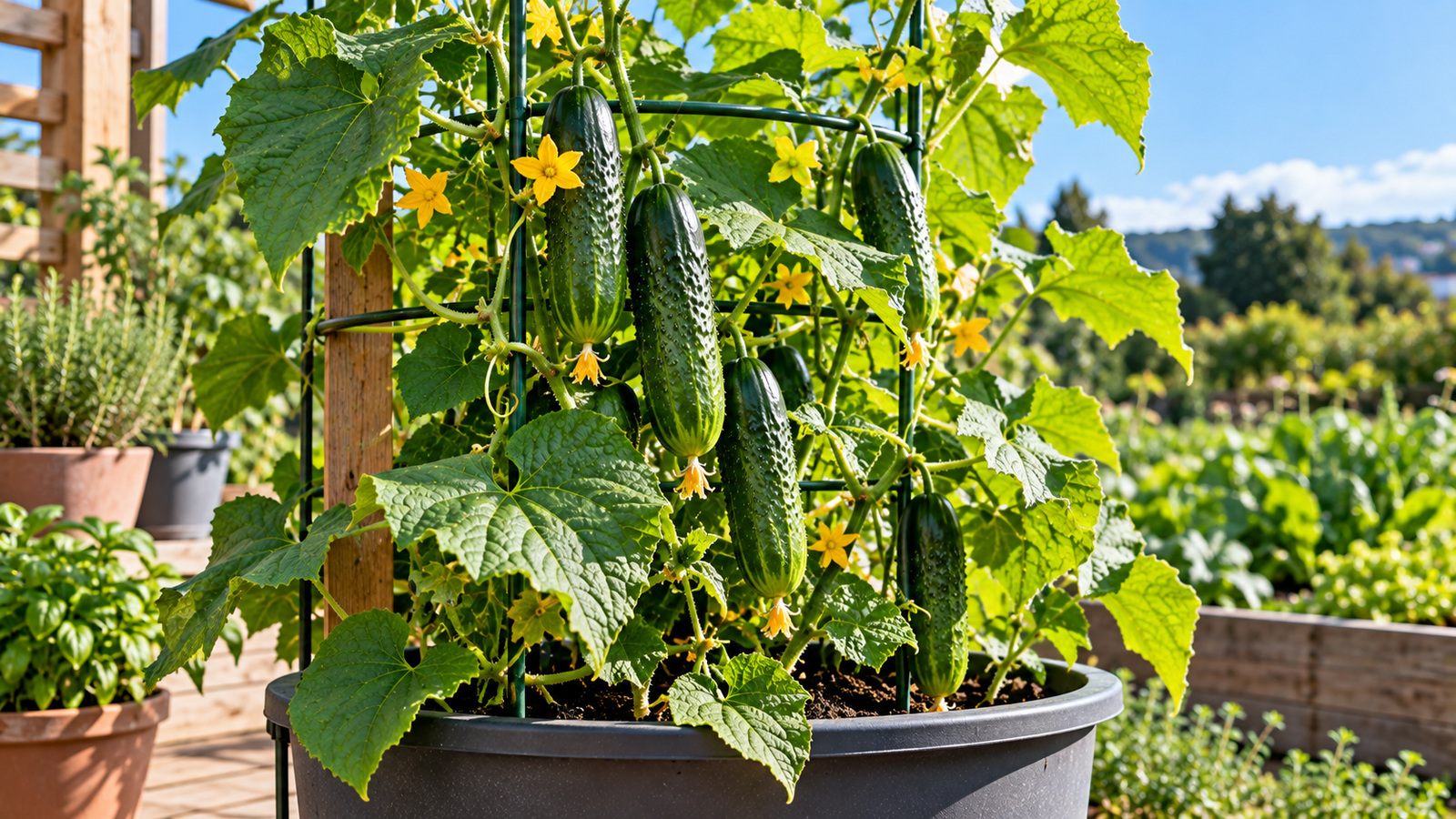
You do not need a vegetable bed to grow cucumbers. Containers can work well on a sunny patio or in a sheltered courtyard, provided you choose an appropriate variety and stay on top of watering.
- Choose a large container with drainage holes; at least 40 cm wide and deep is a useful starting point for many varieties.
- Use quality vegetable potting mix rather than compacted garden soil.
- Position the pot in a sunny, sheltered place.
- Add a stable trellis or tripod for climbing varieties.
- Check moisture frequently during hot, windy weather; pots dry faster than beds.
- Feed according to the instructions on a suitable vegetable fertiliser.
A compact variety can be easier to manage in a pot, but even a compact plant needs adequate root space. If the container dries out repeatedly, fruit quality and production can suffer.
Watering, feeding and pollination
Keep moisture consistent
Cucumbers grow quickly and have a high demand for water when flowering and fruiting. Aim for soil that stays evenly moist, not saturated. Water at the base of the plant rather than regularly soaking the foliage. A mulch layer can reduce moisture swings.
Feed for sustained growth
Start with compost-rich soil and use a vegetable fertiliser as directed on its label. Container plants may need more frequent feeding because nutrients are washed through the potting mix. Avoid guessing large doses: excess fertiliser can harm plants.
Understand the flowers
Many cucumber varieties produce separate male and female flowers. Female flowers have a tiny cucumber-shaped swelling behind the bloom. If female flowers repeatedly fail to set fruit, poor pollination may be a factor. Encourage pollinators and, where appropriate, transfer pollen gently from a male flower to a female flower with a small brush.
Important: Some greenhouse or parthenocarpic varieties set fruit without pollination, and their care requirements can differ. Follow the instructions for your exact cultivar.
Common cucumber problems in NZ — and what to do
| What you see | Possible cause | First step |
|---|---|---|
| Leaves turning yellow | Overwatering, poor drainage, nutrient imbalance or ageing leaves | Check soil moisture and drainage before feeding |
| White powder on leaves | Powdery mildew | Improve airflow, avoid wetting foliage and remove badly affected material where appropriate |
| Flowers but no cucumbers | Early male flowers, cool conditions or inadequate pollination | Look for female flowers and check pollinator activity |
| Small fruit shrivels | Poor pollination, temperature or moisture stress | Check variety, watering and weather |
| Bitter cucumbers | Stress, uneven moisture or variety | Maintain even watering and harvest at the correct size |
| Seedlings collapse | Cold, wet growing media or seedling disease | Improve warmth, drainage and hygiene |
| Curled or distorted new growth | Aphids or other sap-feeding insects, among other causes | Inspect the undersides of leaves before treating |
For persistent or severe disease, identify the problem before using a treatment. If applying any garden product, follow its New Zealand label instructions, including safety precautions and harvest withholding periods where relevant.
When and how to harvest cucumbers
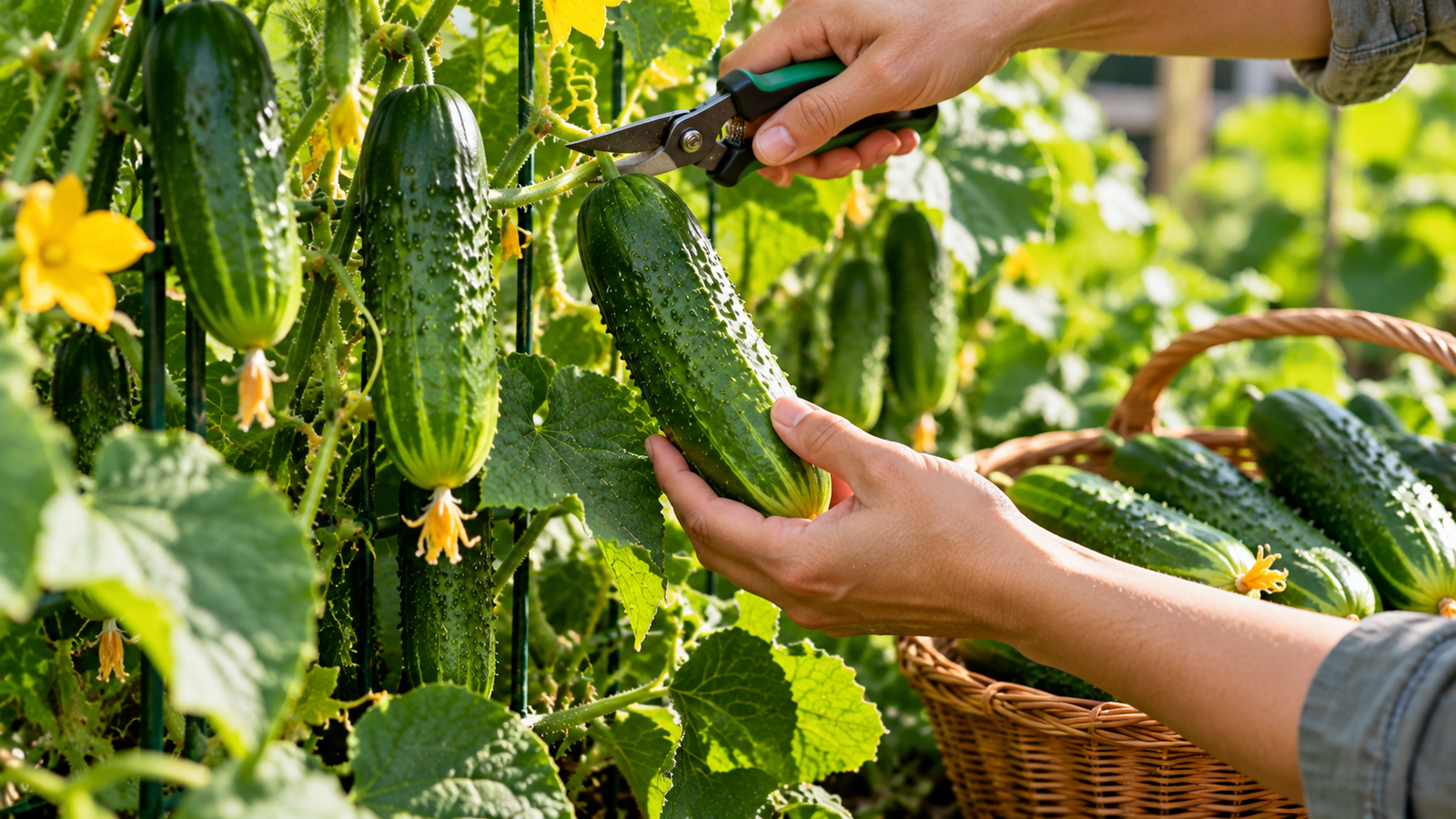
Depending on the variety and conditions, cucumbers may be ready to pick around 7–12 weeks after starting the crop. Use the expected fruit size on the seed packet rather than waiting for every cucumber to become enormous.
- Check vines every day or two during peak summer production.
- Harvest when fruit is firm and at the recommended size for the variety.
- Cut the stem with clean secateurs or scissors instead of tugging the fruit off the vine.
- Pick regularly to encourage continued production.
- Remove overmature fruit promptly.
Want a longer harvest? Where your climate and growing season allow, consider sowing a second small batch rather than relying on a single planting. In cooler regions, prioritise getting the first crop established in warm conditions rather than sowing too late.
Quick NZ cucumber-growing checklist
- ☐ Choose a variety suited to your space and conditions.
- ☐ Check the local frost forecast and soil warmth.
- ☐ Prepare a sunny, sheltered, well-drained position.
- ☐ Add compost and install the trellis before planting.
- ☐ Give each plant adequate room.
- ☐ Water consistently, especially as fruit develops.
- ☐ Inspect flowers and foliage regularly.
- ☐ Harvest at the right size and pick often.
Frequently asked questions
What month should I plant cucumbers in NZ?
In warmer northern areas, outdoor planting often starts in October once the soil is warm and frost risk has passed. In cooler districts, November or December is usually safer. Local conditions matter more than a fixed date.
Can I grow cucumbers in pots in New Zealand?
Yes. Use a large, free-draining container, quality potting mix, regular water and a stable support for climbing varieties. A pot at least 40 cm wide and deep is a useful starting point.
Do cucumbers need a trellis?
Vining cucumbers benefit from a trellis because it saves space and lifts fruit off the ground. Some compact bush varieties can grow without a tall support; check the seed packet.
Why are my cucumber plants flowering but not producing fruit?
Young plants may produce male flowers before female ones. Cold weather and limited pollination can also reduce fruit set. Some greenhouse varieties fruit without pollination, so identify your variety first.
How often should I water cucumber plants?
Water often enough to keep the root zone evenly moist, adjusting for weather, soil type, plant size and whether the crop is in a pot. Avoid a rigid daily schedule that leaves soil either waterlogged or dry.
Can I grow cucumbers outside in Christchurch or Dunedin?
Yes, but wait until frost risk has passed and the soil is warm. Christchurch gardens may be ready in November or December; in Dunedin and other cool southern areas, December or protected growing may be more reliable.
Final verdict
Growing cucumbers in NZ is straightforward once you get the fundamentals right: plant for your local climate, not just the month; give vines sun and support; keep moisture steady; and harvest regularly. For many beginners, a Lebanese cucumber trained up a simple trellis is an excellent first crop. In colder regions, a little patience in spring can make the difference between struggling seedlings and a productive summer vine.
Further reading and New Zealand sources
- Tui Garden — Cucumber Growing Guide
- Yates New Zealand — How to Grow Cucumber
- Bunnings NZ — How to Grow and Care for Cucumbers
- Daltons — Spring & Summer Vegetable Planting Guide
Keep planning your spring garden: Read our guide to what to plant in September in New Zealand for a broader seasonal checklist.
0 Comments