Grow • Fruit & berries • New Zealand
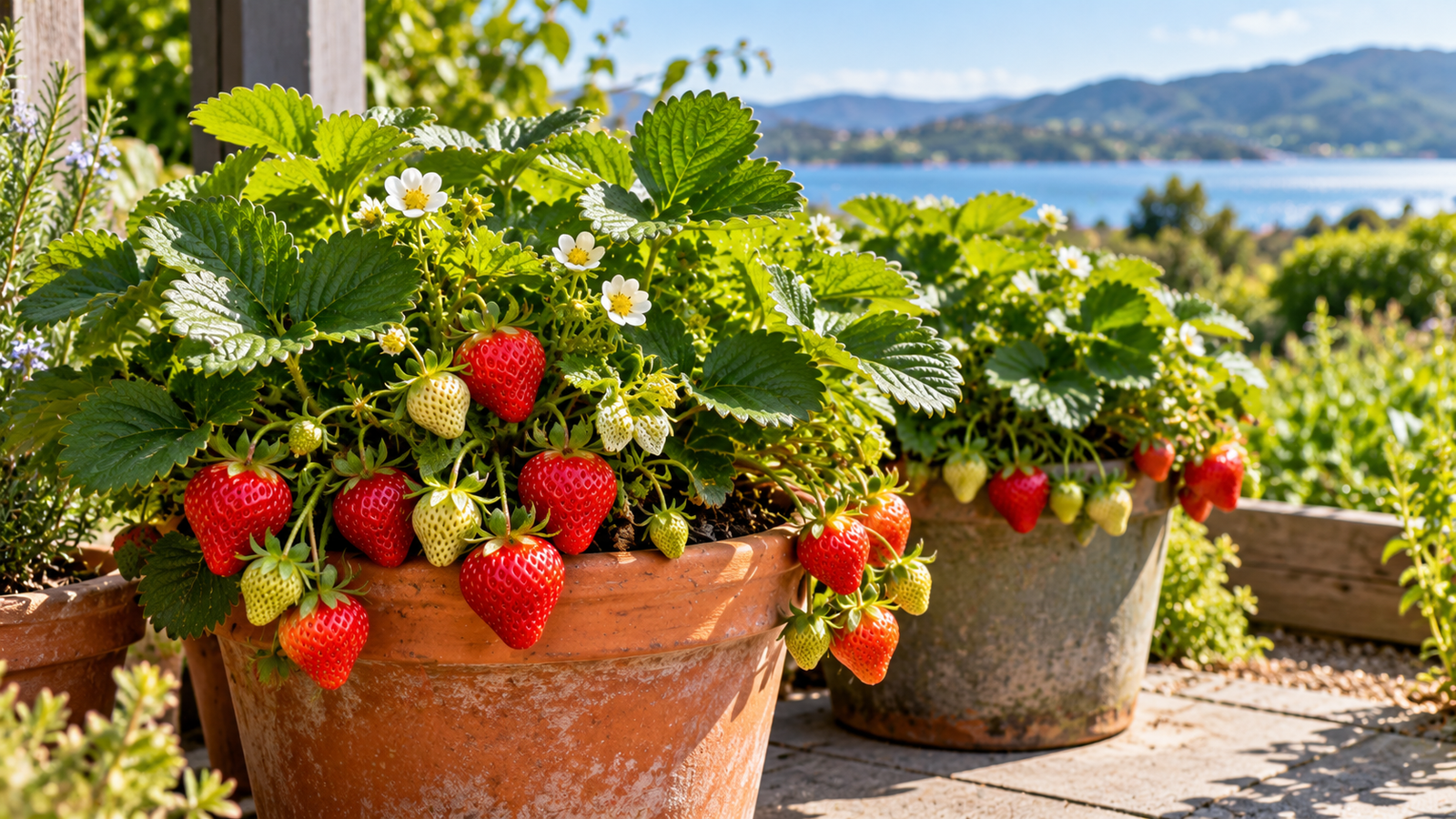
There is something special about picking a sun-warmed strawberry from your own garden. The good news? You do not need a large backyard to grow them in New Zealand. A sunny raised bed, a few containers or even a hanging basket can produce delicious berries with the right care.
Whether you are planting your first strawberry crowns or trying to improve a disappointing harvest, this guide explains when to plant strawberries in NZ, how to grow them in pots, what to feed them and how to protect the fruit from birds and slugs.
When to plant strawberries in New Zealand
Winter to early spring is a particularly useful planting period for bare-root crowns and young strawberry plants. In New Zealand, garden centres commonly stock plants from around June onwards, and planting can continue through spring. Tui Garden gives a broad June–November planting window, although earlier planting generally gives roots more time to develop before fruiting.
| NZ region | Practical planting approach | What to watch |
|---|---|---|
| Auckland, Northland and warmer northern areas | Plant in winter or early spring where drainage is good; spring planting is also possible. | Hot, drying weather can stress newly planted crowns and containers. |
| Waikato, Bay of Plenty, Wellington and much of the central North Island | Winter to early spring is a useful target; plant once the bed is workable. | Exposure, wet soils and local frost pockets vary considerably. |
| Canterbury, Otago, Southland and colder inland areas | Use hardy crowns in well-drained beds during the cooler planting season; protect vulnerable new growth when necessary. | Hard frosts and waterlogged winter soil can slow establishment. |
These are regional guidelines, not fixed calendar rules. A sheltered coastal garden can behave very differently from a frosty inland property in the same region. If you are planting in late October or November, choose vigorous nursery plants and keep them evenly watered; you may get a smaller first crop than with earlier-established plants.
Which strawberry plants should you choose?
Start with healthy nursery-grown plants or crowns suited to your local conditions. Garden centres may offer varieties that fruit heavily over a shorter period as well as types that produce over a longer season. The exact availability changes between suppliers and years.
- Short-season or June-bearing types: often produce a concentrated flush of berries, useful if you want a bigger harvest over a shorter period.
- Day-neutral or repeat-fruiting types: may produce over a longer period when temperatures and care are suitable.
- Runners from an established patch: an inexpensive way to renew plants, provided the parent plants are healthy.
If you have room, try more than one locally available variety to spread the picking season. Read the plant label for mature size and any variety-specific care.
How to plant strawberries in garden beds
- Choose a sunny location. Aim for at least six hours of direct sunlight where possible. Good airflow helps leaves dry after rain.
- Improve drainage. Work compost into the bed and avoid compacted, persistently soggy soil. In heavy ground, consider a raised bed or low planting mound.
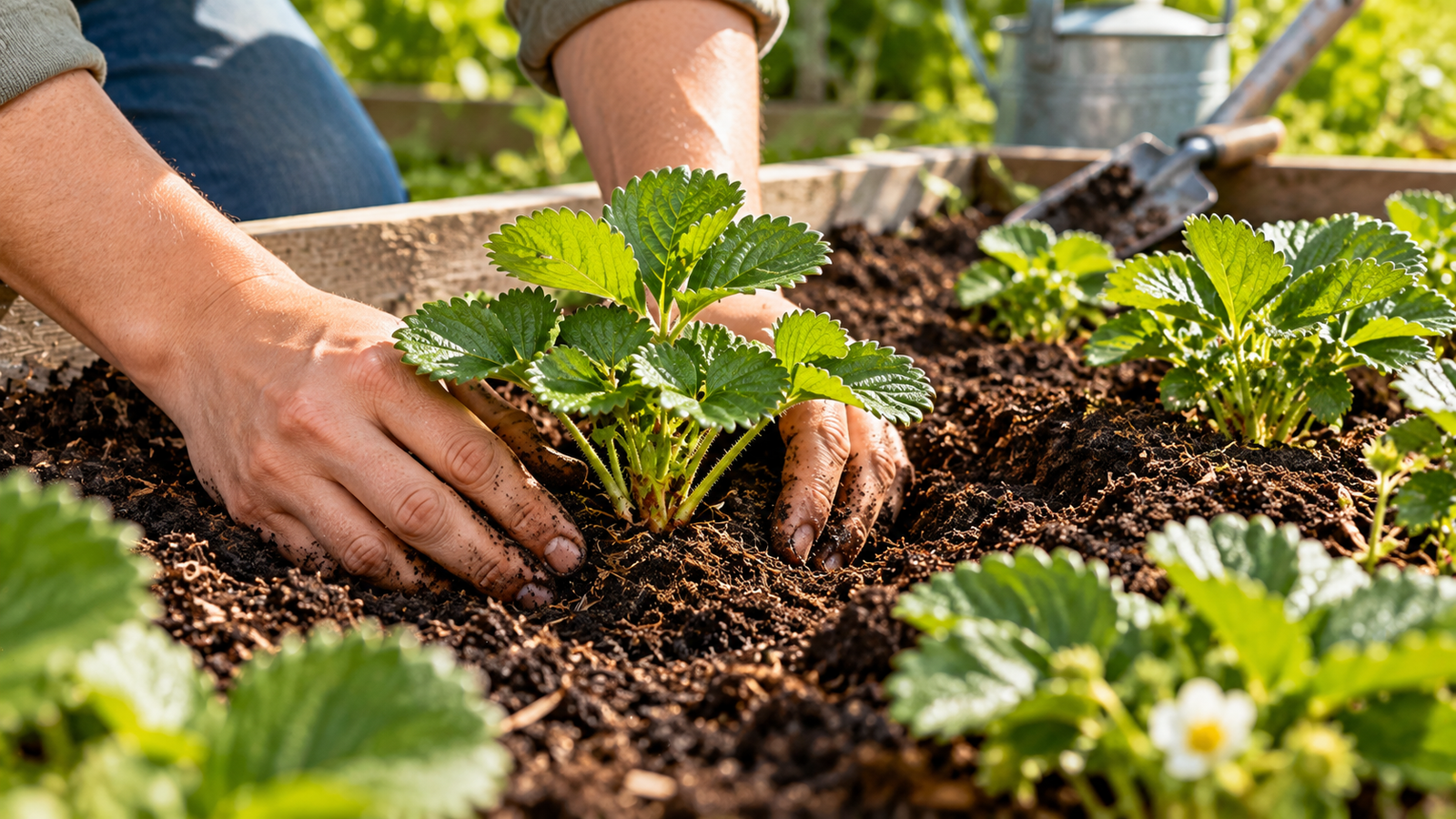
- Set the crown at the right height. Spread the roots down into the planting hole, but keep the crown—the point where leaves meet roots—at soil level. Burying it can encourage rot; leaving roots exposed can dry them out.
- Allow room to grow. Around 20–30 cm between plants is a practical starting point for home beds, adjusted to the variety and planting system.
- Water thoroughly. Settle soil around the roots and keep moisture consistent while plants establish.
- Mulch carefully. Use clean straw or another suitable mulch around, not over, the crowns.
If you are building a dedicated strawberry patch, a raised bed can help with drainage and harvesting. Our guide to the best timber for raised garden beds in NZ explains material choices for a longer-lasting setup.
How to grow strawberries in pots and hanging baskets
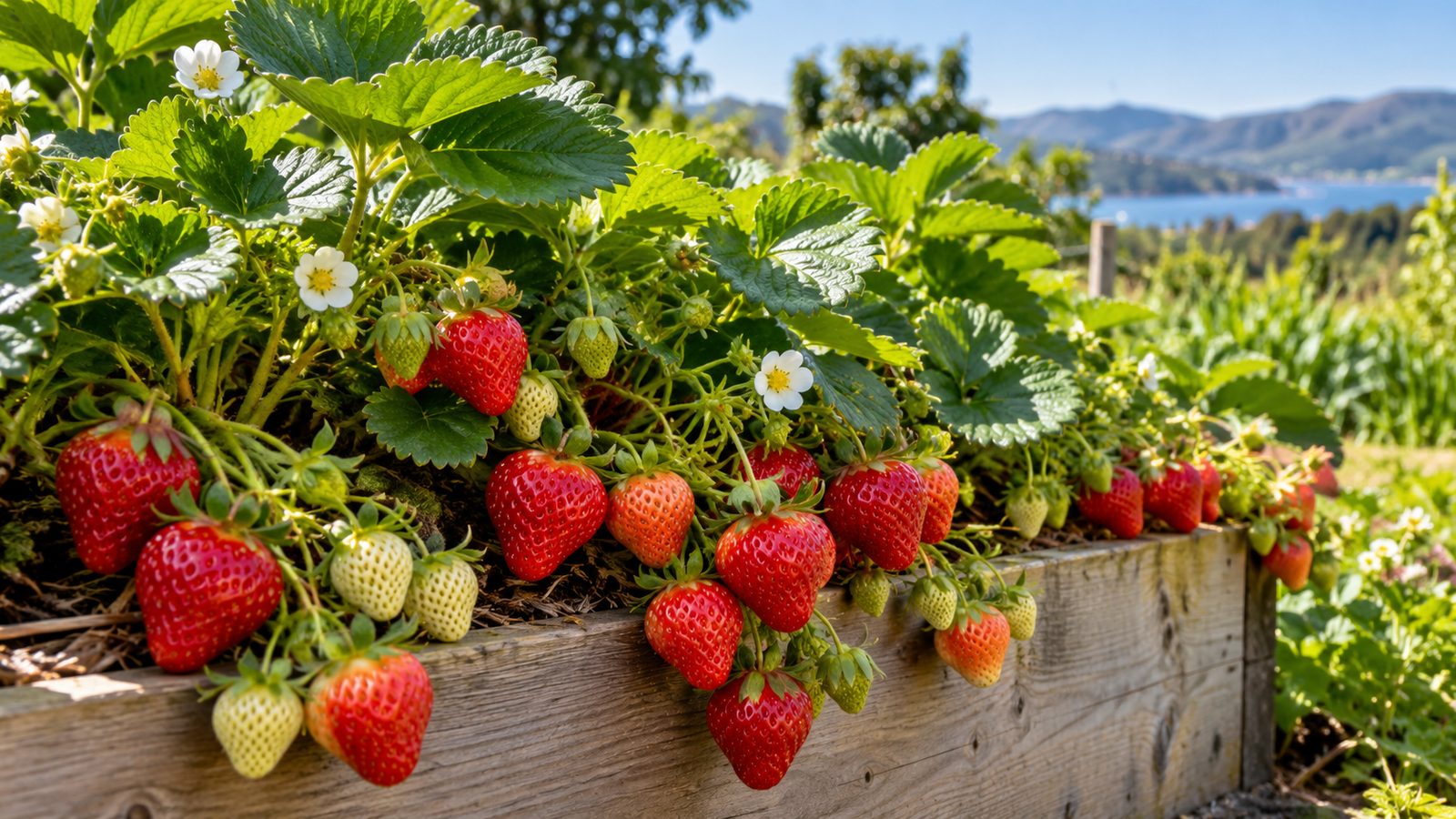
Strawberries are well suited to container gardening because their roots are relatively compact. Pots also let you move plants into a sunnier position and lift fruit away from damp ground.
Choosing a container
Use a pot with generous drainage holes and enough room for the plants to develop. A container around 25–30 cm wide is a useful starting point for a single strawberry plant; larger troughs can hold several plants with appropriate spacing. Choose quality potting mix rather than dense garden soil.
Container care that makes a difference
- Check moisture regularly: containers dry faster than garden beds, especially in wind and summer heat.
- Water the potting mix thoroughly, allowing excess water to drain; avoid leaving pots permanently standing in water.
- Use a fertiliser suitable for fruiting plants and follow the label. Nutrients leach out of containers faster than in-ground soil.
- Position hanging baskets where they receive sun but are not exposed to constant hot, drying wind.
- Keep developing fruit clear of wet potting mix where possible.
Watering, feeding and mulching for bigger harvests
Water evenly, not constantly
Strawberries prefer consistently moist, freely draining soil. Deep watering when the upper layer begins to dry is usually more useful than frequent light splashes. During hot spells, containers may need daily checks. Water at soil level when practical to reduce prolonged leaf wetness.
Feed without overdoing nitrogen
Apply a balanced fertiliser formulated for berries or fruiting plants during active growth, following the manufacturer’s rate and timing. Too much nitrogen can encourage lush leaves without a matching improvement in fruit. A healthy plant needs nutrients, sunlight, water and successful pollination—not simply more fertiliser.
Use straw mulch
Clean straw or suitable organic mulch helps conserve moisture, reduce splashed soil and keep berries away from wet ground. Keep mulch away from the central crown. Refresh old mulch when it becomes damp, contaminated or a shelter for pests.
Why are my strawberries not producing fruit?
| Problem | Likely cause | What to try |
|---|---|---|
| Lots of leaves, few berries | Insufficient sun, excess nitrogen, young plants or runners diverting energy | Improve sunlight; review feeding; remove unwanted runners during fruiting. |
| Small or misshapen berries | Incomplete pollination, uneven moisture or plant stress | Encourage pollinators, maintain moisture and avoid spraying flowers. |
| Fruit rots before picking | Wet fruit touching soil, poor airflow or fungal disease | Use clean mulch, remove damaged fruit and improve spacing. |
| Holes in ripe berries | Slugs, snails, birds or other pests | Inspect plants at dusk, remove hiding places and use wildlife-safe netting. |
| Brown or yellow leaves | Old foliage, water stress, root problems or disease | Check soil moisture and drainage; remove badly damaged foliage; inspect for pests. |
How to keep birds away from strawberries
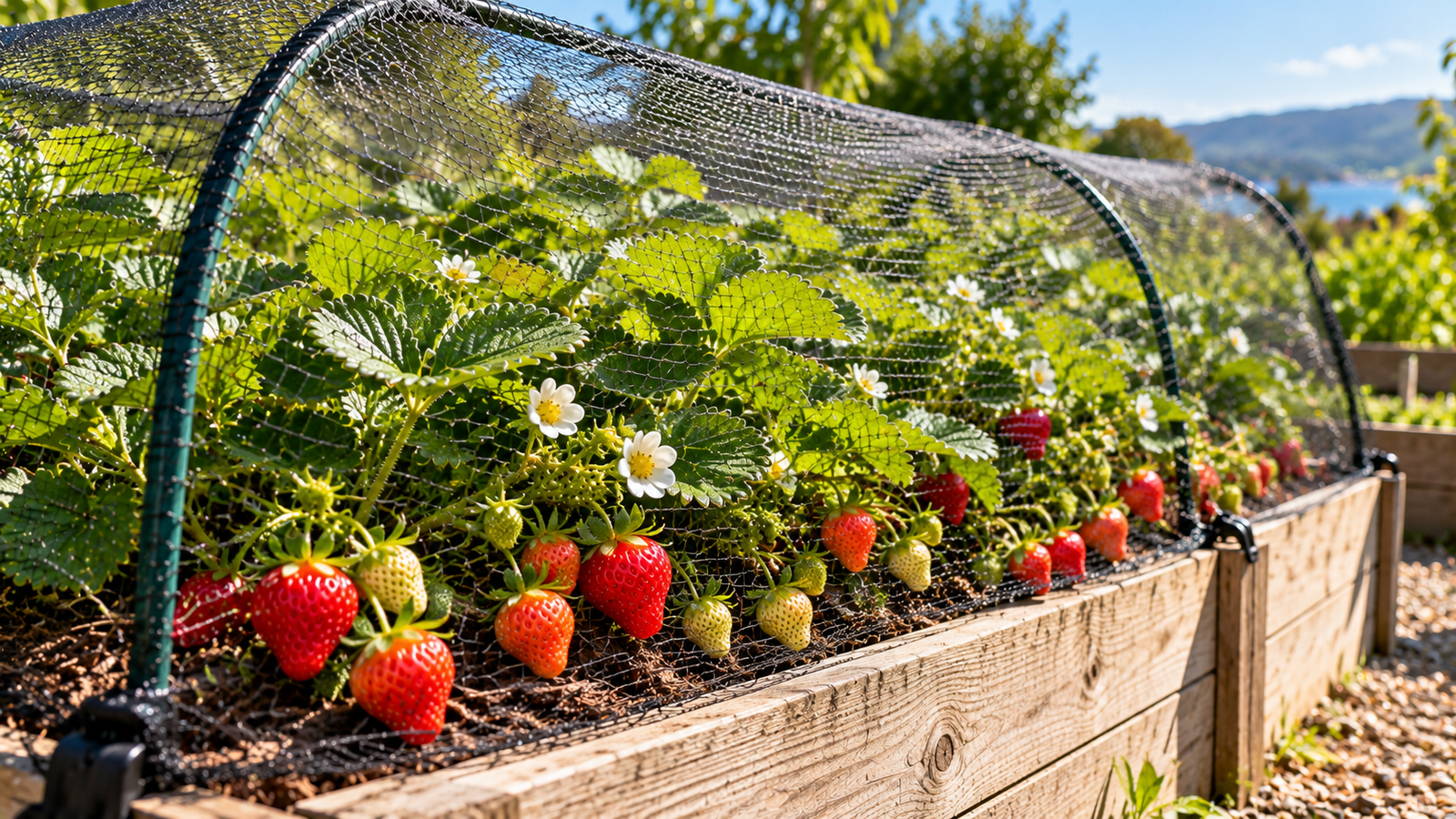
Install bird netting before berries turn red. Use wildlife-safe netting with a small mesh and keep it taut on a frame so birds cannot become tangled. Secure the edges and check the enclosure regularly. Avoid loose netting draped directly over fruiting plants.
What about slugs and snails?
Check beneath pots, boards and old mulch, especially after wet weather. Hand-picking after dark, improving airflow and keeping the patch tidy can help. If using any garden treatment, choose one approved for edible crops in New Zealand and follow its label and harvest withholding instructions.
When and how to harvest strawberries
Pick strawberries once they have developed their full ripe colour and aroma. Fruit does not become significantly sweeter after picking, so harvesting too early sacrifices flavour. Gently pinch or snip the stalk rather than pulling hard on the plant.
Check plants every day or two during peak ripening. Remove damaged berries promptly and refrigerate harvested fruit if you are not eating it soon.
What should you do with strawberry runners?
Runners are long stems that develop baby strawberry plants. During fruiting, removing runners you do not need can help the parent plant focus its resources. To propagate, pin a healthy runner plantlet into a small pot of moist potting mix while it remains attached. Once it has formed its own roots, cut the connecting stem and grow it on for next season.
Established strawberry plants can crop for more than one season, but productivity often declines after roughly two to three seasons. Renewing the patch gradually with healthy young plants can help maintain yields.
Frequently asked questions
Can I plant strawberries in October or November in NZ?
Yes. Spring planting is possible, but earlier-established plants generally have more time to develop roots before summer. Choose healthy plants and monitor watering closely.
Do strawberries need full sun?
They crop best in full sun. Around six or more hours of direct light is a useful goal, although conditions vary by variety and location.
How many strawberry plants should I grow?
Start with a manageable number based on your space and appetite. Five plants per person is a commonly quoted NZ gardening rule of thumb, not a guaranteed yield calculation.
Can strawberries survive winter in New Zealand?
Established plants generally survive winter, although severe frost, saturated soil and exposed containers can cause damage. Local conditions matter.
Should I remove strawberry flowers from new plants?
Not always. Removing early flowers may help very small or stressed transplants establish, but healthy, well-rooted plants can often be allowed to fruit. Base the decision on plant vigour and planting time.
The Root & Yard takeaway
For most NZ gardeners, the simplest path to better strawberries is to plant early, give plants plenty of sun, keep water consistent and protect ripening fruit. You do not need expensive equipment. A well-drained bed or generously sized pot, healthy plants and attentive seasonal care will do most of the work.
If you are planning the rest of your spring vegetable garden, see our guide to what to plant in September in New Zealand, or learn how to grow tomatoes in NZ alongside your berry patch.
Sources and further reading
- Tui Garden — Strawberry Growing Guide
- Yates NZ — How to Grow Strawberries
- Tui Garden — Replanting Strawberry Runners
Editorial gardening guide for New Zealand conditions. Planting times and results vary with local weather, variety and growing conditions. This article does not claim first-hand growing trials.
0 Comments