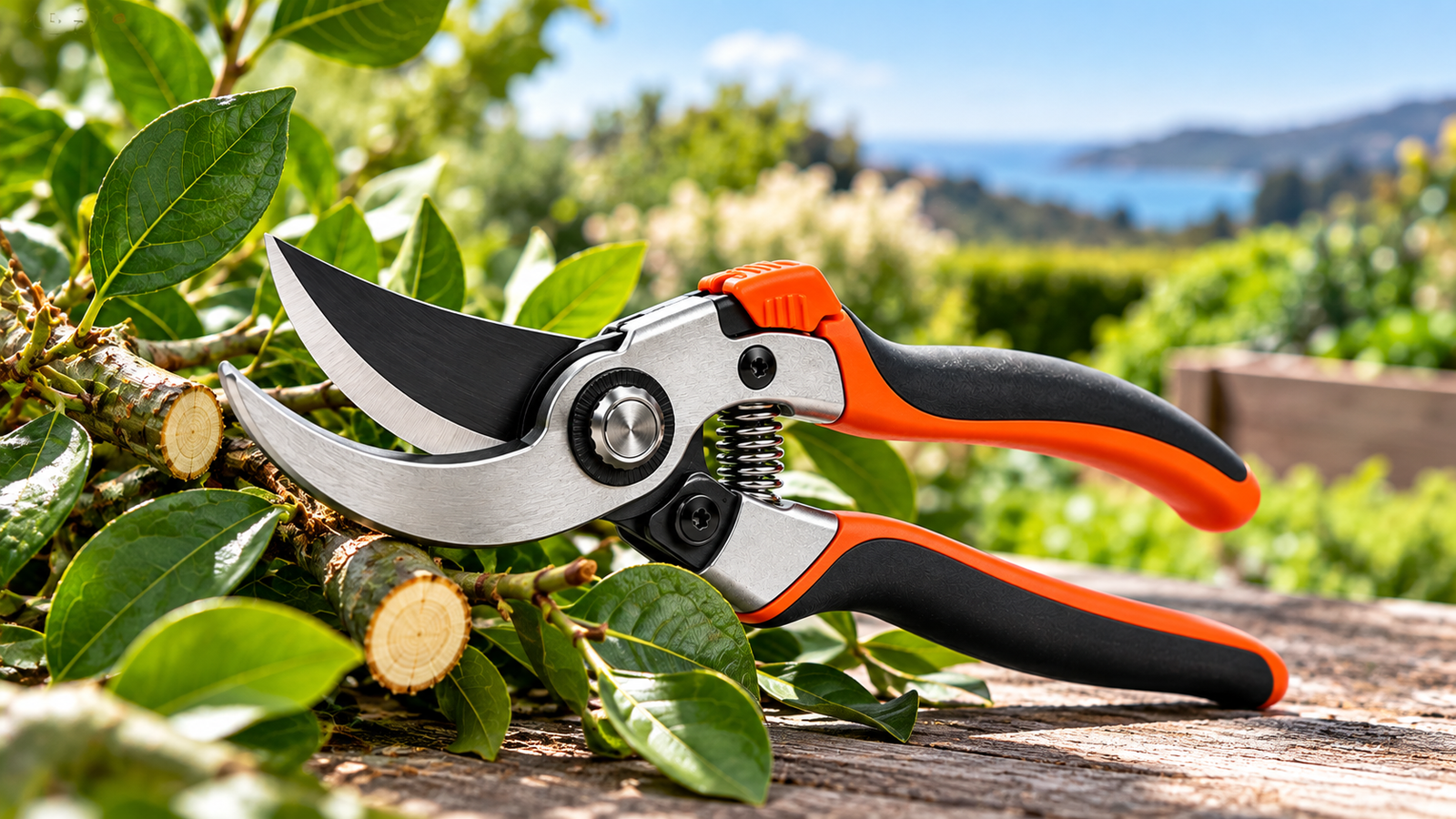
A good pair of secateurs makes pruning feel easy. The wrong pair can crush stems, strain your hand and leave you wishing you’d bought something else. Here’s how to choose secateurs for New Zealand gardens — without paying for features you won’t use.
Whether you’re tidying roses, pruning citrus, cutting back lavender or clearing dead branches, the first decision is surprisingly simple: bypass or anvil? Once you’ve got that right, blade quality, hand fit and cutting capacity matter far more than a flashy product description.
Bypass vs anvil secateurs: what’s the difference?
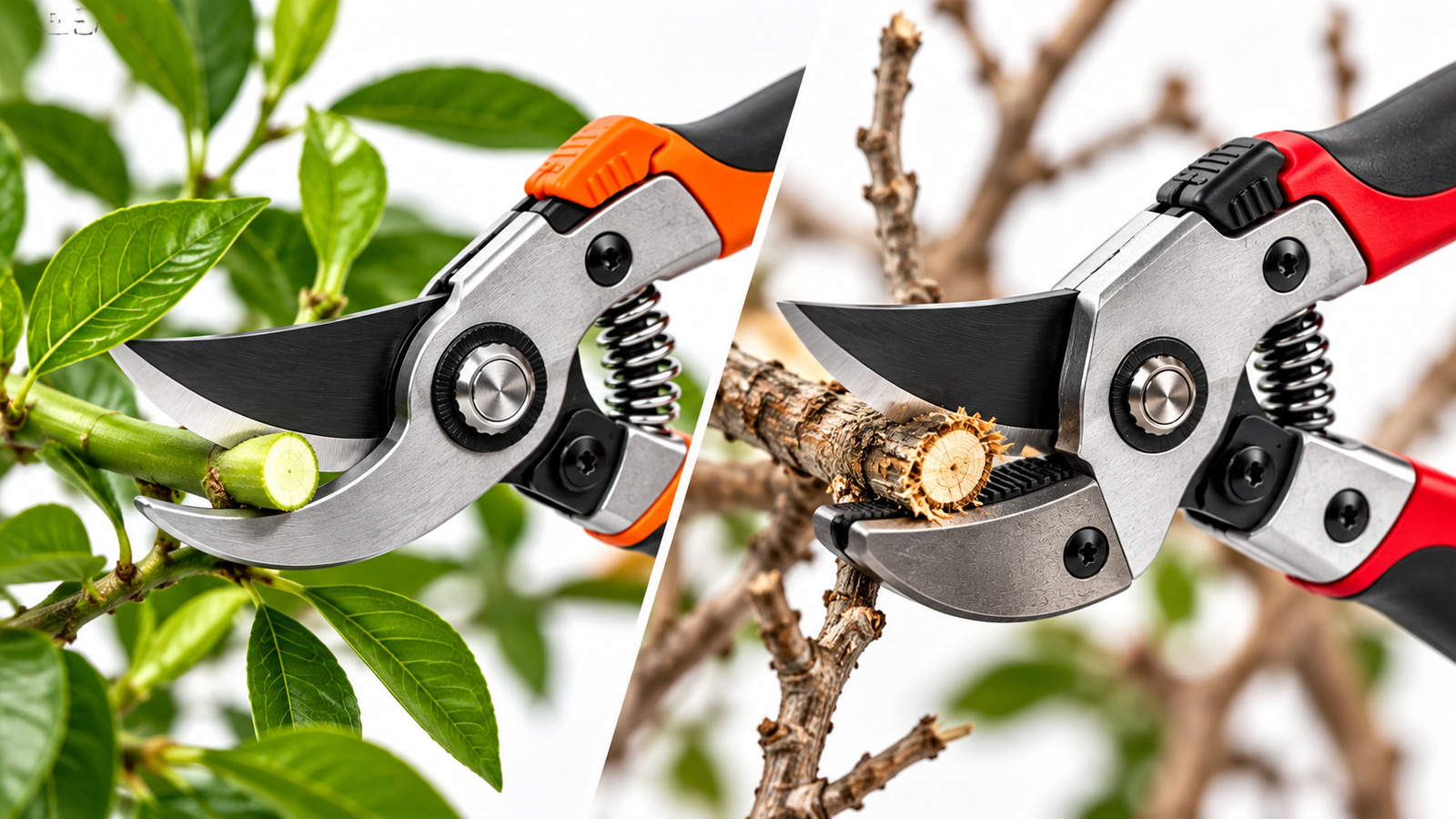
Both tools are hand-held pruners, but their cutting mechanisms work differently. That difference matters because the cut you make affects the plant tissue left behind.
Bypass secateurs
A sharp cutting blade slides past a counter-blade, much like scissors. This helps produce a precise cut on living stems and green wood.
Ideal for: roses, flowers, soft shoots, most routine shrub pruning and live fruit-tree growth within the tool’s capacity. If you are shaping hedges for screening, see our guide to privacy plants for NZ gardens.
Anvil secateurs
A cutting blade presses down against a flat supporting surface. The action suits tougher, dry material but can crush living tissue.
Ideal for: dead twigs, dry woody cuttings and clearing already-dead stems.
| Feature | Bypass | Anvil |
|---|---|---|
| Cutting action | Blades pass each other | Blade meets a flat anvil |
| Best material | Living, green stems | Dead, dry wood |
| Cut finish | Typically cleaner on live growth | Can compress live stems |
| Everyday garden use | Usually the more versatile choice | Useful as a second, specialist pair |
| Fruit trees and roses | Preferred for live pruning cuts | Not the first choice for living growth |
The distinction is also explained by GARDENA’s guide to bypass and anvil secateurs, which recommends bypass tools for living plant tissue and anvil tools for dead wood.
Which secateurs are best for your garden?
Instead of treating one product as the winner for everyone, match the tool to the pruning you actually do.
| Your main task | What to choose | Why |
|---|---|---|
| General home gardening | Comfortable bypass secateurs | Versatile for routine living growth |
| Roses and flowering shrubs | Sharp bypass secateurs | Precise cuts near buds and stems |
| Citrus and fruit trees | Robust bypass secateurs, plus loppers if needed | Clean live cuts and suitable tools for larger wood |
| Dead twig removal | Anvil secateurs | Suited to dry woody material |
| Smaller hands | Compact or adjustable-grip bypass model | More comfortable handle opening |
| Frequent pruning | Ergonomic, serviceable secateurs | Comfort and replaceable parts matter over time |
7 things to check before buying secateurs in NZ
1. Cutting capacity
Manufacturers usually specify a maximum branch diameter in millimetres. For example, GARDENA lists NZ-market bypass models with stated capacities of 20 mm and 24 mm. Treat those figures as upper limits for suitable material, not a reason to force through hard wood. Actual effort varies with wood type, moisture and sharpness.
2. Hand size and grip
Secateurs should open and close comfortably without overstretching your fingers. If possible, try the grip before buying. A compact handle or adjustable opening may be a better investment than a higher cutting-capacity number.
3. Blade quality
Look for a sharp, well-aligned blade that can be maintained. Steel type and coatings vary, but easy sharpening, good alignment and spare-part availability are often more useful than vague claims about premium metal.
4. Locking mechanism
A secure, easy-to-operate lock helps keep the blades closed during storage. Check whether you can operate it without awkward hand movements.
5. Spring and replaceable parts
Springs and blades can wear. If you plan to keep your secateurs for years, check whether the manufacturer offers replacement parts and servicing information for that exact model.
6. Comfort for longer sessions
Soft grips, a suitable handle shape and a sensible weight can make repetitive pruning more comfortable. No handle design is universally best; fit matters.
7. The right tool for larger branches
Don’t twist or lever secateurs through a branch that’s too thick. Move to loppers or a pruning saw. For high branches, use a suitable pole tool or a qualified professional rather than climbing with hand secateurs.
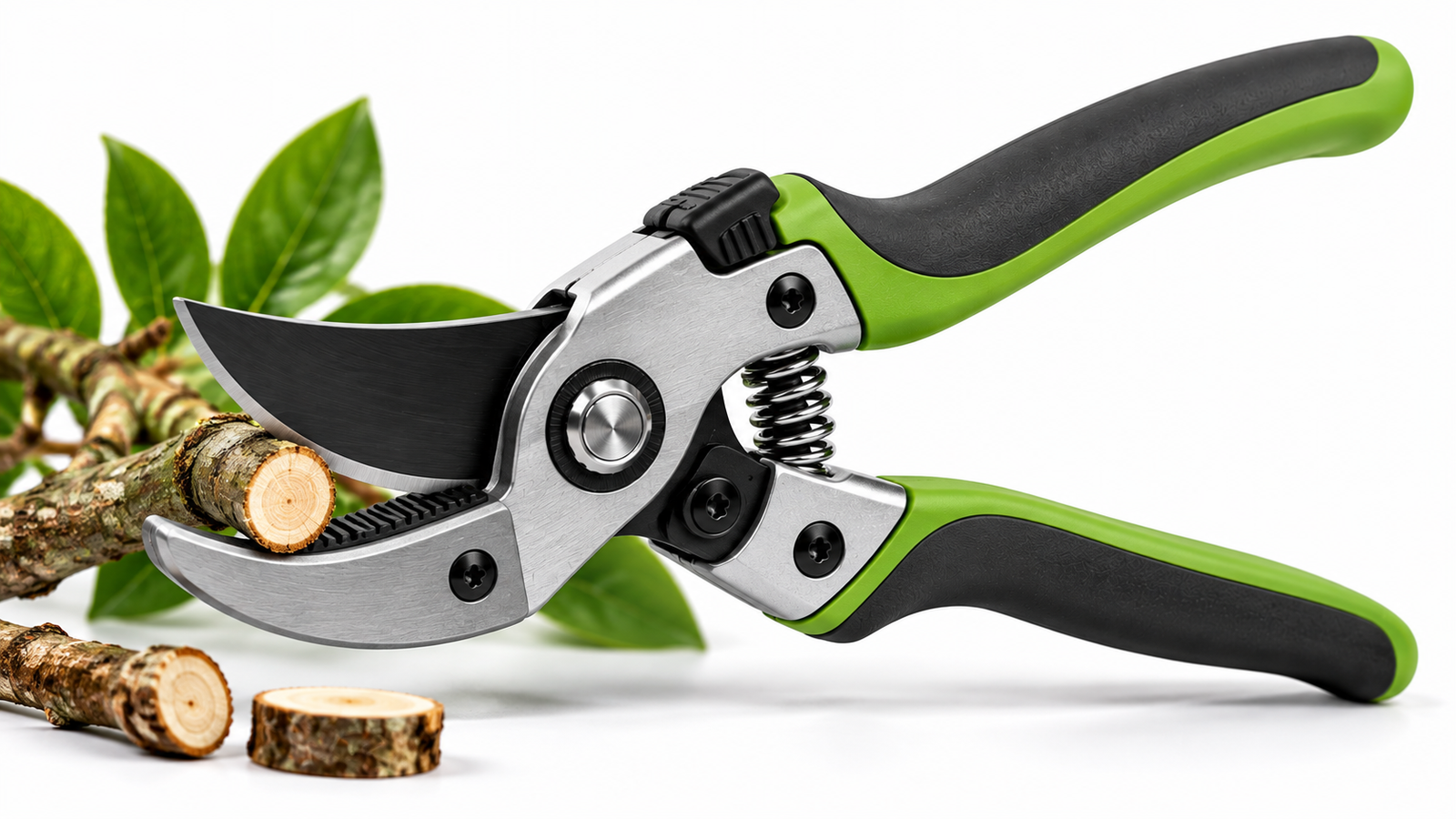
Secateurs available to compare in New Zealand
These are examples from GARDENA’s New Zealand product catalogue, not a ranked list or products we’ve independently tested. Specifications and retail availability can change, so check the current listing and local stock before buying.
| Example | Type | Listed cutting diameter | Who might consider it |
|---|---|---|---|
| GARDENA EasyCut Secateurs | Bypass | 20 mm | General-purpose garden pruning |
| GARDENA PremiumCut Flex | Bypass | 24 mm | Gardeners wanting a larger stated capacity |
| GARDENA PremiumCut Pro Dry Wood | Anvil | 24 mm | Regular pruning of dry, dead wood |
| GARDENA PremiumCut Pro Flex | Bypass | 24 mm | Green-wood pruning with a higher listed capacity |
See the GARDENA NZ secateurs range for current product descriptions. Compare other brands on the same criteria rather than assuming a particular label guarantees better results.
Affiliate disclosure placeholder: If affiliate links are added later, insert a clear disclosure near the first commercial link. No affiliate links or prices have been fabricated in this article.
When should you use secateurs in a New Zealand garden?
The right pruning season depends on the plant, local climate and whether you’re removing dead material or encouraging new growth. New Zealand’s seasons run opposite to those in the Northern Hemisphere, so don’t copy an overseas pruning calendar without checking.
Dead, damaged or diseased material may need attention when noticed, but major shaping and fruit-tree pruning should follow plant-specific guidance. For example, roses, citrus, stone fruit and native shrubs do not all benefit from the same schedule. Avoid heavy pruning during frost risk or stressful weather unless there’s a clear reason. For indigenous species, our NZ native plants guide can help you plan what to grow before deciding how to maintain it.
If you’re planning the rest of your garden, explore our guide to timber for raised garden beds in NZ, our ground cover plants guide, and ideas for garden edging in New Zealand.
How to use and maintain secateurs properly
- Check the stem. Identify whether it is living or dead and whether its diameter is within the tool’s stated limit.
- Position the blades carefully. On live stems, use bypass secateurs and avoid crushing the portion of the plant you intend to keep.
- Make one controlled cut. Don’t twist, yank or use the tool as a lever.
- Clean off sap and debris. Wipe the blades after use and dry them thoroughly.
- Reduce disease transfer. Clean and disinfect cutting surfaces when moving between diseased plants; follow the disinfectant manufacturer’s instructions and allow the required contact time.
- Maintain the blade. Sharpen according to the manufacturer’s guidance and apply a suitable light lubricant to moving parts when needed.
- Store safely. Lock the blades closed and keep the tool dry and out of children’s reach.
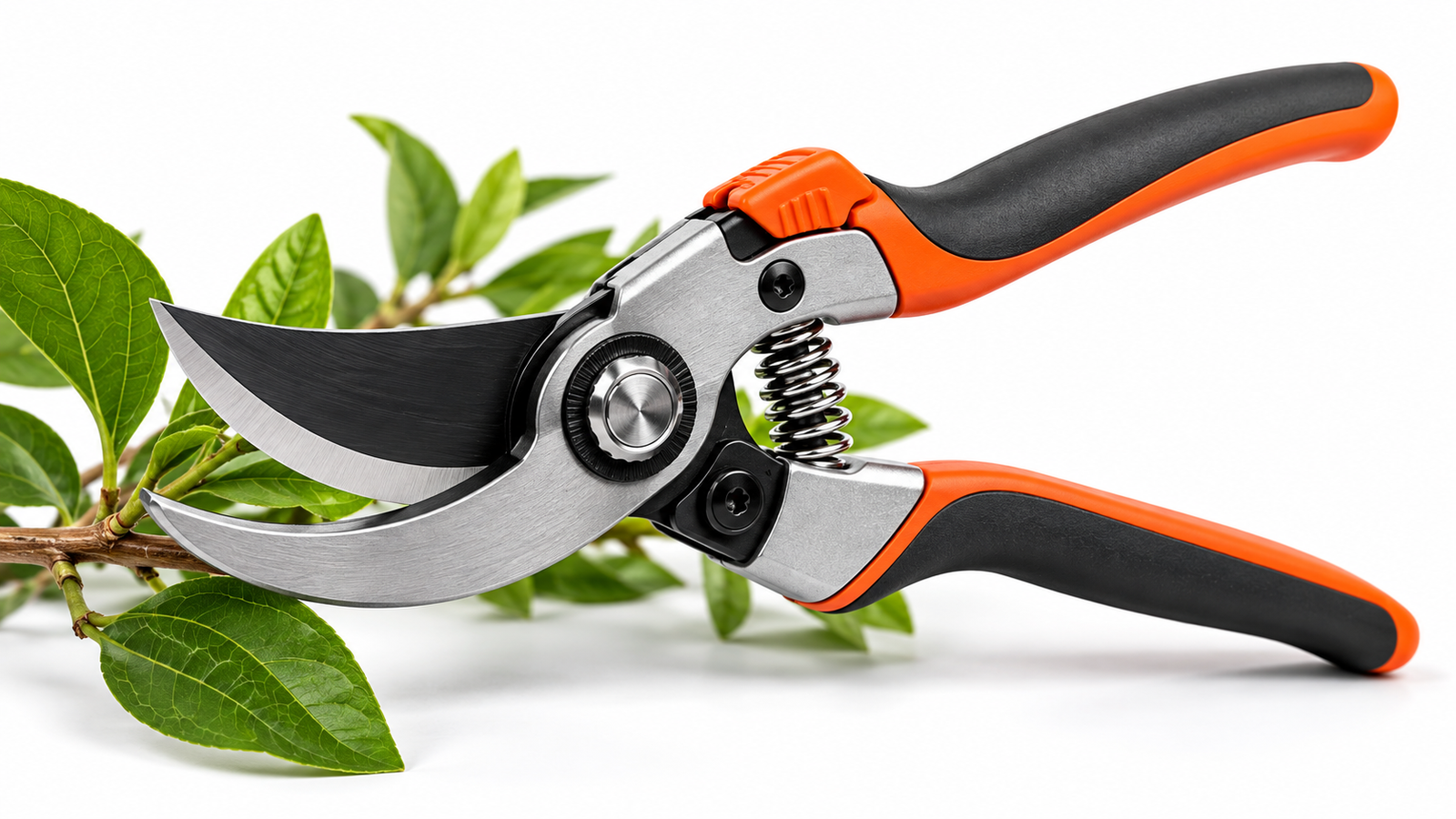
Frequently asked questions
Are bypass or anvil secateurs better?
Bypass secateurs are generally better as an all-round first pair because they make cleaner cuts on living stems. Anvil secateurs are useful for dry, dead wood.
What size secateurs do I need?
Choose a model that fits your hand and has enough cutting capacity for the stems you normally prune. A manufacturer’s stated maximum diameter is not a guarantee that every branch of that thickness will cut easily.
Can I use anvil secateurs on roses?
Bypass secateurs are the preferred choice for live rose stems because they are less likely to crush living tissue. Anvil secateurs can be useful when removing completely dead material.
Are expensive secateurs worth it?
Sometimes, especially if you prune frequently and benefit from comfortable handles, replaceable blades and easy maintenance. For occasional garden work, a reliable mid-range pair that fits your hand may be enough.
How often should I sharpen secateurs?
There’s no universal schedule. Sharpen when cutting performance deteriorates, the blade begins to tear stems or the manufacturer recommends it. Clean and inspect your tool after each pruning session.
Can secateurs cut thick tree branches?
Only within their stated capacity and for suitable wood. Use loppers or a pruning saw for thicker branches; do not force a small hand pruner through oversized material.
The verdict: which secateurs should you buy?
For most New Zealand gardeners, a sharp, comfortable pair of bypass secateurs is the smartest starting point. Look for a secure lock, good blade alignment, a grip that suits your hand and a realistic cutting capacity. If your garden produces lots of dead woody stems, consider an anvil pair as a second tool.
The best secateurs aren’t necessarily the most expensive. They’re the ones that match the plants you prune and make clean, controlled cuts without straining your hands.
Sources and further reading
- GARDENA — Difference between bypass and anvil secateurs
- GARDENA New Zealand — Secateurs catalogue and specifications
- GARDENA New Zealand — Loppers and cutting principles
Editorial note: This is a research-based buying guide, not a hands-on comparative test. Product specifications were checked against manufacturer material in October 2026.
Related Articles

0 Comments