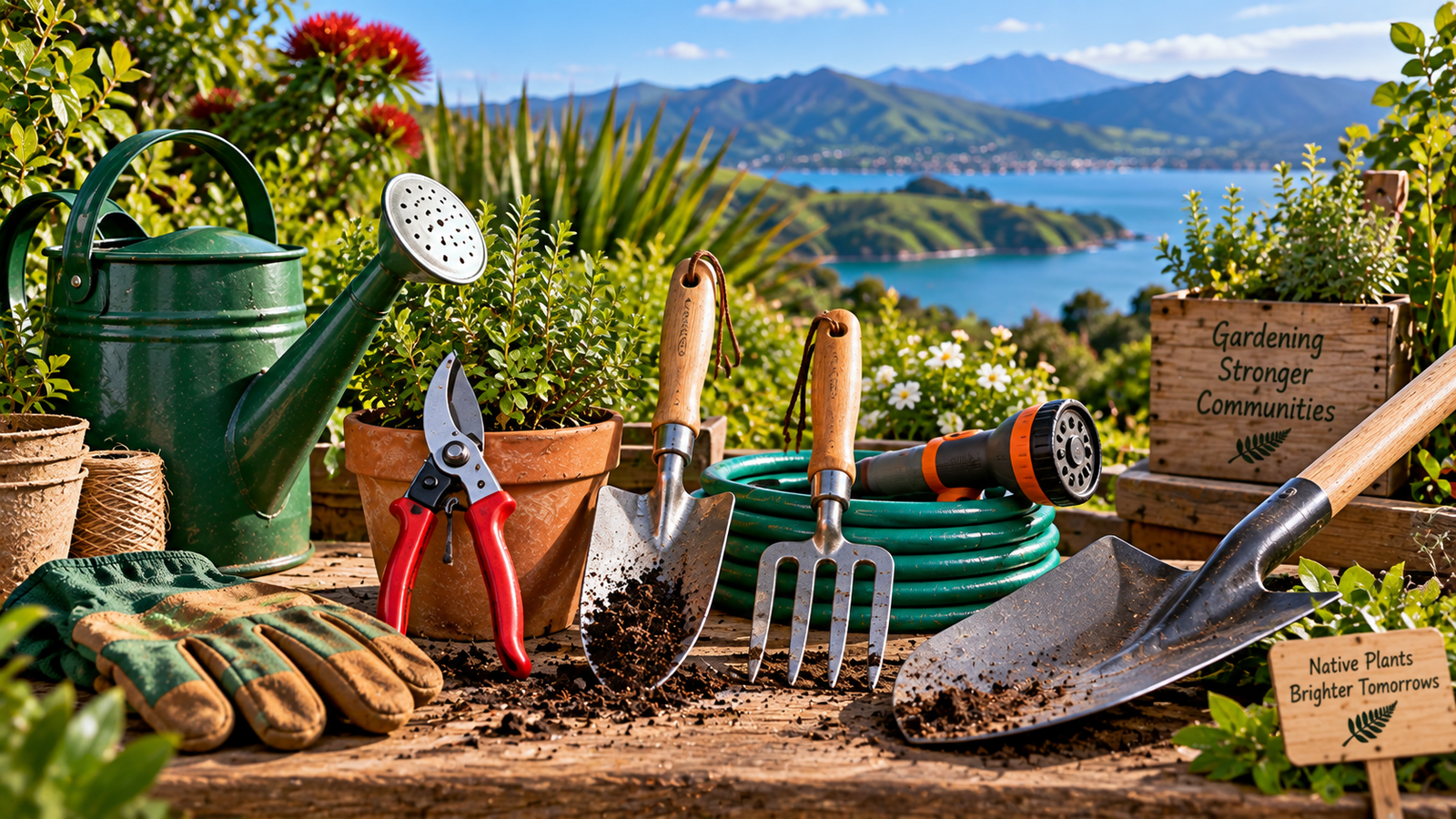
Choosing the right garden tools can make gardening easier, faster and far more enjoyable. But if you walk through a garden centre in New Zealand, it is easy to come away thinking you need dozens of different tools before you can even plant your first shrub.
The reality is much simpler. Most home gardeners can handle the majority of everyday jobs with a relatively small collection of reliable tools. The key is knowing which ones are genuinely useful, which features matter and which specialist tools can wait until you actually need them.
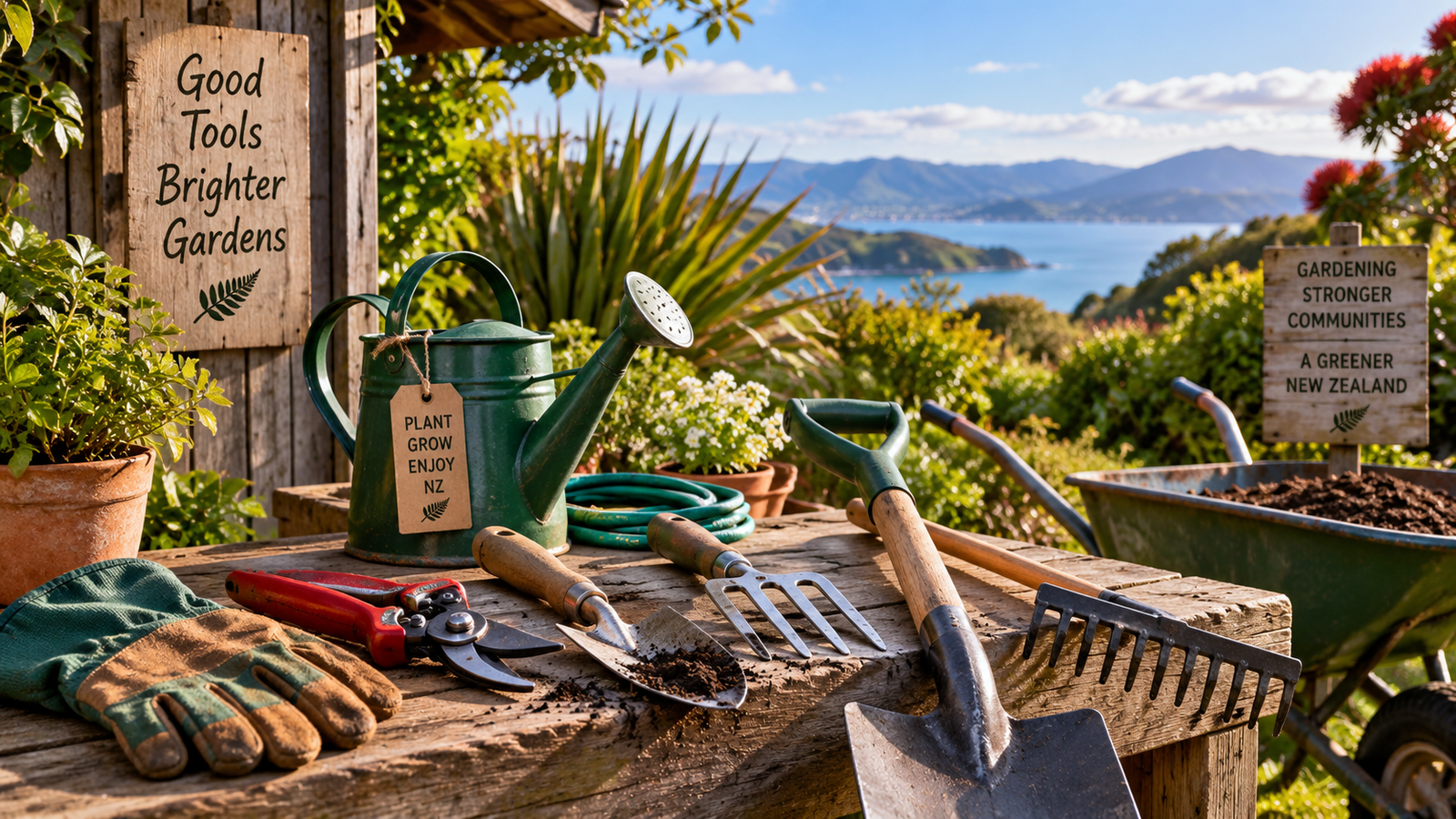
Essential garden tools at a glance
You do not need to buy everything at once. Start with tools that match the jobs you actually perform, then add specialist equipment as your garden develops.
| Garden tool | Best used for | Priority |
|---|---|---|
| Bypass secateurs | Pruning stems, flowers and small branches | Essential |
| Hand trowel | Planting seedlings, bulbs and small plants | Essential |
| Garden spade | Digging, edging and planting | Essential |
| Garden fork | Loosening soil and incorporating compost | Essential |
| Garden rake | Levelling soil and clearing debris | Useful |
| Weeding tool or hoe | Removing weeds and cultivating soil | Essential |
| Garden gloves | Hand protection and grip | Essential |
| Hose or watering can | Watering plants and new plantings | Essential |
| Loppers | Cutting thicker woody branches | As needed |
| Pruning saw | Removing larger branches | As needed |
| Wheelbarrow | Moving soil, mulch and garden waste | Very useful |
| Mower or line trimmer | Lawn and edge maintenance | Garden dependent |
12 essential garden tools for New Zealand home gardeners
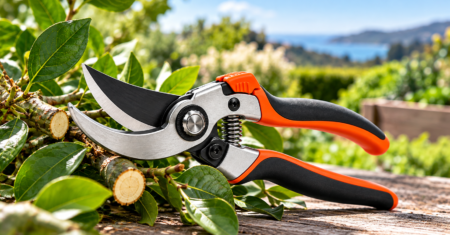
1. Bypass secateurs
A good pair of bypass secateurs is one of the most useful tools you can own. They are ideal for trimming flowers, pruning shrubs, cutting back soft growth and removing smaller branches.
Bypass secateurs use two blades that pass each other like scissors, which generally produces a cleaner cut on live plant material than crushing-style tools.
Look for a pair that feels comfortable in your hand and can be opened and closed repeatedly without strain.
2. Hand trowel
A hand trowel is perfect for smaller planting jobs, container gardening and working in established beds where a full-size spade would be awkward.
You will use it for transplanting seedlings, planting annuals, adding compost and digging small holes.
Choose one with a strong blade and a comfortable handle rather than simply buying the cheapest option available.
3. Garden spade
A garden spade is one of the true workhorses of a home garden. Its relatively flat blade makes it particularly good for cutting through turf, shaping borders, preparing planting holes and dividing plants.
If you are establishing a new garden bed or planting shrubs, a solid spade will quickly become one of your most-used tools.
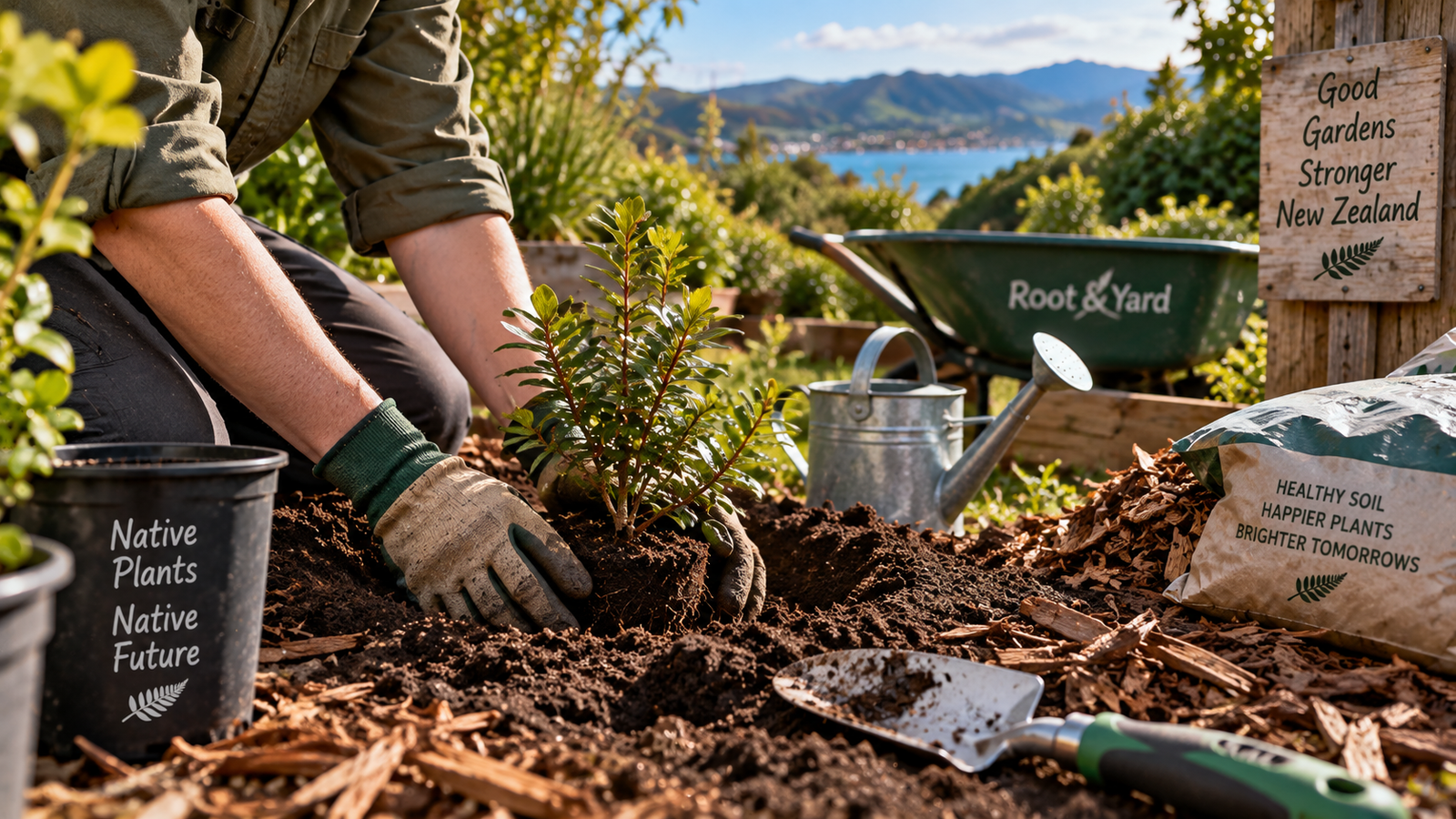
If you are planning to establish native planting, our guide to the best native plants for New Zealand gardens can help you decide what to plant once the ground is prepared.
4. Garden fork
A garden fork is extremely useful for loosening compacted ground, lifting plants and working compost into garden soil.
Because the tines penetrate the soil rather than lifting a complete block of earth, a fork can be easier to use in heavy or compacted soil than a spade.
It is also useful when you want to improve soil structure without completely turning over the garden bed.
5. Garden rake
A garden rake helps level freshly prepared soil, break up clumps and remove loose stones and debris.
Do not confuse it with a flexible leaf rake. A traditional garden rake has short, rigid teeth and is designed primarily for soil preparation.
6. Weeding tool or hoe
Weeds are much easier to deal with while they are small. A suitable weeding tool lets you remove young weeds before they become established and compete with your plants.
For small beds, a hand weeder may be enough. For larger vegetable or ornamental beds, a hoe allows you to work from a standing position and cover much more ground.
7. Garden gloves
Gardening gloves protect against rough soil, thorns, splinters and minor cuts while improving grip on tools and garden materials.
The best pair is not necessarily the thickest. Gloves should be comfortable enough that you are happy to wear them for an extended gardening session.
8. Hose, nozzle or watering can
Even in climates that receive regular rainfall, newly planted shrubs, vegetables and container plants may require supplemental watering.
For small gardens and pots, a watering can may be sufficient. Larger properties generally benefit from a hose fitted with an adjustable nozzle.
A quality connector and nozzle can often be more useful than an expensive hose packed with unnecessary features.
9. Loppers
Loppers are essentially long-handled pruning cutters. The longer handles create extra leverage, making them useful for branches that are too thick for ordinary secateurs.
They are particularly useful in established gardens with shrubs, hedges and small trees.
10. Pruning saw
Once a branch becomes too thick for secateurs or loppers, a pruning saw becomes the safer and more effective option.
A compact folding pruning saw is often enough for an average suburban garden and takes up very little storage space.
11. Wheelbarrow or garden cart
A wheelbarrow may not seem essential when your garden is small, but it becomes invaluable once you start moving compost, mulch, soil, stones or pruning waste.
If your property has narrow paths, steps or limited storage, a smaller garden cart can sometimes be a more practical alternative.
12. Lawn mower or line trimmer — only if you need one
Powered lawn equipment should match the size and layout of your property rather than being treated as a default purchase.
A small lawn may only require a compact battery mower. Larger sections or difficult edges may justify a mower plus a line trimmer.
If your property has no lawn, there is little reason to invest in this equipment simply because it appears on generic garden tool lists.
Garden spade vs shovel: what is the difference?
The terms are often used interchangeably, but they are designed for slightly different jobs.
| Tool | Typical design | Best for |
|---|---|---|
| Spade | Flatter, straighter blade | Cutting soil, edging, planting and dividing plants |
| Shovel | More curved or scooped blade | Moving soil, compost, mulch and loose materials |
How to choose good garden tools
A garden tool does not have to be expensive to be good, but it should feel comfortable, solid and appropriate for the job.
Choose tools that fit your body
Handle length, tool weight and grip shape make a major difference during longer gardening sessions.
If possible, hold the tool before buying it. A tool that feels awkward in the shop is unlikely to become more comfortable after 30 minutes of digging or pruning.
Consider handle materials
Common garden tool handles include timber, fibreglass, composite materials and steel.
Traditional timber handles can be comfortable and repairable but require some maintenance. Fibreglass and composite handles are usually weather resistant, while steel handles can be extremely durable but may add weight.
Look at replaceable parts
For tools you expect to use regularly, check whether blades, springs, fasteners or other wear components can be replaced.
A repairable tool may offer better long-term value than a cheaper model that must be discarded when a single component fails.
Pay attention to ergonomics
Longer handles can reduce the amount of bending required, while ratchet or geared cutting mechanisms may help gardeners who find conventional pruning tools tiring.
Ergonomics becomes increasingly important when a gardening session lasts more than a few minutes.
Do you really need power garden tools?
Not necessarily. Hand tools are often lighter, cheaper, quieter and perfectly adequate for small gardens.
| Garden job | Hand tool option | Power tool worth considering when… |
|---|---|---|
| Hedge trimming | Hedge shears | The hedge is large or frequently trimmed |
| Lawn mowing | Manual reel mower | The lawn is medium or large |
| Pruning | Secateurs, loppers, saw | There is extensive repetitive pruning |
| Leaf cleanup | Rake | The property generates large volumes of leaves |
What garden tools are worth spending more on?
You do not need premium versions of every tool, but equipment that receives heavy or frequent use deserves closer attention.
- Secateurs: comfort, blade quality and replaceable parts matter.
- Spades and forks: strong shafts and secure connections are important.
- Pruning saws and loppers: sharp, durable cutting surfaces improve safety and efficiency.
- Hoses and fittings: poor connectors can leak and become frustrating quickly.
- Frequently used power tools: battery availability, warranty and spare parts matter.
How to make garden tools last longer
A small amount of maintenance can dramatically extend the useful life of garden equipment.
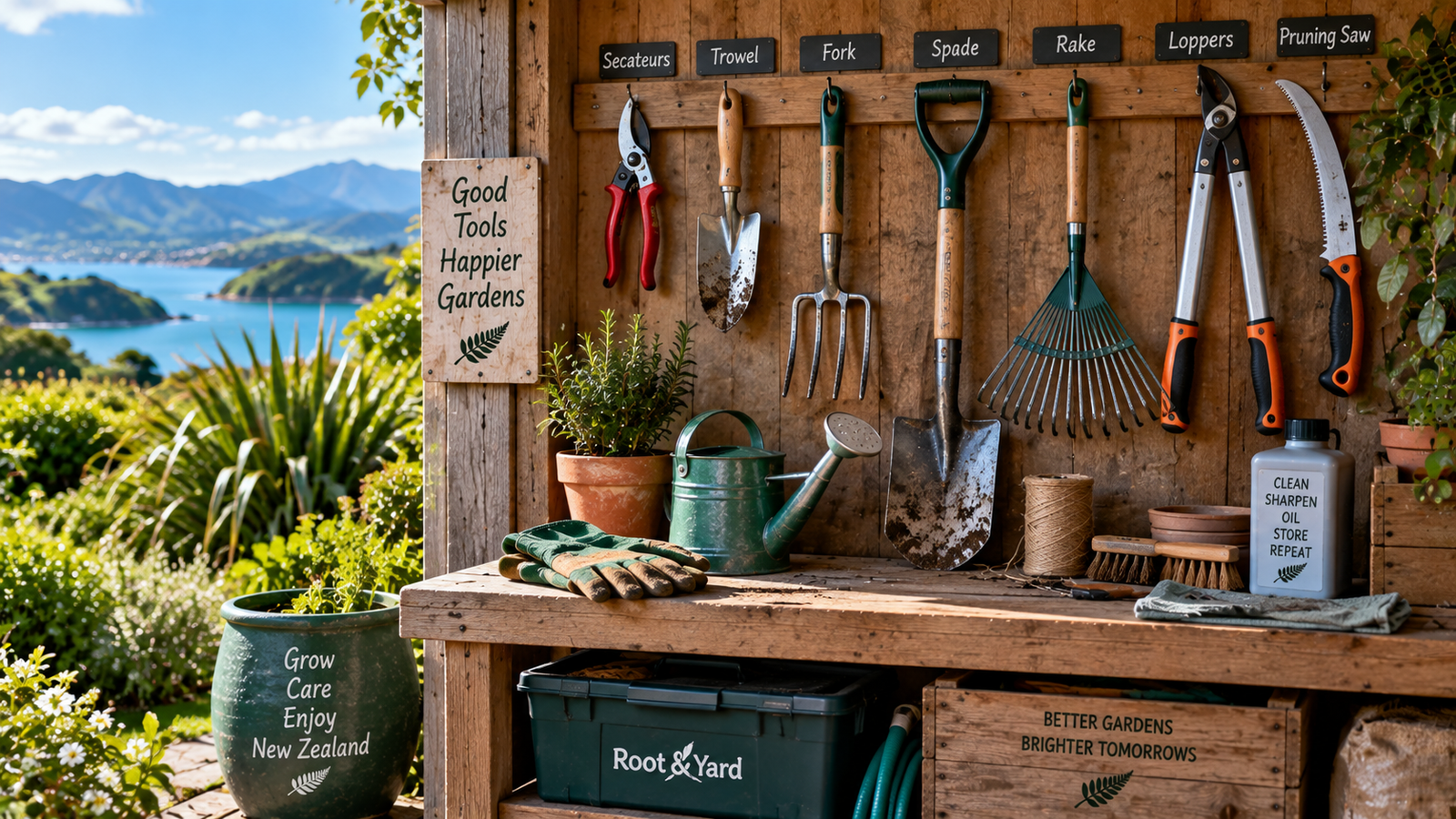
Remove soil after use
Damp soil left on metal tools encourages corrosion. Brush or wipe off soil before putting tools away.
Keep cutting tools sharp
Sharp secateurs, loppers and digging tools generally require less force to use and produce cleaner cuts.
If a tool suddenly feels much harder to use than it once did, the cutting edge may simply need sharpening.
Dry tools before storage
Avoid putting wet tools directly into a closed shed or storage box. Allow them to dry before storage whenever possible.
Protect metal surfaces
After cleaning and drying, a light application of suitable tool oil can help protect exposed metal from corrosion.
Check timber handles
Inspect wooden handles for cracks, splinters or looseness. Light sanding and periodic treatment can help keep them comfortable and extend their life.
Should pruning tools be cleaned between plants?
Keeping pruning tools clean is good practice, particularly when working around plants that appear diseased.
Remove plant residue and sap from blades and clean them before moving on to sensitive plants.
Garden tool safety in New Zealand
Most hand tools are straightforward to use, but powered outdoor equipment deserves additional care.
Inspect cords and equipment before use and avoid using mains-powered electrical garden tools in wet conditions.
Keep children and pets away while operating powered equipment and wear suitable footwear rather than working barefoot or in loose footwear.
Eye and hearing protection may also be appropriate depending on the tool and the job.
Choose tools for New Zealand’s changing weather
Garden equipment in New Zealand may be exposed to strong sun, rain, damp sheds and coastal conditions.
Tools stored outdoors or in humid locations can deteriorate surprisingly quickly, so weather-resistant materials and dry storage are worth considering.
Garden conditions can also vary significantly between regions. A tool collection suitable for a compact urban garden may look very different from one used on a large rural or coastal property.
The Root & Yard 7-tool starter kit
If you were starting a New Zealand garden from scratch today, this is the compact tool kit we would build first:
- Bypass secateurs
- Hand trowel
- Garden spade
- Garden fork
- Rake or weeding tool, depending on your garden
- Comfortable gardening gloves
- Hose with nozzle or watering can
That collection is enough to handle planting, pruning, soil preparation, weeding, watering and many routine maintenance jobs.
Once you start working in the garden, it becomes much easier to identify whether you genuinely need additional equipment.
Garden tools you probably do not need immediately
Specialist tools can be useful, but many are solutions to jobs you may rarely perform.
- Powered secateurs for a small residential garden
- Long-reach pole pruners when there are no tall trees
- Specialist bulb planters for occasional planting
- Large leaf blowers for tiny sections
- Powered cultivators for small established beds
- Several different hand weeders that perform nearly the same job
- Large petrol equipment for compact urban gardens
Buying equipment only when a real gardening problem appears helps prevent sheds from filling with tools that are barely used.
Verdict: build a small, useful tool kit first
The best garden tool collection is not the largest one. It is the one that fits your garden, your body and the work you actually do.
For most New Zealand home gardeners, a good pair of secateurs, a hand trowel, spade, fork, gloves and a reliable watering setup will cover a surprising amount of everyday gardening.
Add larger pruning tools, transport equipment and powered machinery only when your garden genuinely demands them.
Frequently asked questions about garden tools
What garden tools does a beginner really need?
Most beginners can start with bypass secateurs, a hand trowel, garden spade, fork, gloves, a weeding tool and a watering can or hose. Additional tools can be added as specific gardening jobs arise.
Is a garden fork necessary?
A garden fork is particularly useful for loosening compacted soil, incorporating compost and lifting plants. It is not essential for every tiny container garden, but it is highly useful for beds and borders.
Are expensive garden tools worth it?
Sometimes. Tools used frequently, such as secateurs, spades and pruning equipment, can justify a higher-quality purchase. For tools used only occasionally, a basic well-made option may be sufficient.
Which is better, battery or petrol garden equipment?
For many residential gardens, modern battery tools offer convenient operation with less noise and maintenance. Petrol equipment may still make sense for larger properties or demanding jobs requiring long continuous operation.
How often should garden tools be cleaned?
Remove soil and moisture after use whenever practical. Cutting tools should also be checked regularly for sap buildup, rust and dull blades.
Root & Yard creates practical gardening guides for home gardeners in New Zealand, focusing on useful tools, plants, garden design and straightforward DIY advice.
Related Articles
1 Comment
[…] A garden fork is also one of the tools included in our guide to the 12 essential garden tools for NZ home gardeners. […]