NEW ZEALAND GARDEN DESIGN • MATERIALS • DIY
A good garden edge does more than separate grass from flowers. It gives the whole outdoor space a clearer shape, helps keep mulch and gravel in place, and can make mowing easier. From inexpensive flexible borders to statement stone and steel, these 15 garden edging ideas for NZ homes show what works, where to use it and what to consider before buying.
Quick answer: what is the best garden edging in NZ?
For neat, low-profile borders: galvanised or coated steel. For budget-friendly curves: flexible recycled-plastic edging. For a natural look: treated timber, brick or stone. For easy mowing: a properly installed flush paver or concrete mowing strip. The best choice depends on your garden shape, soil, exposure, maintenance preferences and total installed cost.
Best modern look: black steel · Best natural finish: stone · Best DIY straight border: treated timber · Best adaptable curves: flexible plastic · Best decorative statement: weathering steel.
Garden edging materials compared
Use this as a starting point, not a substitute for checking the exact product. A decorative border, a mowing edge and a soil-retaining structure are different jobs.
| Material | Appearance | Curves | Key consideration |
|---|---|---|---|
| Steel | Slim, crisp, modern | Good with flexible systems | Finish and corrosion exposure |
| Plastic / recycled plastic | Subtle and practical | Often very good | UV rating, stakes and profile height |
| Timber | Warm and natural | Segmented or wired profiles | Ground-contact treatment and moisture |
| Stone / brick | Textured, traditional | Depends on unit size | Weight, base preparation and settlement |
| Concrete / pavers | Solid and structured | Product and layout dependent | Harder to relocate later |
| Living plants | Soft and informal | Excellent visually | Ongoing pruning and grass control |
15 garden edging ideas for New Zealand homes
These options cover everything from small urban courtyards to larger suburban lawns. Mix materials thoughtfully rather than using every style in one garden.
Slim galvanised steel
Best for neat, understated lawn borders
A narrow galvanised steel profile creates a clean separation between lawn and planting without drawing attention away from the plants. Choose a profile intended for ground contact and check how its zinc coating will perform in your location.
Works well for: Long straight edges, compact contemporary gardens.
Before you buy: Check finish, stakes and exposed-edge safety.
Black powder-coated steel
Best for modern, minimalist gardens
Black edging visually recedes into dark mulch, making it a good match for charcoal fences, dark joinery and architectural planting. Coating quality matters more than colour alone.
Works well for: Modern houses and formal borders.
Before you buy: Protect cut ends and avoid damaging the coating.
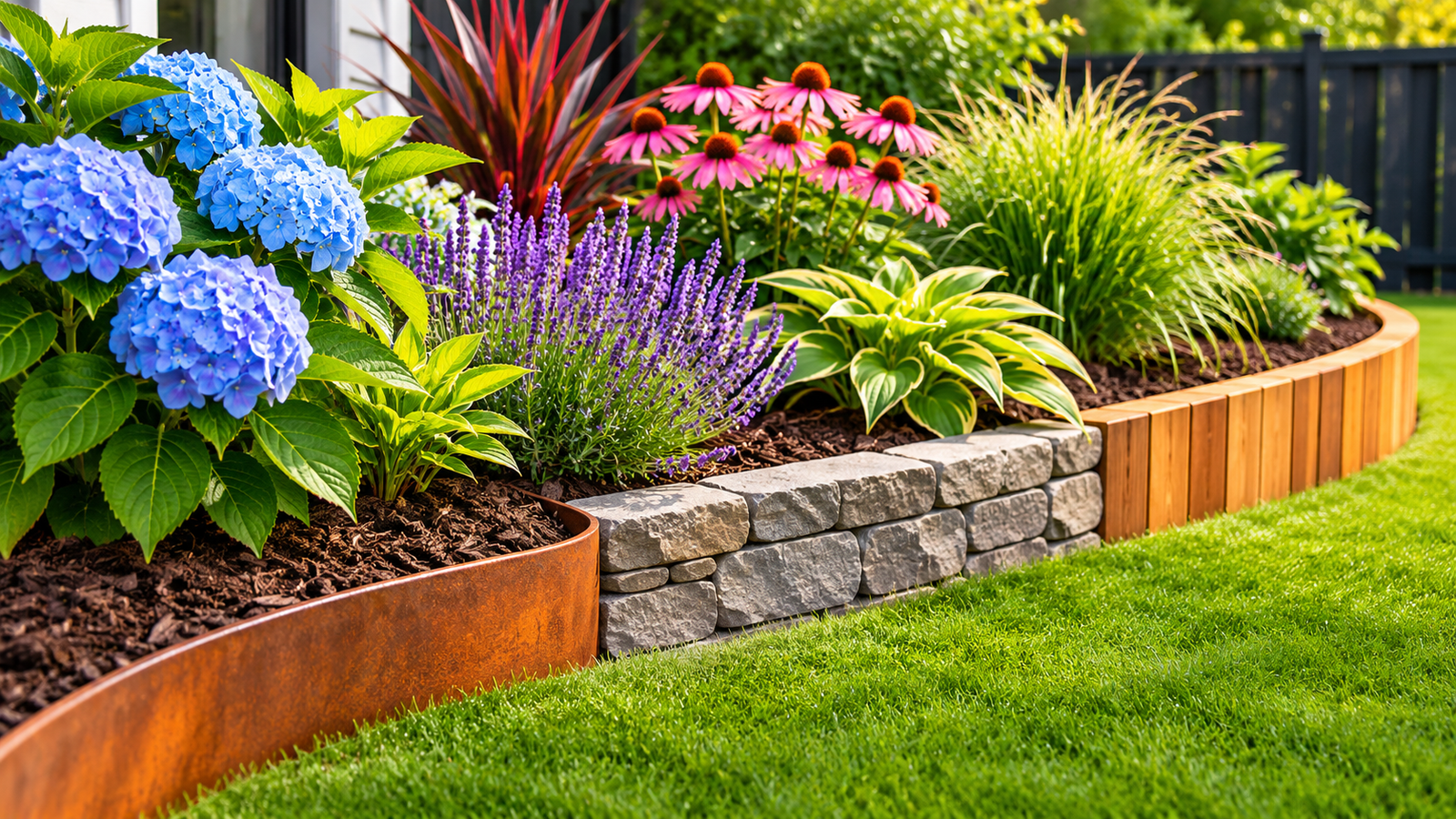
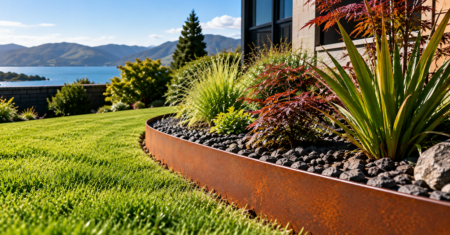
Corten-style weathering steel
Best for warm, architectural colour
Weathering steel develops an orange-brown surface that can look striking beside grasses, gravel and pale planting. It is not ideal in every continuously damp or salt-exposed setting.
Works well for: Feature curves and ornamental beds.
Before you buy: Rust-coloured runoff can stain light paving.
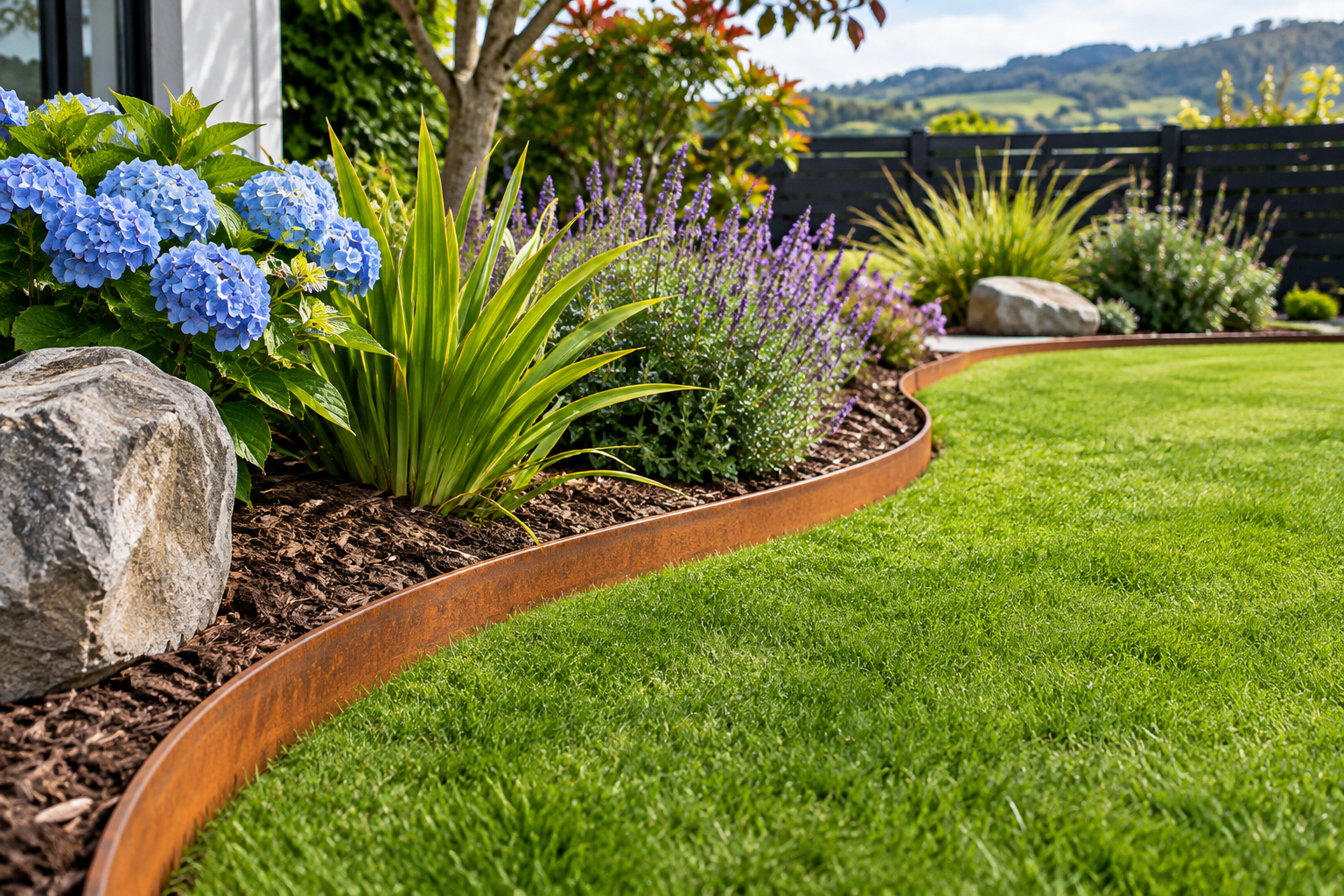
Flexible recycled-plastic edging
Best for budget-friendly curves
Flexible recycled-plastic systems can follow sweeping lawn shapes and are often simple to reposition. Check the profile height, UV suitability, and whether the fixing pegs are included.
Works well for: Curved lawns and frequently updated beds.
Before you buy: Very low profiles may not contain deep gravel.
Natural stone blocks
Best for cottage-style and established gardens
Natural stone adds texture and a sense of permanence. Use stable, level foundations and choose sizes that can follow the intended line without awkward gaps.
Works well for: Informal flower beds and rustic paths.
Before you buy: Heavy materials and uneven ground add labour.
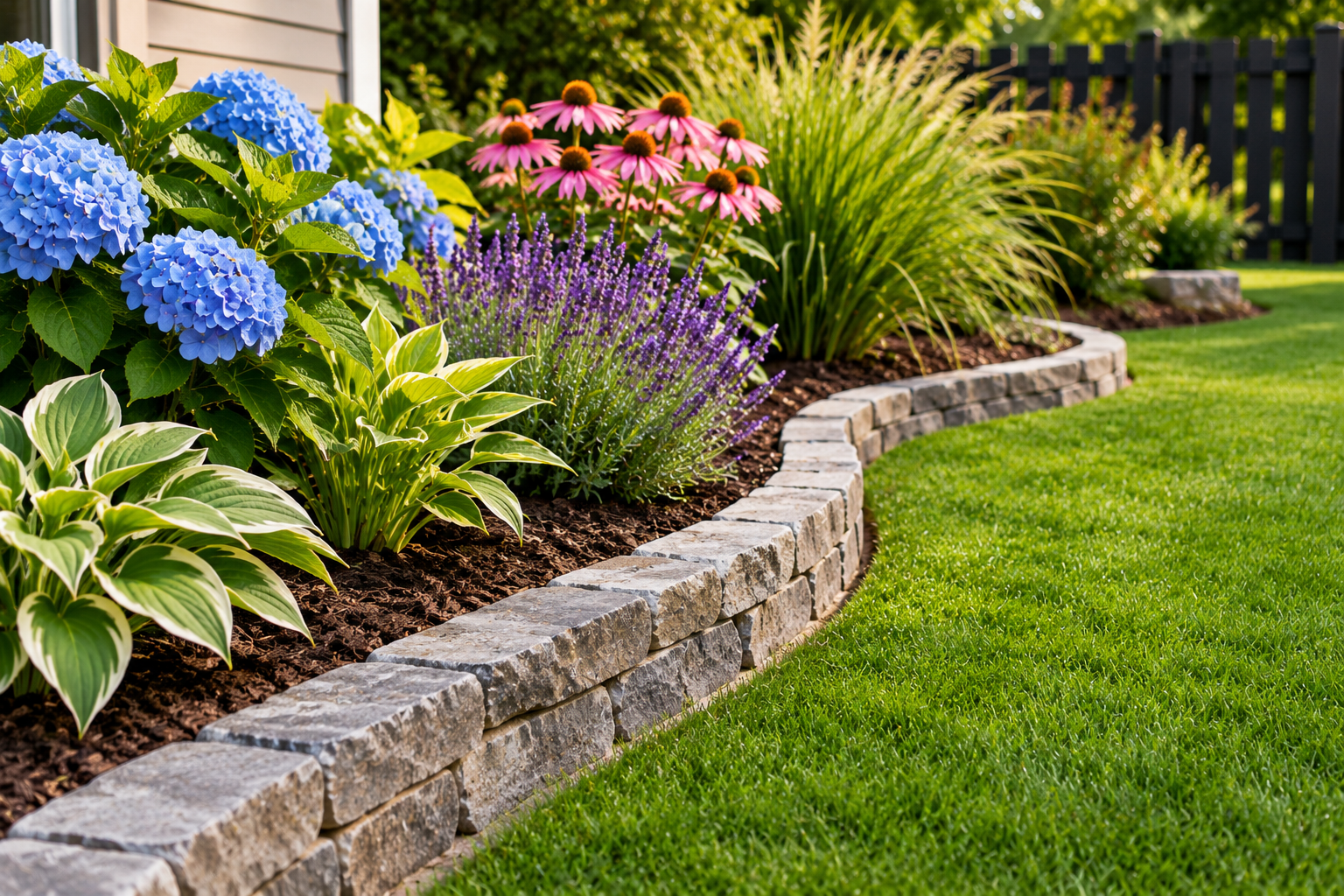
Stacked stone mini-border
Best for a raised visual edge
A low stacked-stone border creates a distinct change in level and can frame lush planting beautifully. Decorative dry-stacked edging should not be assumed to retain significant soil loads.
Works well for: Gentle slopes and wide planting beds.
Before you buy: A taller retaining edge needs proper design.
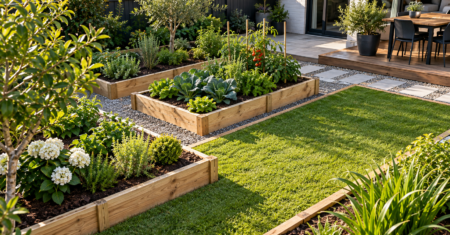
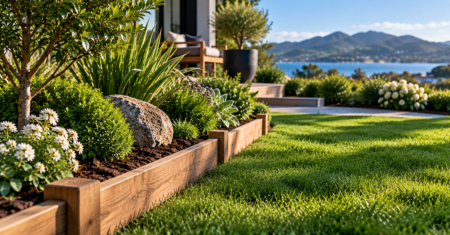
Treated timber sleepers
Best for strong, straight lines
Ground-contact-rated timber sleepers provide a substantial, warm edge. They suit rectangular beds and can make an easy-to-follow boundary for DIY projects.
Works well for: Straight beds and vegetable plots.
Before you buy: Choose appropriate treatment and fixings for soil contact.
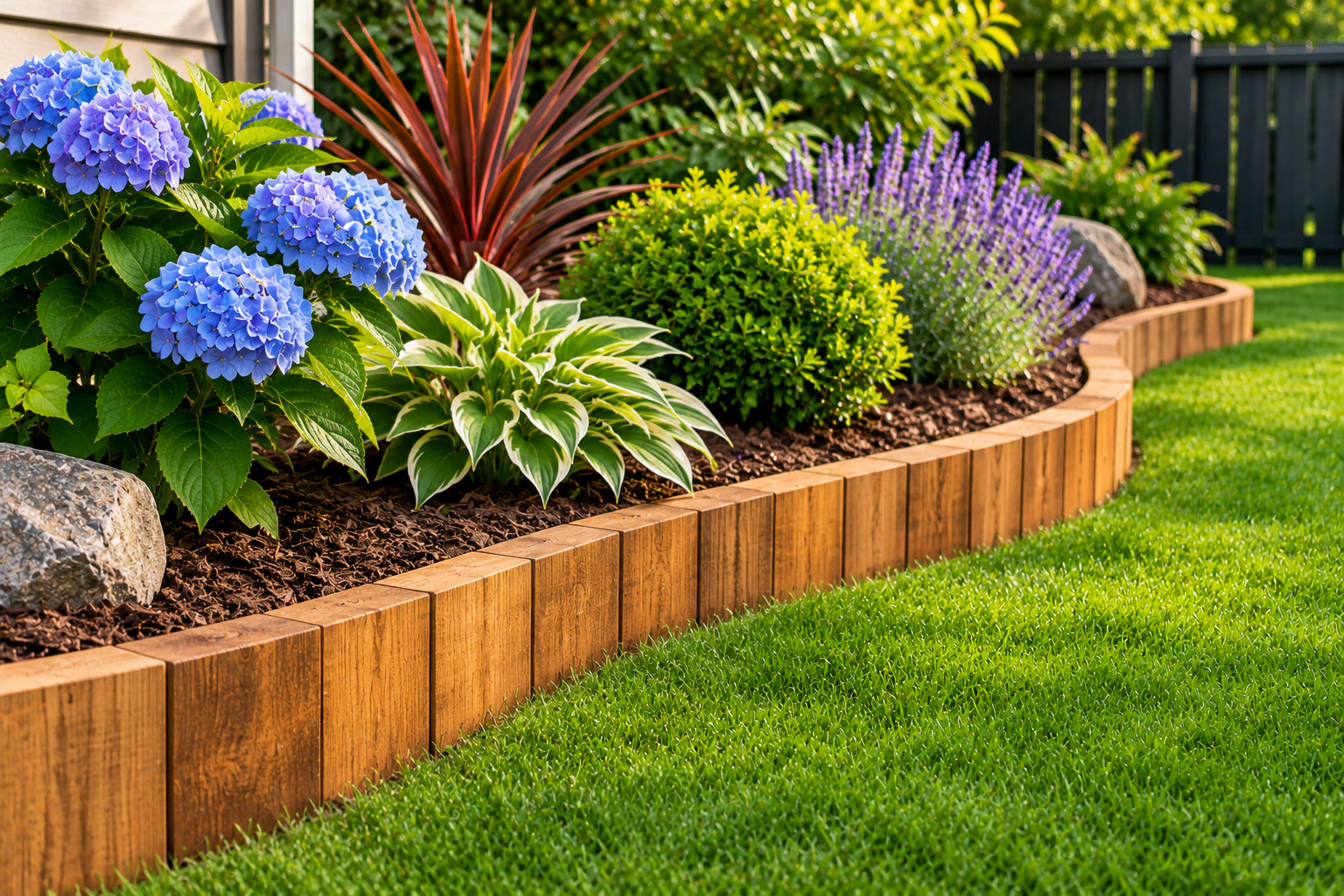
Vertical timber rounds or palisades
Best for softer, cottage-garden curves
Short upright timber pieces create a rhythmic, curved outline around planting beds. Pre-assembled wired products can simplify installation.
Works well for: Curved borders and informal planting.
Before you buy: Keep tops even and check treatment suitability.
Reclaimed brick edging
Best for character on a modest budget
Bricks can be laid flat, on edge or in a shallow soldier course for a timeless garden look. Reused bricks vary in condition, so inspect them before installation.
Works well for: Cottage gardens and older homes.
Before you buy: Set a stable base to reduce movement.
Concrete mowing strip
Best for easier lawn maintenance
A flush or low-profile mowing strip can create a stable edge for mower wheels and reduce trimming time when installed correctly. It is less flexible to change later.
Works well for: Straight lawns and high-maintenance boundaries.
Before you buy: Plan drainage and expansion details.
Precast concrete edging blocks
Best for defined, repeatable shapes
Modular concrete units are useful when you want a consistent border without pouring concrete on site. Choose the shape and dimensions to suit curves or straight runs.
Works well for: Front gardens and formal flower beds.
Before you buy: Allow for jointing, base preparation and weight.
Paver or cobblestone soldier course
Best for pathways and outdoor living areas
A single row of pavers or cobbles can connect garden borders visually with patios and paths. The foundation is as important as the visible surface.
Works well for: Courtyards, pathways and entertaining areas.
Before you buy: Use suitable edge restraint and bedding.
Gravel transition with hidden restraint
Best for contemporary, low-water designs
A gravel band can create visual breathing room between lawn and planting. A discreet restraint beneath or beside the gravel helps stop it migrating.
Works well for: Dry gardens and modern landscapes.
Before you buy: Gravel needs ongoing weed and leaf management.
Living edge with low-growing plants
Best for a natural, softer finish
Low, spreading plants can soften a hard edge and create a gradual transition from lawn to bed. Select species suited to local climate, light and maintenance needs.
Works well for: Naturalistic borders and pollinator gardens.
Before you buy: Plants alone do not reliably contain mulch or grass roots.
Gabion or rock-filled feature edge
Best for a bold statement
Small rock-filled wire baskets can add a textured feature in a larger garden. They require proper support, corrosion-resistant mesh and suitable stone.
Works well for: Large gardens and architectural landscapes.
Before you buy: Do not improvise retaining structures on slopes.
How much does garden edging cost in NZ?
Prices vary widely by height, material, pack size, coating, delivery and fixing system. The examples below are advertised product reference prices observed in November 2026, not a universal market average or guaranteed live quote. Check current pricing and stock before ordering.
| Example listing | Advertised price | Nominal length | Simple material-only rate |
|---|---|---|---|
| Syneco flexible edging (Bunnings NZ) | NZ$44.99 | 10 m | Approx. NZ$4.50/m |
| Genia Outdoor wired treated timber edging (Bunnings NZ) | NZ$64.98 | 5 m | Approx. NZ$13.00/m |
| EverEdge Classic steel (supplier reference in our steel guide) | From NZ$26.45 | 1 m | From NZ$26.45/m |
| EverEdge Cor-Ten (supplier reference in our steel guide) | NZ$40.25 | 1 m | NZ$40.25/m |
Price notes: These are selected product examples, not like-for-like comparisons: heights, material grades and fixing systems differ. The per-metre calculation assumes nominal listed lengths and excludes joins, waste, stakes not included, delivery, ground preparation and labour. Retail listings can change at any time. Source links appear below.
Example: budgeting for a 12-metre border
Measure the entire edging line first. If you plan a 10% material allowance, the planning quantity becomes 12 m × 1.10 = 13.2 m. For a 10-metre roll, you would need two rolls; for a 5-metre timber product, three packs; for a 1-metre steel system, typically 14 sections, subject to effective installed coverage. This is a quantity illustration, not a quote.
Money-saving tip: Compare effective installed cost per metre rather than shelf price. Check whether pegs, connectors and end caps are included, and whether you can collect heavy materials locally.
How to choose the right edging for your garden
For a small urban garden
Keep the border narrow and the design simple. Black steel, low-profile plastic or a single paver course can define beds without using much growing space.
For a large lawn
Prioritise mowing access and long-term maintenance. Straight timber or steel runs are easy to set out; a flush mowing strip may help reduce line trimming.
For curves and cottage-style planting
Choose a product designed to bend or use small modular pieces such as bricks or stones. Mark the shape with a hose before purchasing materials.
For gravel paths
Use a sufficiently tall, stable edge to contain the aggregate. A thin decorative strip may not be suitable for deep gravel or regular wheelbarrow traffic.
For slopes and raised beds
Distinguish decorative edging from retaining walls. If soil is being held back, especially near boundaries or structures, seek suitable professional advice rather than relying on ordinary garden edging.
How to install garden edging: a practical DIY sequence
- Mark the line. Use string for straight edges and a hose for curves. View the shape from the house and main paths.
- Measure the complete run. Include corners, curves, overlaps and any end pieces.
- Check underground services. Locate irrigation, electrical lines and other buried infrastructure before digging or driving pegs.
- Prepare the ground. Remove grass and obstructions, then form a suitable trench or base according to the chosen system.
- Position the sections. Follow the manufacturer’s instructions for joins, fixing spacing and required burial depth.
- Check level and safety. Avoid sharp exposed ends, trip points and edging that obstructs mower wheels.
- Backfill and inspect. Firm the soil, test the stability and check water movement after rain.
NZ-specific considerations: rain, coastal exposure and timber treatment
Wet and poorly drained sites: avoid creating a barrier that traps water against a house, paving or planting bed. Maintain appropriate drainage and ground levels.
Coastal locations: salt spray can shorten the life of unsuitable metal finishes and fasteners. Check the supplier’s exposure rating, especially for steel and wire baskets.
Timber in contact with soil: choose timber treated and specified for the intended use. Do not assume every decorative timber product is suitable for continuous ground contact or edible-garden applications.
Hot, exposed areas: consider UV suitability for plastics and whether dark metal edges could become hot to touch.
Frost-prone gardens: prepare a stable base for modular stone and paver edges, and inspect for seasonal movement.
Seven common garden edging mistakes
- Buying on price without comparing installed length and accessories.
- Using a low-profile border where deep gravel or mulch needs containment.
- Forcing rigid materials around tight curves.
- Ignoring drainage or installing edging too close to vulnerable cladding.
- Choosing untreated or unsuitable timber for soil contact.
- Assuming rust-coloured weathering steel suits every coastal or constantly wet site.
- Treating decorative edging as a retaining wall.
Frequently asked questions
What is the cheapest garden edging option in NZ?
Flexible plastic edging can be an economical choice for long, simple borders, but compare the full cost of stakes, delivery and replacement over time. Reused bricks or locally available materials can also be cost-effective when safe and suitable.
What garden edging is easiest to install yourself?
Many flexible plastic and pre-assembled wired timber products are DIY-friendly. Installation still depends on soil conditions, the product’s fixing method and the length of the border.
Is steel or timber edging better?
Steel suits thin profiles and clean curves, while timber brings warmth and can be straightforward to cut. Choose based on exposure, maintenance, budget and the desired appearance.
Can edging stop grass spreading into flower beds?
A correctly installed physical border can reduce encroachment, but it will not eliminate all runners, rhizomes or weeds. Regular maintenance remains necessary.
How deep should garden edging go?
There is no universal depth. Follow the product’s installation guidance and account for the material being contained, soil conditions and mower access.
Which edging works best on a slope?
Low modular stone or timber may suit a gentle change in level, but significant soil retention needs a purpose-designed solution. Check local requirements and seek qualified advice when necessary.
Can I use Corten-style steel near paving?
Possibly, but weathering steel can produce rust-coloured runoff that stains pale surfaces. Follow supplier guidance and consider placement and drainage.
Choose the border that makes the garden easier to live with
For a crisp contemporary look, start with properly specified steel. For softer, natural planting, consider stone or ground-contact-rated timber. For long, curving borders on a tighter budget, flexible recycled plastic is worth comparing. Above all, select the edging for the job it must do—not just the photo on the packaging.
If steel is on your shortlist, read our detailed Steel Garden Edging NZ: Types, Costs & Best Options guide for finishes, installation and supplier comparisons.
Sources, product references and further reading
- Bunnings New Zealand — Garden Bed Edging (product listings and example prices; checked November 2026).
- Mitre 10 NZ — Garden Edging & Screens (product types and listings).
- Root & Yard — Steel Garden Edging NZ (steel finishes, reference prices and installation).
- Kāinga Ora — Landscape Design Guidelines (landscape edging principles; guidance intended for public housing, not a universal residential standard).
Editorial note: The garden photographs in this article are AI-generated design illustrations, not photos of named products or completed customer projects. Prices are indicative reference examples and may change.
0 Comments