New Zealand Lawn Care Guide · Updated October 2026
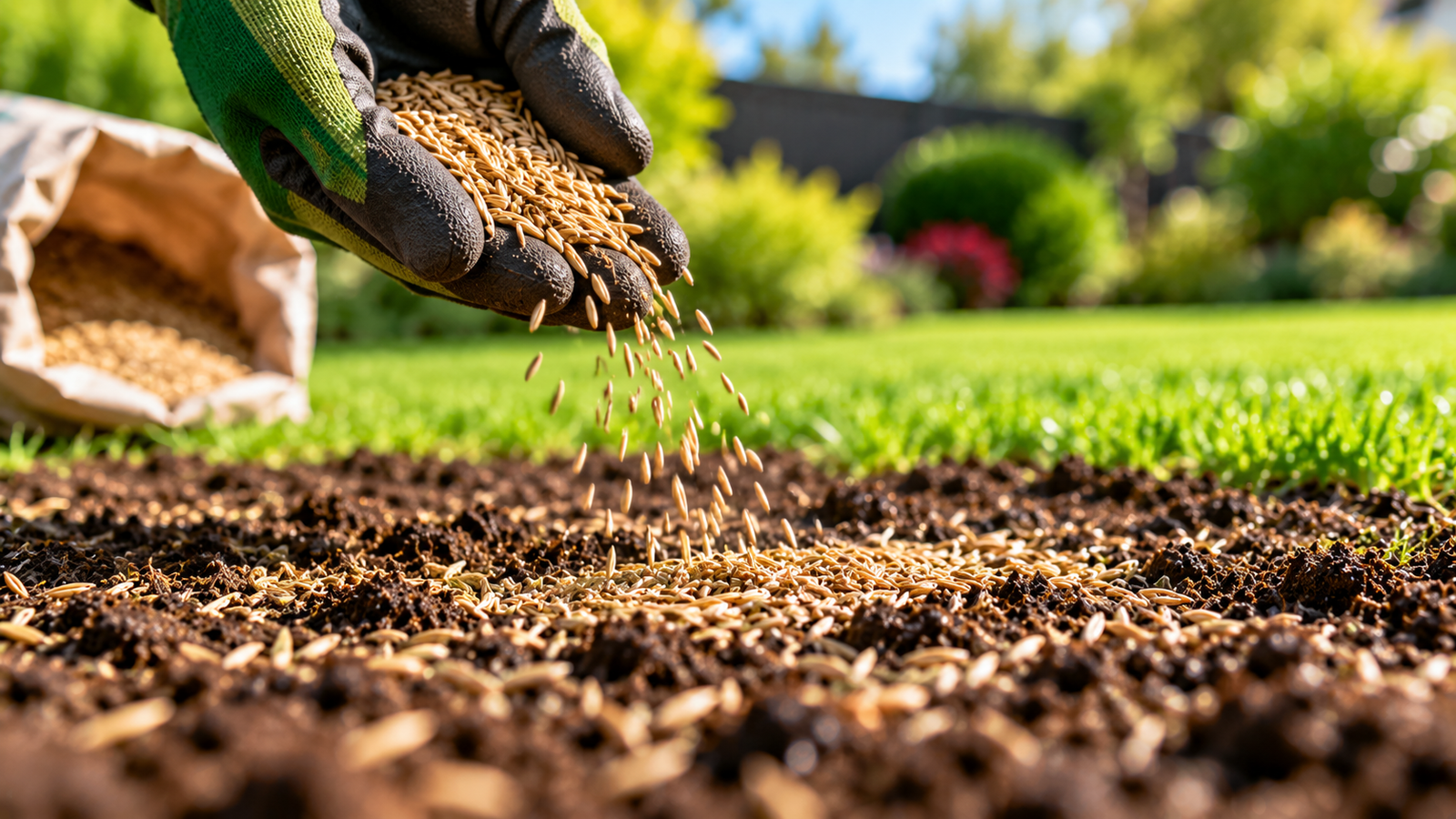
You’ve sown your lawn seed, watered the soil and waited patiently. But how long does grass seed actually take to germinate in New Zealand? And when should you start worrying if nothing has appeared?
The answer depends on the grass species, soil temperature, moisture and the time of year. Fast-growing ryegrass may begin emerging within a week in favourable conditions, while slower grasses can take several weeks.
This guide explains realistic germination times for common NZ lawn grasses, what to expect during the first month, and how to troubleshoot a lawn that refuses to grow.
Root & Yard Quick Answer
How Long Does Grass Seed Take to Germinate in NZ?
Perennial ryegrass commonly starts germinating in approximately 5–14 days under suitable conditions. Fescues may take longer, while warm-season grasses such as kikuyu can require several weeks and sufficiently warm soil.
Some specially prepared NZ lawn seed products advertise visible growth in as little as seven days under ideal conditions. That is not a guarantee for every seed mix or garden.
These are indicative ranges, not deadlines. Follow the guidance on your specific seed packet.
Grass Seed Germination Times in New Zealand
Different grass species germinate at different speeds. This matters particularly when you sow a blended lawn seed product, because not every species will emerge at the same time.
| Grass type | Indicative germination time | Important consideration |
|---|---|---|
| Perennial ryegrass | 5–14 days | Often among the fastest common lawn grasses |
| Fine fescue | 7–21 days | May emerge after ryegrass in a blend |
| Tall fescue | 7–21 days | Needs suitable moisture and soil warmth |
| Couch grass | 10–21 days or longer | Warm soil is particularly important |
| Kikuyu | Several weeks; some products indicate around 6 weeks | Requires warm conditions; check the specific seed product |
These estimates are for planning rather than precise predictions. Seed quality, cultivars, soil conditions and weather can all affect the outcome.
For example, Tui’s Superstrike Kikuyu product information distinguishes between fast-germinating ryegrass in the mix and slower kikuyu, which may take around six weeks to germinate.
What to Expect After Sowing Grass Seed: A 28-Day Timeline
One of the most common mistakes is assuming a lawn has failed simply because the ground still looks bare after a week.
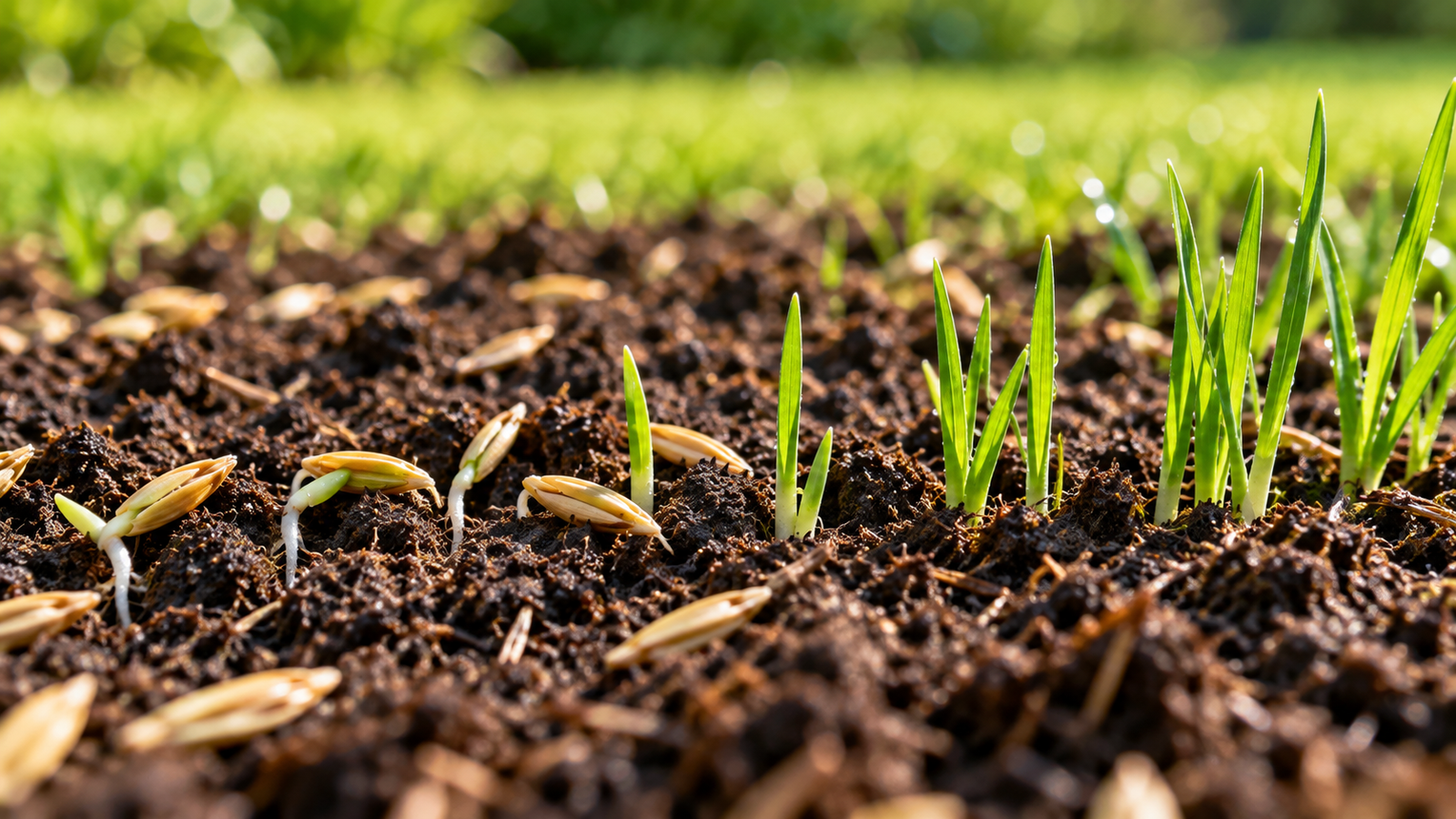
Seeds absorb water and begin the germination process when conditions are suitable. Fast-growing ryegrass may start appearing near the end of this period.
More ryegrass seedlings may become visible. Some fescues may also begin emerging. Uneven coverage is common at this stage.
Slower seedlings may continue appearing. Existing grass should begin developing stronger roots and additional leaves.
The lawn may start looking fuller, but it is not necessarily established. Warm-season species and poorly timed sowings may still need more time.
How Soil Temperature Affects Germination
Soil temperature is one of the biggest reasons two lawns planted on the same day can germinate at different speeds.
Cool-season grasses such as perennial ryegrass are better suited to relatively cool growing conditions. Warm-season grasses such as kikuyu generally require warmer soil.
Tui recommends soil temperatures above approximately 10°C for reliable establishment when preparing many new lawns, while its kikuyu guidance identifies a higher minimum germination temperature of around 18°C.
Best Time to Sow Grass Seed in NZ
Often an excellent period for cool-season lawn establishment, with milder temperatures and improved moisture availability.
Another strong option as soil temperatures rise. Monitor drying conditions as summer approaches.
Possible with suitable species and irrigation, but heat and rapid moisture loss make establishment harder.
Cool-season seed may germinate slowly in mild areas. Frost-prone sites can be better left until spring.
Does Your NZ Region Make a Difference?
Yes. A lawn in Northland may experience different soil temperatures from one in Canterbury or Otago, even during the same month.
- Auckland and Northland: Milder conditions may offer longer sowing opportunities, although summer drying remains a concern.
- Waikato and Bay of Plenty: Spring and autumn are useful starting points for many cool-season lawn mixes.
- Wellington: Wind can dry exposed seedbeds, making moisture management particularly important.
- Canterbury and Otago: Cold soil and frost can delay establishment; assess actual soil conditions before sowing.
These are general regional considerations rather than fixed sowing dates. Local weather and soil temperature should guide the decision.
How Often Should You Water New Grass Seed?
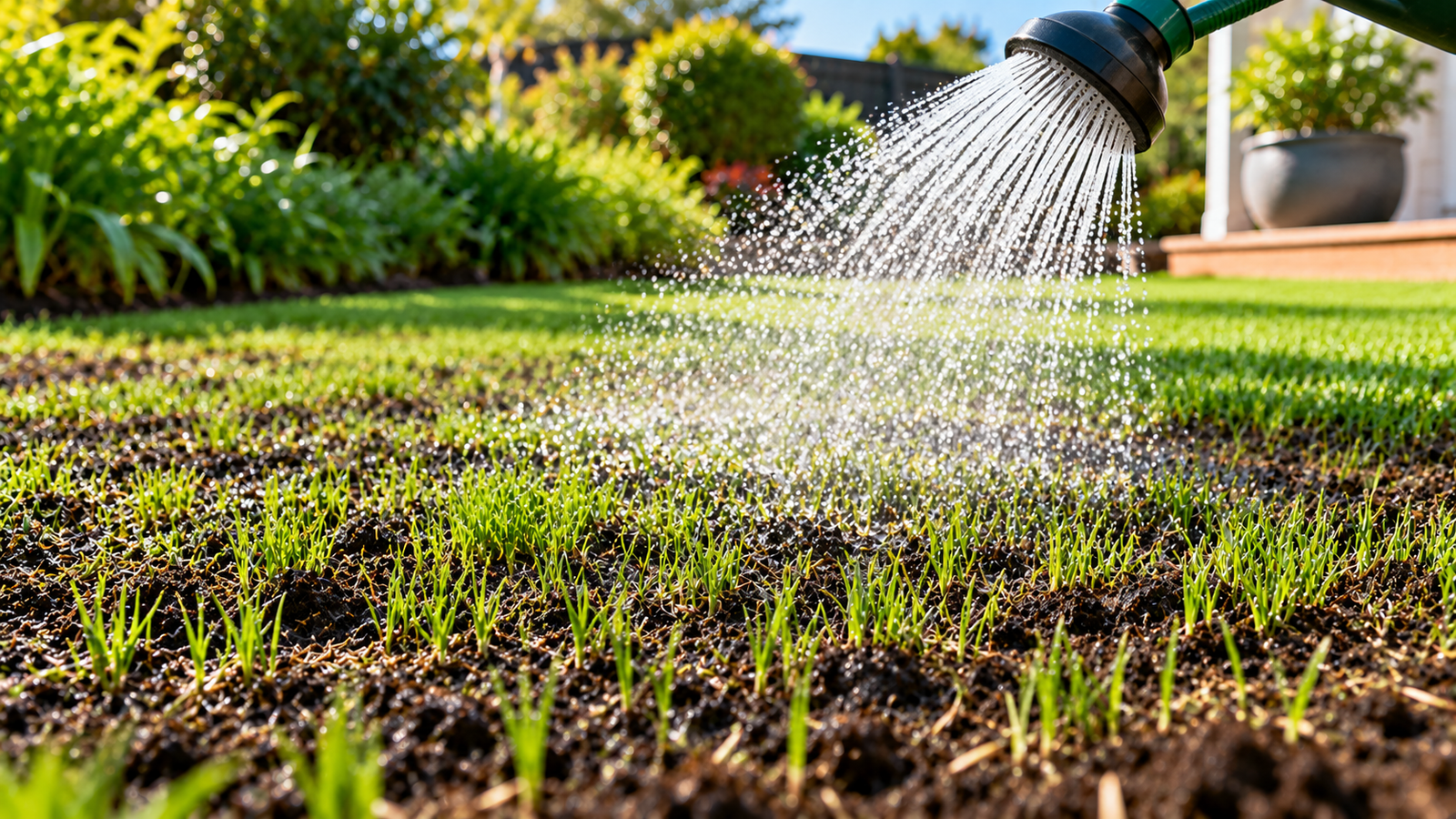
Keep the seedbed consistently moist, but never water so heavily that seeds wash away or the soil becomes waterlogged.
Tui recommends watering immediately after sowing and keeping the surface moist during germination. Its new-lawn guidance suggests watering once or twice daily where needed, adjusting for weather and soil conditions.
Before Seedlings Appear
- Use a gentle sprinkler or fine spray.
- Check moisture at the soil surface regularly.
- Water more frequently if wind or heat causes rapid drying.
- Reduce watering after rain when the surface remains moist.
- Avoid puddles and runoff.
After Grass Begins Growing
Gradually move towards less frequent, deeper watering as seedlings develop. Tui advises progressively reducing irrigation as the new lawn establishes, while avoiding severe drying during its early weeks.
There is no single watering duration suitable for every garden. A sandy lawn in warm weather may need a different routine from a shaded lawn growing in moisture-retentive soil.
Why Is My Grass Seed Not Germinating?
If you’ve waited longer than expected and nothing has appeared, investigate the conditions before buying more seed.
1. The Soil Is Too Cold
Cold soil slows germination. This is especially important for warm-season grasses. Check soil temperature rather than relying only on the air temperature forecast.
2. The Seedbed Dried Out
Germinating seeds need consistent moisture. If they begin germinating and subsequently dry out, seedlings may fail.
3. Too Much Water
Waterlogged soil limits oxygen availability and can encourage seed problems. Heavy watering can also displace seeds.
4. Poor Seed-to-Soil Contact
Seeds left sitting on thick thatch, old grass or compacted debris may not establish properly. Light raking and gentle firming can improve contact.
5. Birds or Seed Movement
Exposed seed may be eaten by birds or moved by wind, rain and irrigation. A light covering helps protect it.
6. Unsuitable or Old Seed
Check the seed’s age, storage conditions, species and suitability for the site. A seed blend designed for full sun may struggle in deep shade.
7. You Simply Haven’t Waited Long Enough
Some grass types take several weeks. Check the species and product instructions before deciding that germination has failed.
Quick Troubleshooting Checklist
- Has the soil stayed consistently moist?
- Is the soil warm enough for the grass species?
- Was the seed lightly covered and firmed?
- Could birds or heavy rain have removed the seed?
- Does the seed packet indicate a slower-germinating variety?
- Has the recommended germination period actually passed?
Seven Ways to Improve Grass Seed Germination
- Choose the right seed: Match the mix to your climate, sunlight and expected foot traffic.
- Sow at the right time: Spring and autumn are generally suitable for many cool-season NZ lawns.
- Prepare the surface: Remove weeds, debris and excessive thatch.
- Improve the seedbed: Create a fine, level surface with adequate drainage.
- Follow the packet rate: Excessively dense sowing does not guarantee a better lawn.
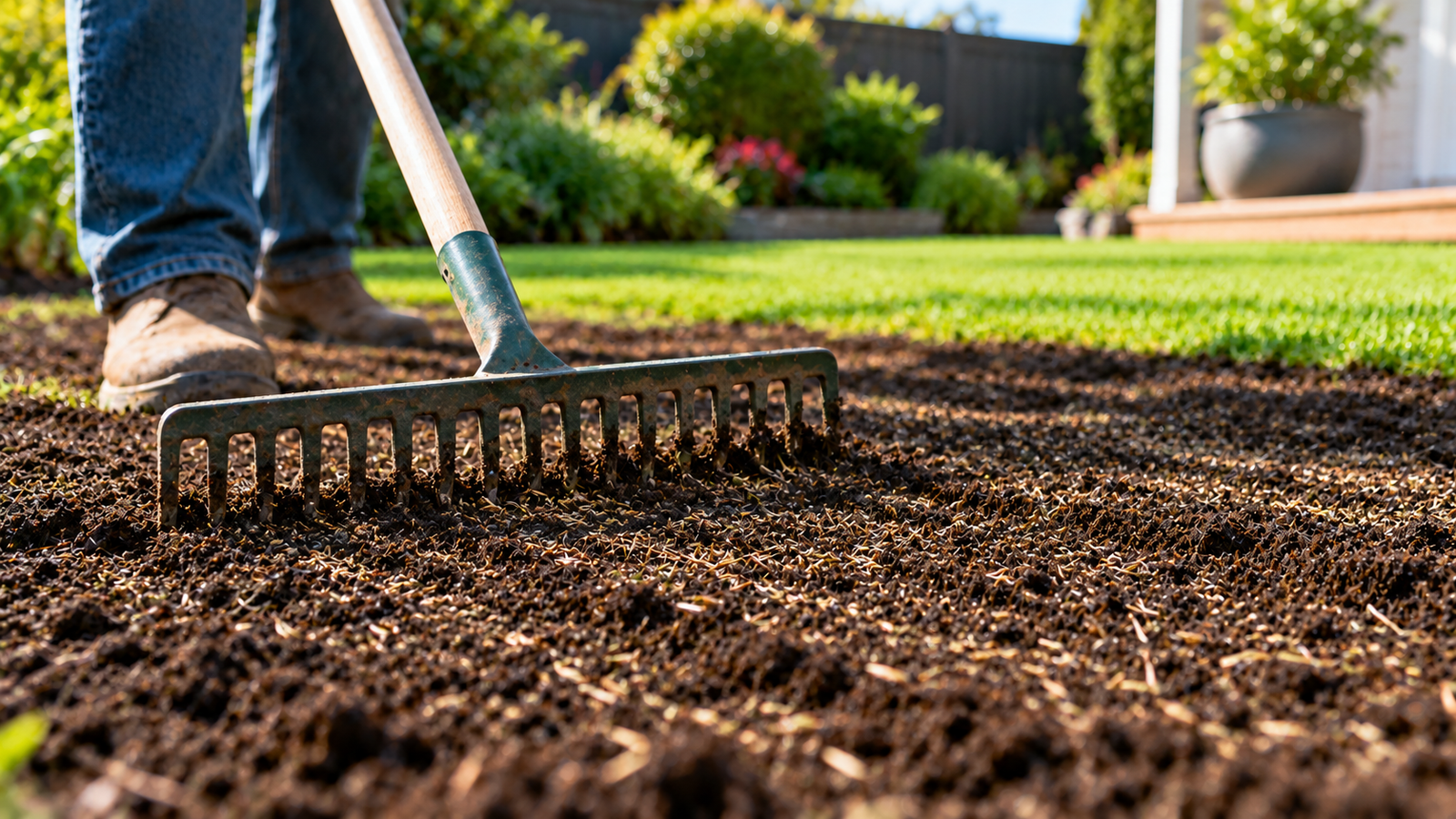
- Rake lightly and firm: Ensure good seed-to-soil contact without burying seeds too deeply.
- Manage moisture: Keep the surface moist during germination, adjusting for weather.
For a practical NZ-specific preparation method, see Tui’s lawn preparation guide.
When Can You Mow New Grass for the First Time?
Germination is not the same as establishment. Grass that has just emerged still needs time to develop enough roots to withstand mowing.
Tui recommends waiting until new grass reaches approximately 5–7 cm and is sufficiently established before the first mow. Use a high mower setting, sharp blades and avoid cutting too much leaf at once.
Make sure the soil is firm enough that walking and mower wheels will not damage the young lawn.
How Long Until a New Lawn Looks Fully Established?
Expect establishment to take longer than germination. Even if seedlings appear after seven days, the lawn may require several more weeks of suitable growing conditions before it looks dense and handles regular use.
Root growth, species, temperature, moisture and traffic all affect establishment. Avoid heavy foot traffic while seedlings are young.
Frequently Asked Questions
Can grass seed germinate in seven days in NZ?
Yes. Some ryegrass-based products may show visible growth in as little as seven days under ideal conditions. Other species or less favourable conditions can take considerably longer.
Why is my grass seed not growing after 10 days?
The soil may be too cold, too dry or too wet, or your seed mix may contain slower-germinating species. Check the packet and growing conditions before reseeding.
Will grass seed germinate on top of soil?
Some exposed seed may germinate, but good seed-to-soil contact and a light covering generally improve establishment and reduce seed loss.
How long does ryegrass take to germinate?
Perennial ryegrass commonly begins germinating in approximately 5–14 days under suitable conditions. Certain treated lawn seed products may emerge sooner in ideal conditions.
How long does kikuyu seed take to germinate?
Kikuyu requires warm conditions and may take several weeks. Tui’s kikuyu lawn seed guidance indicates approximately six weeks for the kikuyu component of its mix.
Should I water grass seed every day?
During germination, the goal is to maintain consistent surface moisture. Daily watering may be appropriate, but rainfall, wind, temperature and soil type determine the actual frequency.
Can I sow lawn seed in winter?
Some cool-season grass varieties may germinate in mild winter conditions, but cold soil slows the process. In frost-prone regions, spring may be more reliable.
Root & Yard Verdict
For many New Zealand lawns, perennial ryegrass can begin appearing within approximately one to two weeks when soil temperature and moisture are suitable. Fescues may take longer, while kikuyu can require several weeks.
The most important advice is to match your expectations to the seed species. Keep the seedbed consistently moist, check soil conditions and avoid rushing to reseed simply because nothing has appeared after seven days.
A healthy lawn starts with suitable seed, good preparation and patient early care.


0 Comments