New Zealand gardening guide · Updated October 2026
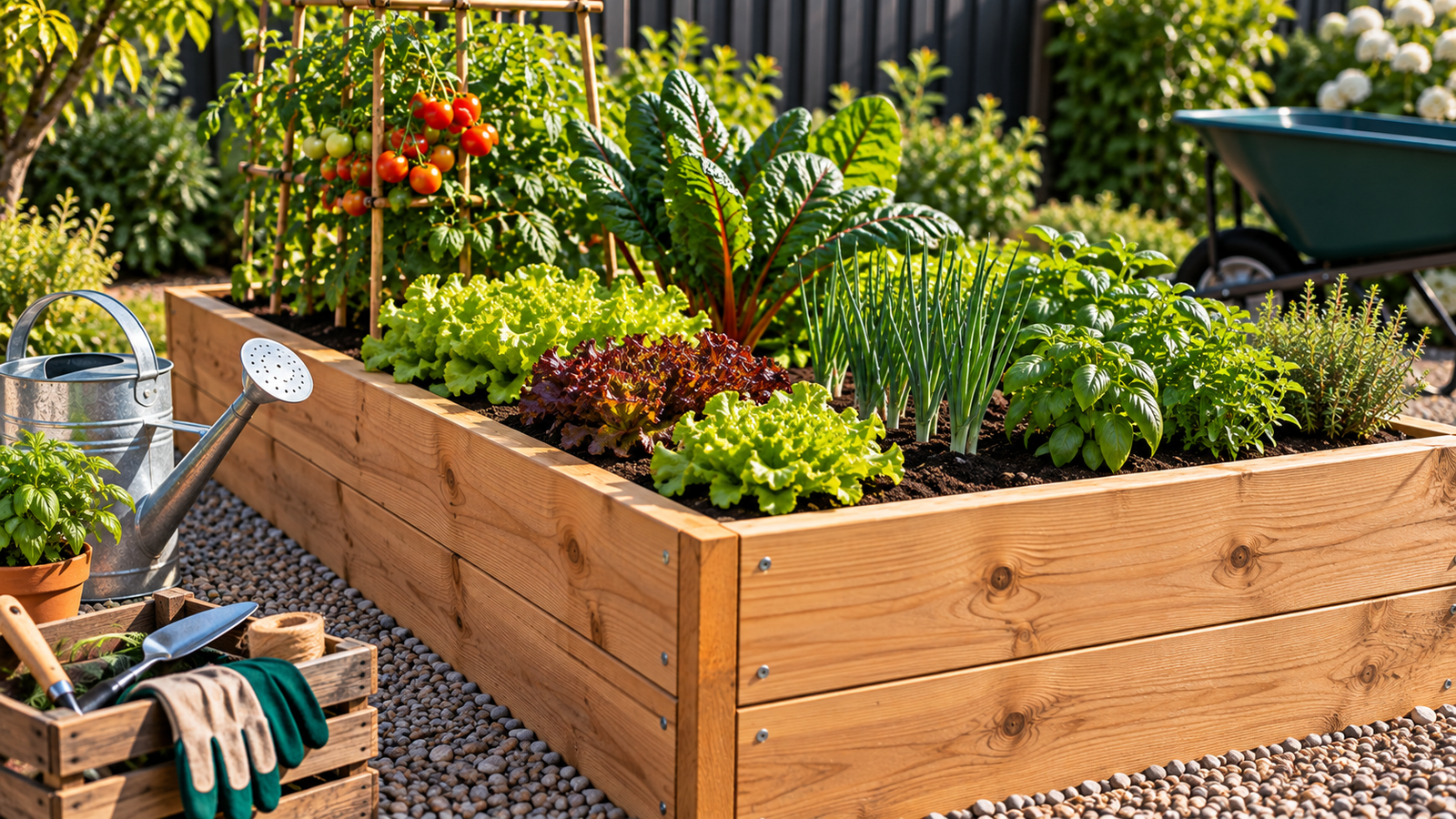
Choosing the best timber for raised garden beds in NZ means balancing durability, price and peace of mind around edible crops. Macrocarpa is a compelling untreated option, while radiata pine can be more economical when you select the right product for the job. This guide compares five timber choices, explains treated-timber precautions and shows what a real timber-only budget can look like in New Zealand dollars.
Root & Yard quick answer
What is the best timber for raised garden beds in NZ?
Macrocarpa is our best all-round starting point for an untreated vegetable garden bed. It offers useful natural durability without conventional preservative treatment. Radiata pine is the budget option, but untreated pine may decay faster in persistent soil contact; for treated pine, confirm the hazard class, preservative and manufacturer’s intended use.
No timber is maintenance-free, and suitability varies with site conditions, board dimensions and product specifications.
Raised garden bed timber comparison
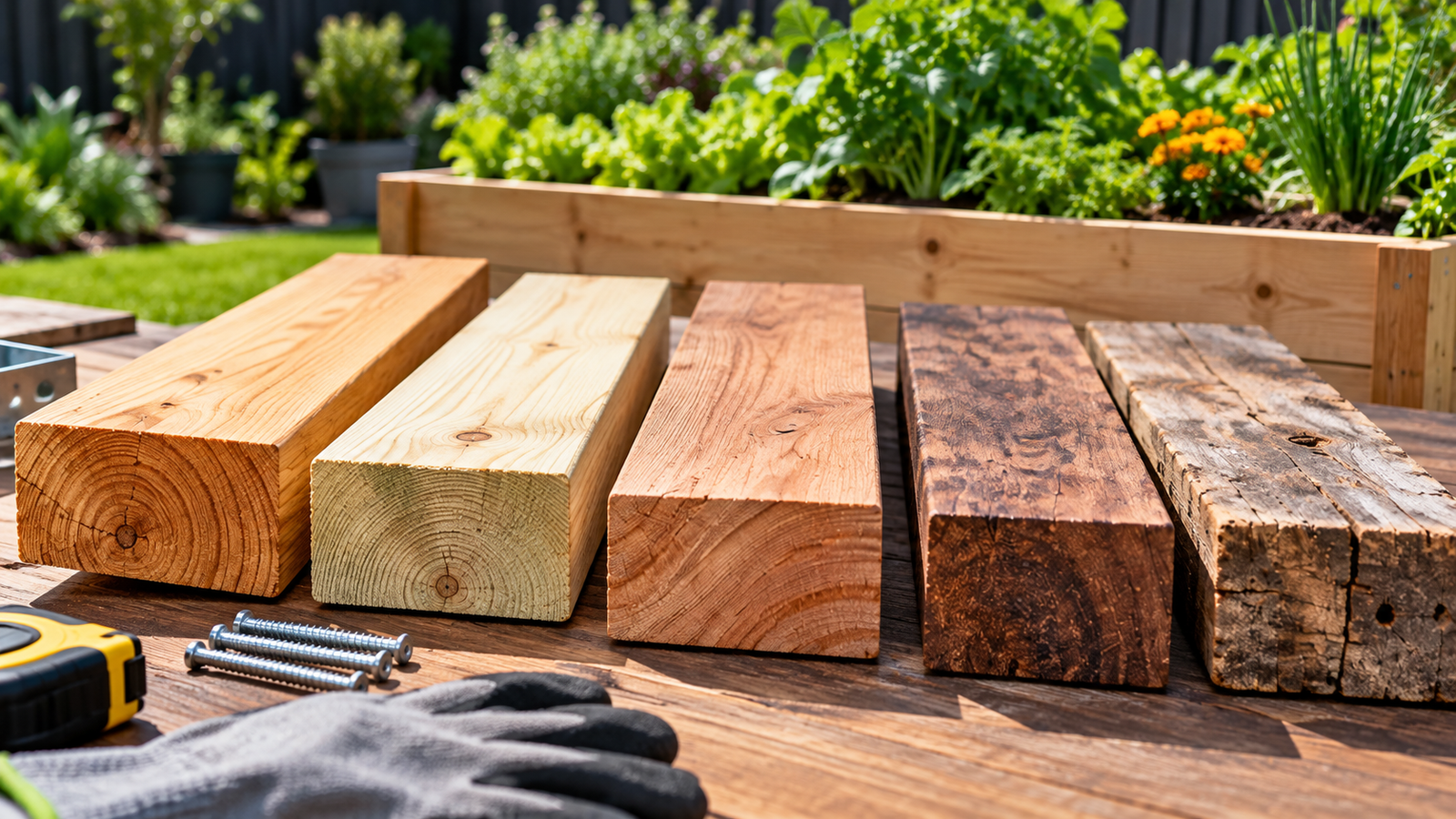
These are practical trade-offs rather than laboratory durability rankings. A thick board in a well-drained garden can perform very differently from a thin board constantly exposed to wet soil.
| Timber | Main advantage | Main limitation | Best for |
|---|---|---|---|
| Macrocarpa | Natural durability; untreated options | Higher upfront cost | Vegetable beds where avoiding preservatives matters |
| Radiata pine | Widely available; often economical | Untreated boards are less durable in soil contact | Cost-conscious projects with carefully specified materials |
| Douglas fir | Good strength; attractive appearance | Durability depends on grade, sapwood and conditions | Projects with suitable locally sourced stock |
| Lawson cypress | Natural durability; untreated alternative | May be harder to find | Gardeners seeking another untreated choice |
| Reclaimed timber | Potential savings and reuse | Unknown coatings or treatment history | Only when provenance and suitability are clear |
Five timber options worth considering
1. Macrocarpa — best all-round untreated choice
Macrocarpa is a popular choice for New Zealand garden projects because suitable heartwood can resist decay without conventional preservative treatment. Its natural look also suits both productive and ornamental gardens. Confirm that the product offered is appropriate for prolonged outdoor and soil exposure; species name alone does not guarantee the same service life for every board.
Our verdict: Start here for a vegetable bed if the price fits your budget. Compare thickness, length and whether the supplier identifies heartwood or sapwood.
2. Radiata pine — best for keeping initial costs down
Radiata pine is easy to find and work with, but untreated radiata pine generally does not offer the same resistance to prolonged wet-soil contact as naturally durable alternatives. Preservative treatment can improve durability, yet the treatment class and chemical system must suit the exposure and intended use.
Our verdict: A sensible option when cost is important, provided you verify product specifications instead of choosing on price alone.
3. Douglas fir — a strong alternative
Douglas fir offers structural strength and a warm timber appearance. However, durability can vary with the wood’s characteristics and moisture exposure. Ask the supplier whether the particular boards are suitable for raised-bed use, especially where they will contact damp soil.
4. Lawson cypress — a natural alternative
Lawson cypress is another species worth asking local timber yards about when you want to avoid preservative-treated boards. Availability, dimensions and price can be less predictable than for radiata pine.
5. Reclaimed timber — only with a known history
Reused timber can reduce waste, but mystery sleepers, old painted boards and timber from demolition may contain unsuitable preservatives or coatings. Never assume an old pallet or railway sleeper is safe for an edible garden simply because it looks weathered.
Macrocarpa vs treated pine for raised garden beds
If you are deciding what timber to use for raised garden beds, macrocarpa and treated radiata pine are two practical options to compare in New Zealand. The better choice depends on whether you prioritise untreated timber, upfront cost or a particular product’s suitability for wet-soil exposure.
| Factor | Macrocarpa | Treated radiata pine |
|---|---|---|
| Preservative treatment | Suitable untreated heartwood can offer natural durability. | Preservative-treated; verify the treatment system and hazard class. |
| Upfront cost | Often higher, depending on board size and supplier. | Often lower, but compare equivalent dimensions and total project cost. |
| Vegetable gardens | A useful starting point for gardeners who prefer untreated timber. | Check intended use and follow NZ EPA precautions for treated timber. |
| Before buying | Confirm heartwood content, dimensions and suitability for soil exposure. | Confirm treatment type, hazard class, dimensions and supplier guidance. |
Is untreated timber better for garden beds?
Untreated timber for garden beds can be appealing when you want to avoid wood preservatives near edible crops. But untreated does not automatically mean long-lasting: timber species, heartwood content and constant soil moisture all affect durability. Untreated radiata pine, for example, is generally more vulnerable to decay in wet-soil contact than suitable macrocarpa heartwood.
For questions about preservatives in food-growing beds, see the treated-timber safety guidance below before choosing a product.
How much does raised-bed timber cost in New Zealand?
Retail pricing is a useful reality check, but compare like-for-like lengths and cross-sections. A 200 × 50 mm sleeper is not structurally interchangeable with a 200 × 100 mm sleeper.
| Example product | Dimensions | Listed price (NZD) |
|---|---|---|
| Mitre 10 Macrocarpa sleeper | 200 × 50 mm × 2.4 m | NZ$50.49 |
| Mitre 10 Macrocarpa sleeper | 200 × 50 mm × 2.1 m | NZ$44.08 |
| Mitre 10 Macrocarpa sleeper | 200 × 100 mm × 2.4 m | NZ$81.98 |
| Mitre 10 Eucalyptus hardwood sleeper | 200 × 50 mm × 2.4 m | NZ$41.98 |
Example advertised prices checked 12 October 2026 on Mitre 10’s landscaping timber catalogue. Prices and availability vary by store and may change; these are examples, not guaranteed quotes. Eucalyptus is shown for price context, not as a blanket recommendation for edible beds.
Worked example: timber cost for a two-course raised bed
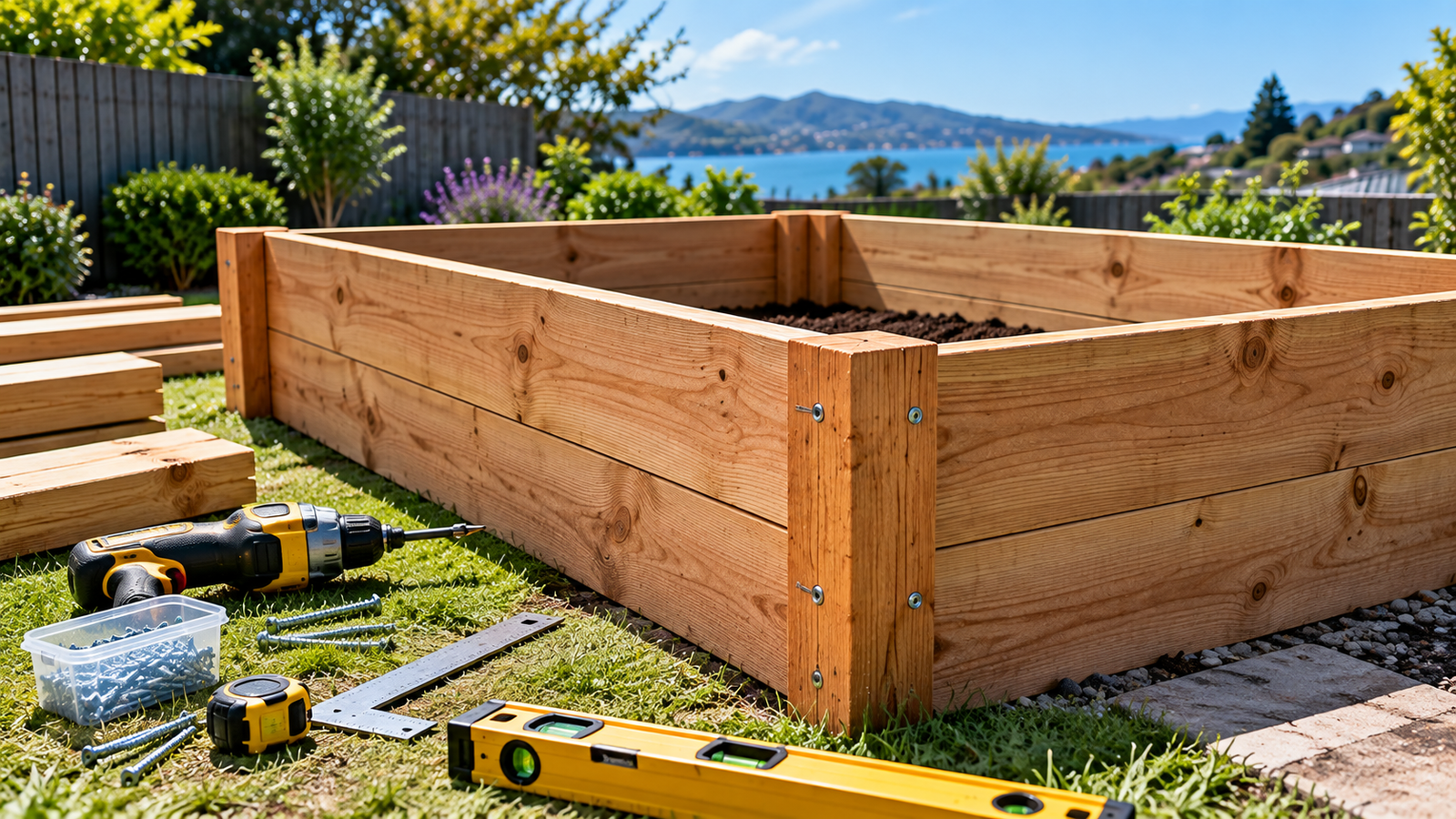
Imagine a rectangular bed using two 2.4 m boards and two 2.1 m boards per course, stacked two courses high. Each course is 200 mm high, giving a nominal board-wall height of approximately 400 mm before accounting for any embedment, gaps or construction details.
2 × NZ$50.49 + 2 × NZ$44.08
4 × NZ$50.49 + 4 × NZ$44.08
Important: NZ$378.28 is the illustrative board-only cost, not the total project price. You must still budget for suitable corner posts, intermediate bracing where needed, exterior-rated fasteners, any cutting or delivery charges, and soil/compost. Final outside dimensions depend on how the corners are joined; the example is not a cut list or structural design.
For deeper beds, long unsupported sides or sites with unusual loads, get construction advice rather than relying on a simple four-board rectangle. For step-by-step construction context, see Bunnings NZ’s raised-bed building guide.
Is treated timber safe for vegetable garden beds?
What is the safest timber for vegetable garden beds?
For gardeners who prefer to avoid preservatives, appropriately specified untreated macrocarpa is a practical starting point. Treated timber is not automatically unsuitable for food gardens, however: the NZ EPA guidance below describes the risks from treated timber in raised vegetable beds as negligible and recommends straightforward precautions. Always confirm the specific product is appropriate for your design.
New Zealand’s Environmental Protection Authority (EPA) says the risks from treated timber used in planters and raised vegetable beds are negligible. It also notes that some preservatives, including CCA, can leach compounds into soil over time, while modern treatment standards require preservatives to be fixed in the timber before sale.
To reduce potential exposure, the EPA suggests planting a few centimetres away from treated boards or lining planter sides with plastic. A side liner should be installed so water does not become trapped; do not seal the bottom of a ground-connected bed and prevent drainage.
- Check the product’s treatment type, hazard class and stated use.
- Ask the supplier whether the specific product is suitable for your raised-bed design.
- Wear appropriate protection when cutting or sanding treated wood, and clean up sawdust.
- Never burn treated timber or put treated sawdust in compost.
- If you prefer to avoid preservatives, consider appropriate untreated macrocarpa, Douglas fir or Lawson cypress, as the EPA also suggests.
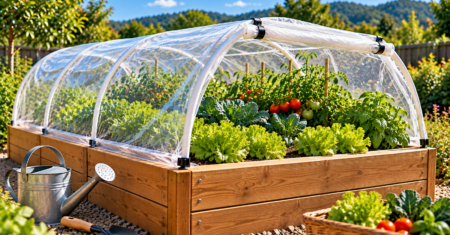
Planning a covered bed as well? See our raised garden bed with cover guide for options to protect plants from pests and weather.
Six practical ways to make a timber raised bed last longer
- Choose a well-drained site. Avoid areas where water regularly pools.
- Keep the base draining. A bed sitting on soil should not become a sealed water-holding box.
- Brace long sides. Wet growing media can push timber outwards.
- Use compatible exterior fasteners. Check corrosion resistance and compatibility with the timber treatment.
- Allow access for maintenance. Inspect corners, posts and fixings at least annually.
- Match the design to the depth. Taller walls and deeper soil increase loading; seek qualified advice for substantial structures.
Which timber should you buy?
Compare locally available macrocarpa first, then suitable Lawson cypress or Douglas fir. Ask about durability and board quality.
Compare radiata pine products on total expected cost, treatment, dimensions and likely replacement needs—not only sticker price.
Prioritise a properly braced design, appropriate timber dimensions and suitable fixings.
Use reclaimed timber only when its treatment and coating history are reliably known.
Frequently asked questions
What is the best untreated timber for raised garden beds in NZ?
Macrocarpa is a strong starting point for an untreated vegetable bed, provided the particular boards are suitable for prolonged outdoor and soil exposure. Lawson cypress and Douglas fir may also be worth comparing locally.
Can I use untreated radiata pine for a raised garden bed?
Yes, but expect greater decay risk where the boards remain in contact with damp soil. If you want a long-lasting installation, compare the whole-life cost with naturally durable or appropriately treated alternatives.
Is CCA-treated wood banned from vegetable beds in NZ?
No blanket ban is established by the EPA guidance cited here. The EPA describes risks from treated timber in raised vegetable beds as negligible, while recommending precautions such as planting away from the timber or lining the sides. Always check the product’s intended use.
How much does a macrocarpa raised bed cost?
Using the example Mitre 10 prices checked in October 2026, eight 200 × 50 mm macrocarpa boards for a two-course rectangular frame cost NZ$378.28 before posts, fixings, delivery, soil and other materials. Your real cost depends on design and local prices.
Should I line the inside of a timber raised bed?
A suitable side liner may reduce direct contact between soil and treated timber, but it must not trap water or block drainage. The EPA suggests lining planters as one way to reduce exposure to preservatives.
Final verdict
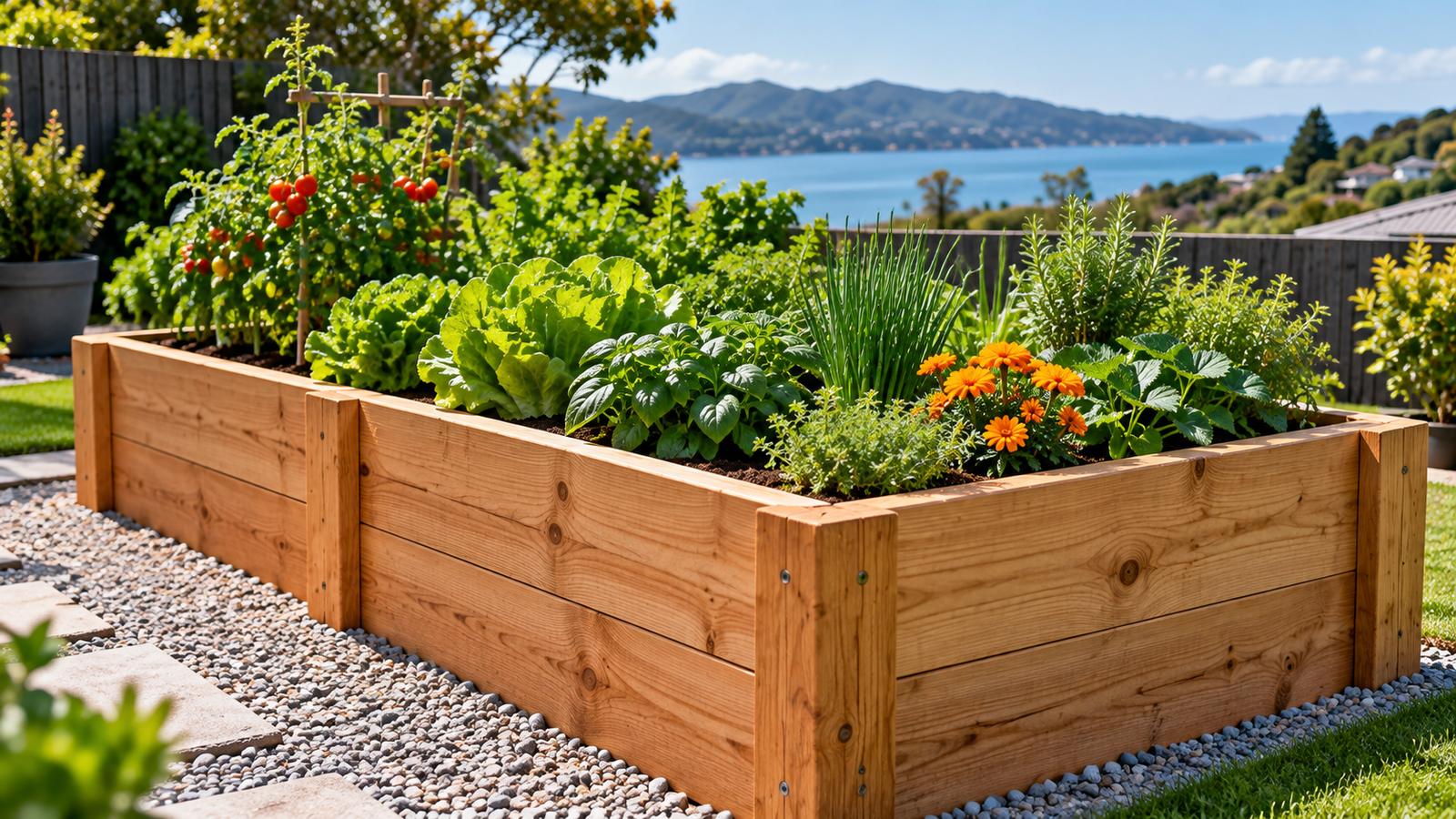
For many Kiwi gardeners, macrocarpa offers the clearest combination of natural durability and suitability for an untreated vegetable-bed project. Radiata pine can make sense where budget is the deciding factor, but buy it based on verified specifications and expected exposure. Above all, choose a sound design: even excellent timber will disappoint if the bed is poorly drained or inadequately supported.
Sources and further reading
Related Articles
1 Comment
[…] raised bed can also work. Our raised garden beds in NZ guide explains how to plan a bed, while our raised-bed timber guide covers suitable […]